What does Exodus 19:5 mean?
"Now therefore, if ye will obey my voice indeed, and keep my covenant, then ye shall be a peculiar treasure unto me above all people: for all the earth is mine:" - Exodus 19:5
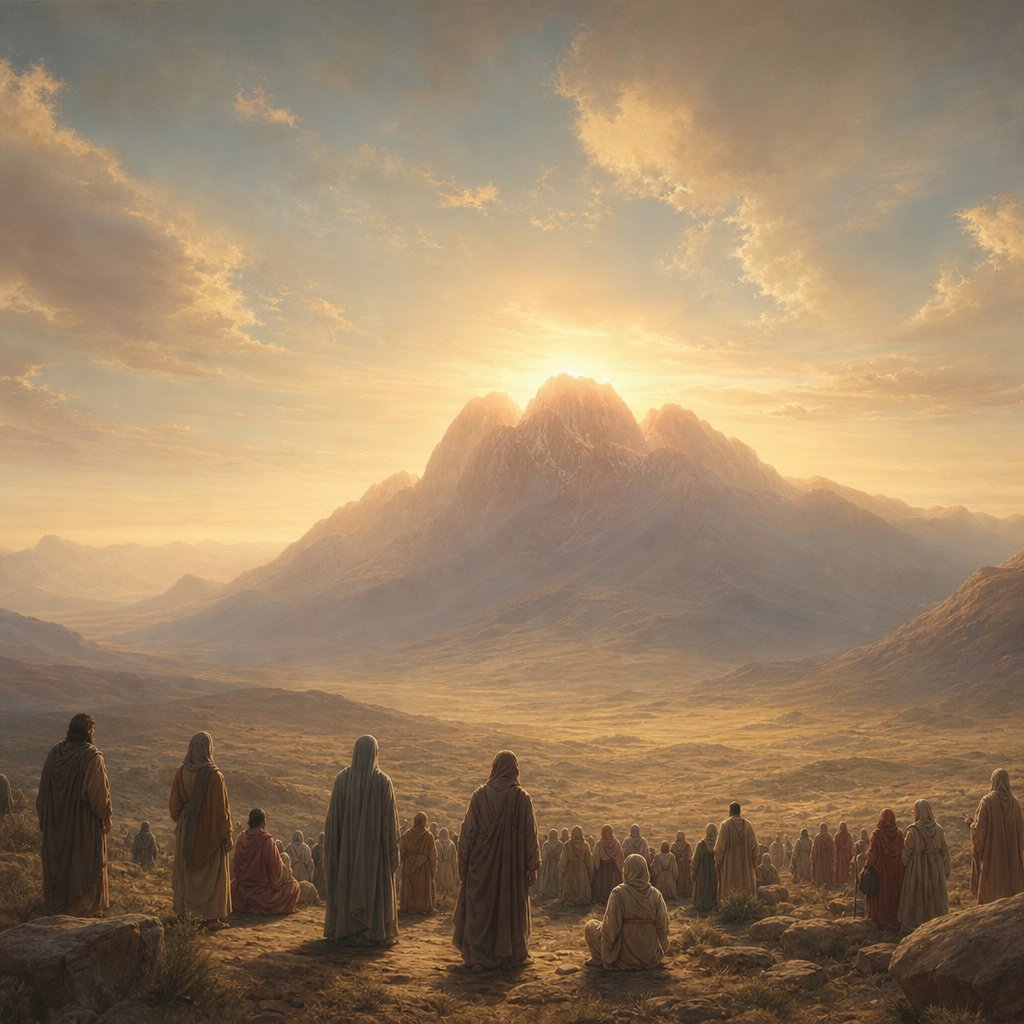
Exodus 19:5 in the KJV reads, “Now therefore, if ye will obey my voice indeed, and keep my covenant, then ye shall be a peculiar treasure unto me above all people: for all the earth is mine.” The verse stands at a decisive moment in Israel’s story, spoken by the LORD through Moses at Sinai after the deliverance from Egypt and before the giving of the law. Israel has been brought out by power they did not create and mercy they did not earn; now they are brought near to hear God’s own terms for living as His redeemed people. The “now therefore” ties the command to what has just been done for them, particularly the saving acts of God that precede it. The verse is not merely a detached rule, but a covenantal declaration: because the LORD has redeemed, He now calls for a response that matches the relationship He is establishing.
The heart of the verse is covenant. “If ye will obey my voice indeed, and keep my covenant” places emphasis on listening and guarding. In the KJV, “obey my voice indeed” is more than outward conformity; it is the serious, wholehearted reception of what God says as authoritative, trustworthy, and binding. The “voice” of the LORD is personal and direct; it underscores that Israel’s life is to be shaped not by Egypt’s patterns or the surrounding nations’ gods, but by the living God who speaks. To “keep my covenant” is to preserve the relationship as God defines it, to live within the terms of communion with Him. This is why the verse is both conditional and relational: the blessings named are attached to covenant faithfulness, not to national pride or mere ancestry. The obedience described is the sign of belonging, the fruit of being brought near, the practical expression of loyalty to the Redeemer.
The promise that follows is striking: “then ye shall be a peculiar treasure unto me above all people.” In KJV language, “peculiar” does not mean strange or odd; it means specially owned, set apart, treasured as property. The phrase paints an image of a king’s private treasure, something reserved for himself, valued not because it is the only wealth he has, but because he has chosen it for intimate possession and special regard. Israel is being told that among the nations they will have a distinct identity and vocation: they are to belong to the LORD in a way that is publicly visible and covenantally defined. “Above all people” does not deny the existence or value of other nations; it highlights the uniqueness of this covenant relationship and the special purpose attached to it. The LORD is forming a people who will bear His name and reflect His character in the world.
Yet the verse immediately guards against misunderstanding by adding, “for all the earth is mine.” This line is the theological foundation beneath the promise. God’s election of Israel is not based on a limitation in God, as though He must choose one people because He cannot claim the rest; rather, He already owns all. The LORD’s sovereignty is universal. He is not a tribal deity negotiating for territory. Because “all the earth is mine,” His choice of Israel is purposeful and gracious, not forced. It also means Israel’s special status is not a license for arrogance. If the whole earth belongs to God, then Israel’s “peculiar treasure” identity is a stewardship—an entrusted role—within God’s broader dominion. They are chosen within a world God already claims, meant to live in such a way that His rule and holiness are displayed among the nations.
Within the wider context of Exodus 19, this verse functions like the threshold of Sinai. The chapter frames the mountain as a place of divine presence, separation, and awe, with boundaries set around it and the people called to sanctify themselves. Exodus 19:5 is part of the LORD’s opening address that prepares Israel for the law that follows in Exodus 20 and beyond. The order matters: redemption comes first, then covenant obligation. Israel is not told to obey in order to be rescued from Egypt; they are rescued and then summoned to covenant faithfulness. In this way, Exodus 19:5 becomes a lens for reading the rest of the law: commandments are not random tests, but the shape of a redeemed life under a holy King.
Symbolically, the verse draws together themes of ownership, voice, and treasure. The “voice” symbolizes revelation—God making His will known—while “covenant” symbolizes binding relationship, not temporary agreement. “Treasure” symbolizes value, delight, and careful keeping; it suggests that God’s intention is not merely to use Israel, but to cherish them as His own possession. “All the earth is mine” symbolizes the absolute kingship of God, the reason He can both choose a people and judge or bless nations. The verse therefore holds in tension both intimacy and universality: Israel is drawn close as treasured property, yet God’s claim extends over all creation.
The significance of Exodus 19:5 is that it defines Israel’s identity at the very moment they are becoming a nation under God. They are not simply a freed slave population wandering toward a land; they are being constituted as a covenant people. Their distinctiveness will not be rooted merely in culture, but in obedience to God’s spoken word and loyalty to His covenant. The verse also sets the moral and spiritual seriousness of their calling: privilege and responsibility are joined. To be God’s “peculiar treasure” is to belong to Him, to live under His terms, and to represent His holiness within a world that is already His.
Have questions about Exodus 19:5?
Dive deeper into this scripture with Bible Chat — an AI-powered tool for exploring God's Word through conversation. Ask questions, get context, and grow in your understanding of the Bible.
Get Our Apps


Exodus 19:5 Artwork

"Now therefore, if ye will obey my voice indeed, and keep my covenant, then ye shall be a peculiar treasure unto me above all people: for all the earth is mine:" - Exodus 19:5

Exodus 19:5 - "Now therefore, if ye will obey my voice indeed, and keep my covenant, then ye shall be a peculiar treasure unto me above all people: for all the earth is mine:"

"Now therefore, if ye will obey my voice indeed, and keep my covenant, then ye shall be a peculiar treasure unto me above all people: for all the earth is mine:" - Exodus 19:5
"Now therefore, if ye will obey my voice indeed, and keep my covenant, then ye shall be a peculiar treasure unto me above all people: for all the earth is mine:" - Exodus 19:5

Exodus 5:19 - "And the officers of the children of Israel did see that they were in evil case, after it was said, Ye shall not minish ought from your bricks of your daily task."

Exodus 19

Exodus 2:19

Exodus 27:19-20

Exodus 12:1-19

Exodus 19:16-20

Exodus 27:19-21

Exodus 19:19 - "And when the voice of the trumpet sounded long, and waxed louder and louder, Moses spake, and God answered him by a voice."

Exodus 28:19 - "And the third row a ligure, an agate, and an amethyst."

Exodus 15:5

Exodus 22:5

Exodus 22:5

Exodus 22:5

Exodus 16:19 - "And Moses said, Let no man leave of it till the morning."

Exodus 22:19 - "¶ Whosoever lieth with a beast shall surely be put to death."

The Plague of Gnats - Exodus 8:16-19

Exodus 6:19 - "And the sons of Merari; Mahali and Mushi: these are the families of Levi according to their generations."

Exodus 30:19 - "For Aaron and his sons shall wash their hands and their feet thereat:"

Romans 5:19

Exodus 4:1-5

Exodus 19:25 - "So Moses went down unto the people, and spake unto them."

Exodus 5:5 - "And Pharaoh said, Behold, the people of the land now are many, and ye make them rest from their burdens."

Genesis 19-5

Romans 5:19

Exodus 3:19 - "¶ And I am sure that the king of Egypt will not let you go, no, not by a mighty hand."

Exodus 19:14 - "¶ And Moses went down from the mount unto the people, and sanctified the people; and they washed their clothes."