What does Exodus 1:11-22 mean?
"So they put slave masters over them to oppress them with forced labor, and they built for Pharaoh treasure cities, Pithom and Raamses. But the more they afflicted them, the more they multiplied and grew. And they were grieved because of the children of Israel. And the Egyptians made the children of Israel to serve with rigour: And they made their lives bitter with hard bondage, in morter, and in brick, and in all manner of service in the field: all their service, wherein they made them serve, was with rigour. And the king of Egypt spake to the Hebrew midwives, of which the name of the one was Shiphrah, and the name of the other Puah: And he said, When ye do the office of a midwife to the Hebrew women, and see them upon the stools; if it be a son, then ye shall kill him: but if it be a daughter, then she shall live. But the midwives feared God, and did not as the king of Egypt commanded them, but saved the men children alive. And the king of Egypt called for the midwives, and said unto them, Why have ye done this thing, and have saved the men children alive? And the midwives said unto Pharaoh, Because the Hebrew women are not as the Egyptian women; for they are lively, and are delivered ere the midwives come in unto them. Therefore God dealt well with the midwives: and the people multiplied, and waxed very mighty. And it came to pass, because the midwives feared God, that he made them houses. And Pharaoh charged all his people, saying, Every son that is born ye shall cast into the river, and every daughter ye shall save alive." - Exodus 1:11-22
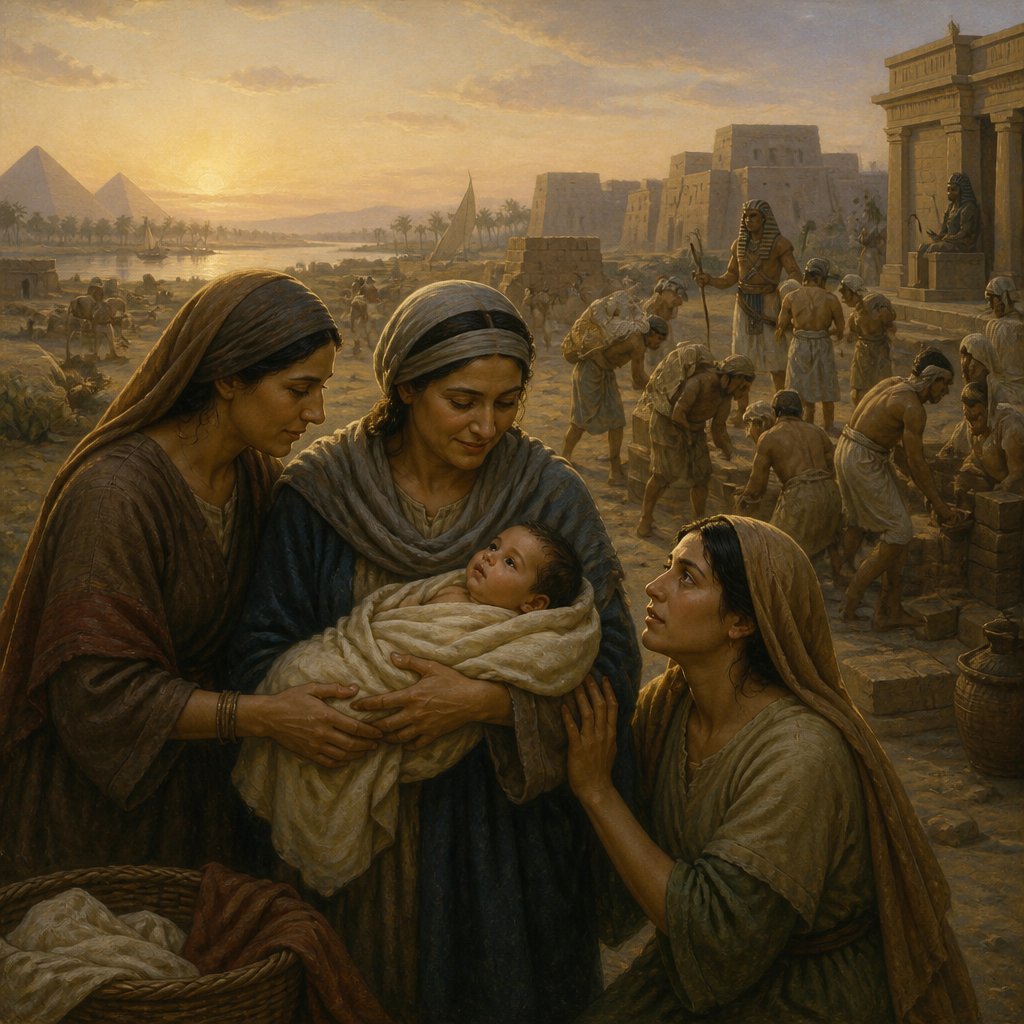
Exodus 1:11-22 in the King James Version (KJV) of the Bible reads:
11 Therefore they did set over them taskmasters to afflict them with their burdens. And they built for Pharaoh treasure cities, Pithom and Raamses.
12 But the more they afflicted them, the more they multiplied and grew. And they were grieved because of the children of Israel.
13 And the Egyptians made the children of Israel to serve with rigour:
14 And they made their lives bitter with hard bondage, in morter, and in brick, and in all manner of service in the field: all their service, wherein they made them serve, was with rigour.
15 And the king of Egypt spake to the Hebrew midwives, of which the name of the one was Shiphrah, and the name of the other Puah:
16 And he said, When ye do the office of a midwife to the Hebrew women, and see them upon the stools; if it be a son, then ye shall kill him: but if it be a daughter, then she shall live.
17 But the midwives feared God, and did not as the king of Egypt commanded them, but saved the men children alive.
18 And the king of Egypt called for the midwives, and said unto them, Why have ye done this thing, and have saved the men children alive?
19 And the midwives said unto Pharaoh, Because the Hebrew women are not as the Egyptian women; for they are lively, and are delivered ere the midwives come in unto them.
20 Therefore God dealt well with the midwives: and the people multiplied, and waxed very mighty.
21 And it came to pass, because the midwives feared God, that he made them houses.
22 And Pharaoh charged all his people, saying, Every son that is born ye shall cast into the river, and every daughter ye shall save alive.
The passage from Exodus 1:11-22 depicts the oppressive and cruel treatment of the Israelites by the Egyptian Pharaoh and his officials. The themes of oppression, courage, and divine intervention are prevalent throughout this passage.
The Israelites had settled in Egypt during the time of Joseph, eventually becoming a large and prosperous community. However, as time passed, a new Pharaoh arose who did not know Joseph, and he became fearful of the Israelites' growing numbers and power. To curb their influence, he subjected them to hard labor and mistreatment, forcing them to build treasure cities for him.
Despite the harsh conditions, the Israelites continued to thrive and multiply, which only served to further incite the Pharaoh's anger. Determined to suppress their growth, he ordered the Hebrew midwives to kill any male babies born to the Israelite women. However, the midwives, Shiphrah and Puah, feared God and refused to obey the Pharaoh's command. Their bravery and steadfast commitment to preserving life in the face of adversity is an exemplary display of courage and moral integrity.
God rewarded the midwives for their faithfulness by granting them families of their own and allowing the Israelites to prosper even more. This demonstrates the overarching theme of divine intervention and protection in times of hardship. Despite the Pharaoh's cruel and tyrannical rule, God's providence ultimately prevailed.
The symbolism within this passage is also significant. The Pharaoh's command to kill the Hebrew male babies represents a broader pattern of infanticide and genocide throughout history. It serves as a chilling reminder of the destructive power of fear and prejudice, as well as the resilience of those who stand up against injustice.
In a broader context, this passage also foreshadows the eventual liberation of the Israelites from Egyptian bondage. It sets the stage for the emergence of Moses as the leader of the Israelites and the eventual exodus from Egypt, marking a pivotal moment in the history of the Jewish people.
In conclusion, Exodus 1:11-22 is a profound and poignant passage that offers valuable insights into the themes of oppression, courage, and divine intervention. It speaks to the enduring human struggle for freedom and justice, as well as the redemptive power of faith and perseverance in the face of adversity. It serves as a timeless reminder of the triumph of good over evil and the enduring hope for liberation and deliverance.
Have questions about Exodus 1:11-22?
Dive deeper into this scripture with Bible Chat — an AI-powered tool for exploring God's Word through conversation. Ask questions, get context, and grow in your understanding of the Bible.
Get Our Apps


Exodus 1:11-22 Artwork
"So they put slave masters over them to oppress them with forced labor, and they built Pithom and Rameses as store cities for Pharaoh. But the more they were oppressed, the more they multiplied and spread; so the Egyptians came to dread the Israelites and worked them ruthlessly. They made their lives bitter with harsh labor in brick and mortar and with all kinds of work in the fields; in all their harsh labor the Egyptians worked them ruthlessly. The king of Egypt said to the Hebrew midwives, whose names were Shiphrah and Puah, “When you are helping the Hebrew women during childbirth on the delivery stool, if you see that the baby is a boy, kill him; but if it is a girl, let her live.” The midwives, however, feared God and did not do what the king of Egypt had told them to do; they let the boys live. Then the king of Egypt summoned the midwives and asked them, “Why have you done this? Why have you let the boys live?” The midwives answered Pharaoh, “Hebrew women are not like Egyptian women; they are vigorous and give birth before the midwives arrive.” So God was kind to the midwives and the people increased and became even more numerous. And because the midwives feared God, he gave them families of their own. Then Pharaoh gave this order to all his people: “Every Hebrew boy that is born you must throw into the Nile, but let every girl live.”" - Exodus 1:11-22

Exodus 1:11-22 - "So they put slave masters over them to oppress them with forced labor, and they built Pithom and Rameses as store cities for Pharaoh. But the more they were oppressed, the more they multiplied and spread; so the Egyptians came to dread the Israelites and worked them ruthlessly. They made their lives bitter with harsh labor in brick and mortar and with all kinds of work in the fields; in all their harsh labor the Egyptians worked them ruthlessly. The king of Egypt said to the Hebrew midwives, whose names were Shiphrah and Puah, “When you are helping the Hebrew women during childbirth on the delivery stool, if you see that the baby is a boy, kill him; but if it is a girl, let her live.” The midwives, however, feared God and did not do what the king of Egypt had told them to do; they let the boys live. Then the king of Egypt summoned the midwives and asked them, “Why have you done this? Why have you let the boys live?” The midwives answered Pharaoh, “Hebrew women are not like Egyptian women; they are vigorous and give birth before the midwives arrive.” So God was kind to the midwives and the people increased and became even more numerous. And because the midwives feared God, he gave them families of their own. Then Pharaoh gave this order to all his people: “Every Hebrew boy that is born you must throw into the Nile, but let every girl live.”"

Exodus 22:28

Exodus 22:28

Exodus 22:28

Exodus 22:28

Exodus 22:28

Exodus 22:28

Exodus 22:5

Exodus 22:5

Exodus 22:28

Exodus 22:5

Exodus 22:28

Exodus 22:28

Exodus 22:28

Exodus 22:28

Exodus 25:10-22

Exodus 17:11

Exodus 1:11 - "Therefore they did set over them taskmasters to afflict them with their burdens. And they built for Pharaoh treasure cities, Pithom and Raamses."
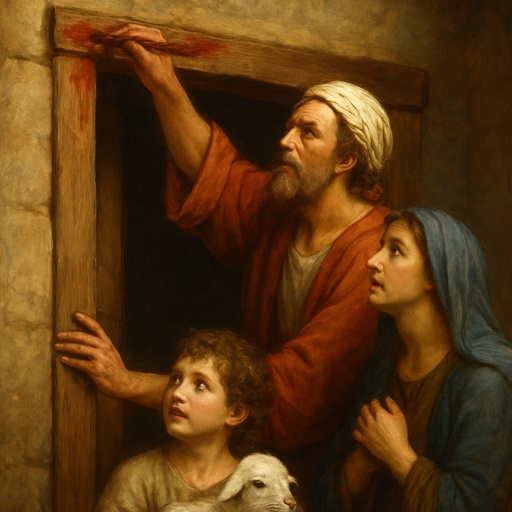
exodus 12:22 painting door lintel with blood

1 Samuel 22:11-13

Acts 1:1-11
Exodus 22:11 - "Then shall an oath of the LORD be between them both, that he hath not put his hand unto his neighbour's goods; and the owner of it shall accept thereof, and he shall not make it good."

The Plague on the Firstborn - Exodus 11, 12:1-30

The Plague on the Firstborn - Exodus 11, 12:1-30

Acts 1:1-11
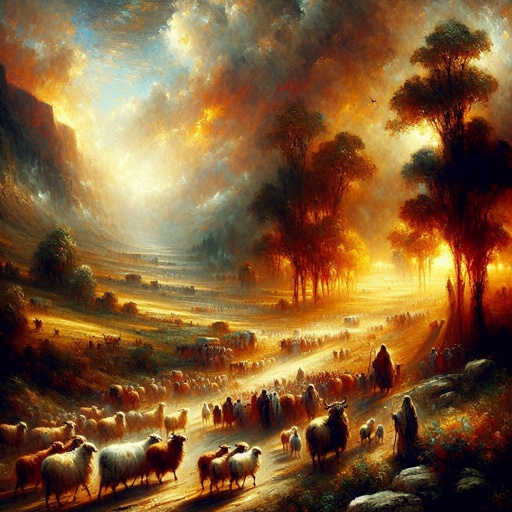
Exodus 22:1 - "If a man shall steal an ox, or a sheep, and kill it, or sell it; he shall restore five oxen for an ox, and four sheep for a sheep."

Exodus 22:22 - "¶ Ye shall not afflict any widow, or fatherless child."

Exodus 1:1 - "Now these are the names of the children of Israel, which came into Egypt; every man and his household came with Jacob."

Exodus 15:22