What does Exodus 1:15 mean?
“And the king of Egypt spake to the Hebrew midwives, of which the name of the one was Shiphrah, and the name of the other Puah:” — Exodus 1:15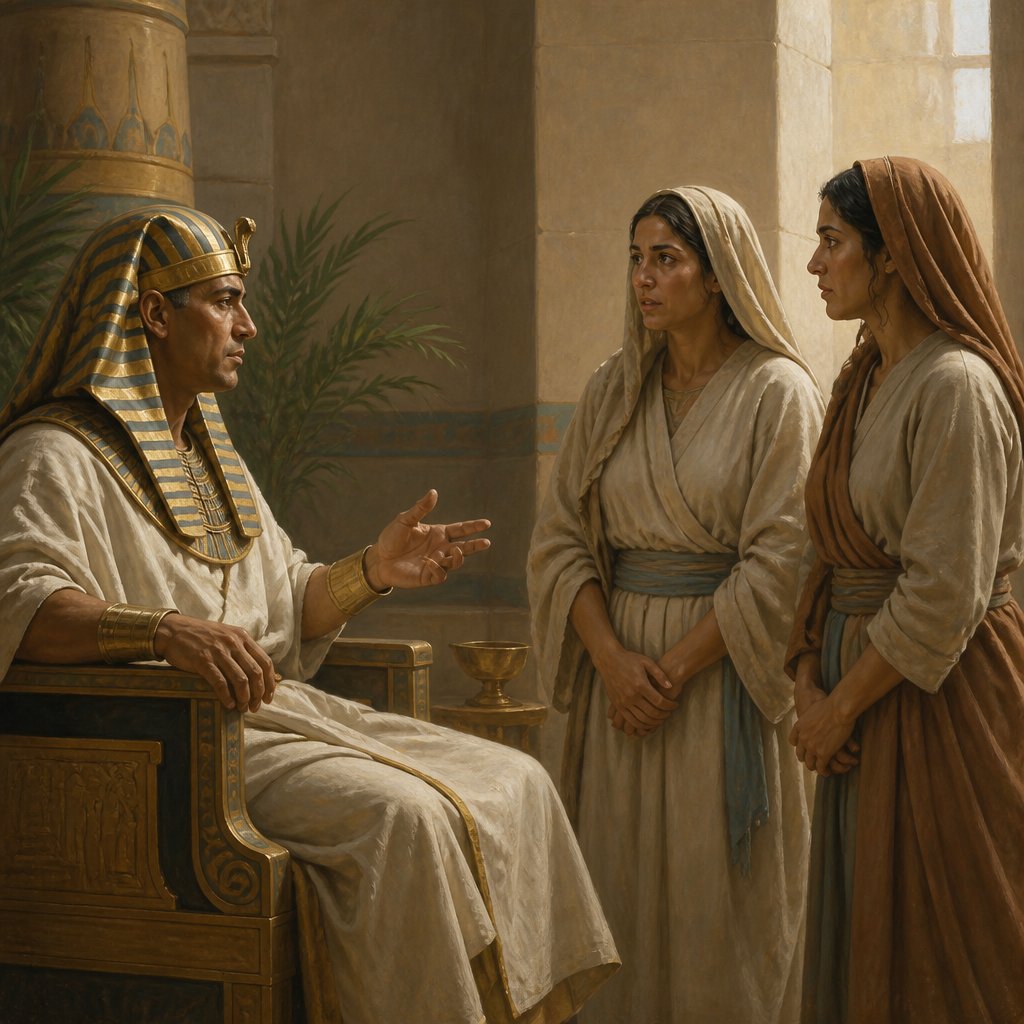
Exodus 1:15 in the King James Version of the Bible reads, "And the king of Egypt spake to the Hebrew midwives, of which the name of the one was Shiphrah, and the name of the other Puah."
This verse is a small but significant part of the larger narrative of the book of Exodus, which tells the story of the Israelites' liberation from slavery in Egypt. The verse takes place during a time when the Israelites were oppressed and enslaved by the Pharaoh of Egypt. It specifically focuses on the actions of two Hebrew midwives, Shiphrah and Puah, who are given a crucial role in the preservation of the Israelite boys and, ultimately, the fulfillment of God's promise to His people.
The context of this verse begins with the oppression of the Israelites by the Pharaoh. The Pharaoh became concerned about the growing population of the Israelites in Egypt, so he issued a decree to the Hebrew midwives commanding them to kill all male Hebrew babies at birth. This was a brutal and desperate attempt to control the Israelite population and prevent any potential uprising or rebellion.
The significance of the verse lies in the courage and faithfulness of Shiphrah and Puah in the face of this ruthless decree. When the Pharaoh ordered them to kill the male babies, they disobeyed him and allowed the boys to live. Their act of civil disobedience was an act of faith in God and a demonstration of their commitment to preserving life, regardless of the consequences.
The story of Shiphrah and Puah can be seen as a demonstration of the broader theme of resistance to oppression and the preservation of life. Despite the immense power of the Pharaoh and the risk to their own lives, they chose to defy his orders and protect the innocent. Their actions were not only a demonstration of courage and faith, but also a powerful example of God working through ordinary people to accomplish His purposes.
The symbolism in this verse is multi-faceted. Shiphrah and Puah can be seen as symbols of resistance against injustice and symbols of faith and obedience to God. Their refusal to comply with the Pharaoh's orders foreshadows the eventual liberation of the Israelites from bondage. Their actions also demonstrate the value of all human life and the importance of standing up for the oppressed and marginalized.
In a broader sense, the story of Shiphrah and Puah also speaks to the power of God to work through ordinary people to bring about His will. Despite being relatively unknown and seemingly insignificant, their faithfulness and actions had a profound impact on the course of history and the fulfillment of God's promises to His people.
In conclusion, Exodus 1:15 in the King James Version of the Bible is a brief but significant verse that is part of the larger narrative of the book of Exodus. It tells the story of the courage and faithfulness of two Hebrew midwives, Shiphrah and Puah, who defied the Pharaoh's orders to kill male Hebrew babies. Their actions demonstrate the themes of resistance to oppression, the preservation of life, and the power of God to work through ordinary people to accomplish His purposes. The story of Shiphrah and Puah serves as a powerful example of faith in the face of adversity and a reminder of the value of all human life.
Get our apps


Artwork for Exodus 1:15

Exodus 1:15 - "¶ And the king of Egypt spake to the Hebrew midwives, of which the name of the one was Shiphrah, and the name of the other Puah:"
"¶ And the king of Egypt spake to the Hebrew midwives, of which the name of the one was Shiphrah, and the name of the other Puah:" - Exodus 1:15

Exodus 28:15-30

Exodus 8:1-15

Exodus 1:5 - "And all the souls that came out of the loins of Jacob were seventy souls: for Joseph was in Egypt already."

The Plague of Frogs - Exodus 8:1-15

The Plague of Frogs - Exodus 8:1-15

The Plague of Frogs - Exodus 8:1-15

The Plague of Frogs - Exodus 8:1-15

The Plague of Frogs - Exodus 8:1-15
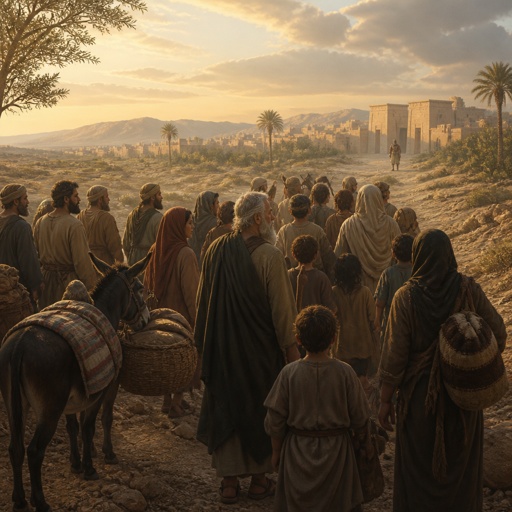
"And all the souls that came out of the loins of Jacob were seventy souls: for Joseph was in Egypt already." - Exodus 1:5

exodus 15

Exodus 15:22

Exodus 15:23

Exodus 15:5
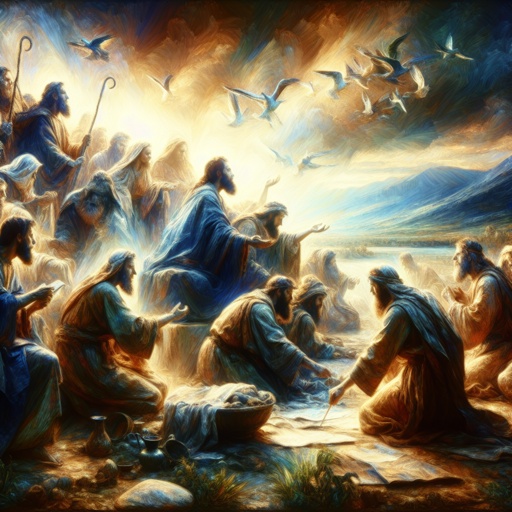
Exodus 15:23

Exodus 15:21

Exodus 20:15 - "Thou shalt not steal."

Exodus 15:1 - "Then sang Moses and the children of Israel this song unto the LORD, and spake, saying, I will sing unto the LORD, for he hath triumphed gloriously: the horse and his rider hath he thrown into the sea."

Exodus 15:18 - "The LORD shall reign for ever and ever."

Exodus 15:3 - "The LORD is a man of war: the LORD is his name."

Exodus 17:15 - "And Moses built an altar, and called the name of it Jehovah-nissi:"

Exodus 25:15 - "The staves shall be in the rings of the ark: they shall not be taken from it."

Exodus 24:15 - "And Moses went up into the mount, and a cloud covered the mount."

Exodus 15:5 - "The depths have covered them: they sank into the bottom as a stone."

"Thou shalt not steal." - Exodus 20:15
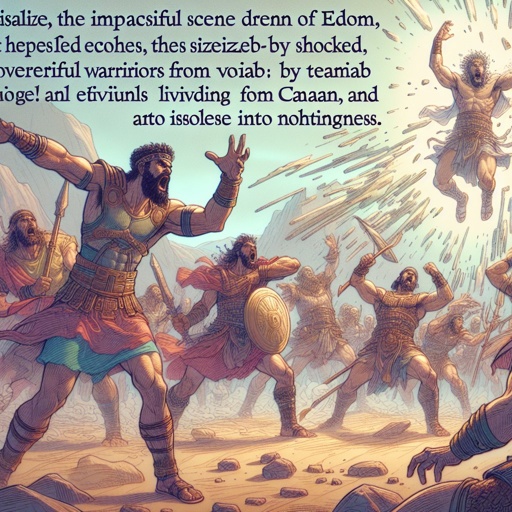
Exodus 15:15 - "Then the dukes of Edom shall be amazed; the mighty men of Moab, trembling shall take hold upon them; all the inhabitants of Canaan shall melt away."

Exodus 26:15 - "¶ And thou shalt make boards for the tabernacle of shittim wood standing up."

Exodus 39:15 - "And they made upon the breastplate chains at the ends, of wreathen work of pure gold."

Exodus 15:24 - "And the people murmured against Moses, saying, What shall we drink?"