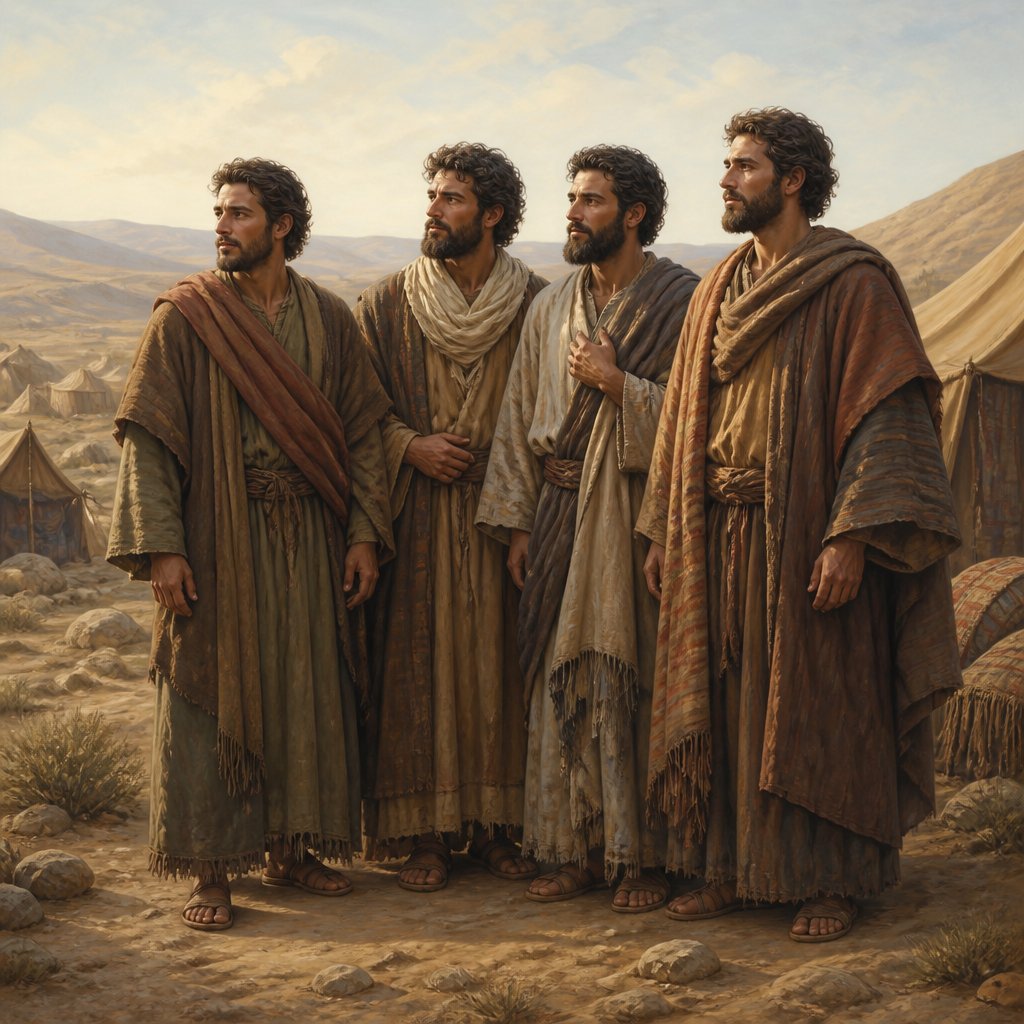
Exodus 1:2 (KJV) - "Reuben, Simeon, Levi, and Judah,"
The book of Exodus is the second book of the Bible and is a crucial part of the Old Testament. It is a historical narrative that describes the oppression and liberation of the Israelites from slavery in Egypt under the leadership of Moses. The verse "Reuben, Simeon, Levi, and Judah" may seem simple at first glance, but it holds a significant meaning within the context of the Israelite nation and their journey towards freedom.
First and foremost, the listing of these four names is a key element in the genealogy of the Israelite people. These four were the sons of Jacob, also known as Israel, who played a central role in the formation of the twelve tribes of Israel. Each of these sons represents a crucial part of the nation's identity and history. Reuben, as the firstborn, symbolizes the beginning of the nation. Simeon and Levi are associated with their actions in the city of Shechem (Genesis 34), and Judah is the ancestor of King David and the royal line of the Israelites. This brief mention of their names sets the stage for the subsequent events that will unfold in the book of Exodus.
Furthermore, this verse sets the tone for the themes of unity and identity that will be explored throughout the book. The mention of these four names serves as a reminder of the collective heritage and common ancestry of the Israelites. Despite their diverse backgrounds and experiences, they are all descendants of the same ancestors and are bound together by their shared history and traditions. This theme of unity becomes especially significant as the Israelites face the challenges of slavery and oppression in Egypt. It underscores the importance of standing together as a community and supporting one another in the face of adversity.
Additionally, the choice to specifically list these four names also carries symbolic meaning. In biblical numerology, the number four is often associated with creation, the earth, and the material world. In this verse, the mention of four names can be seen as a representation of the earthly existence of the Israelite nation. It serves as a reminder of their physical presence in the world and the challenges they face in their earthly journey. This symbolic interpretation adds depth to the verse and emphasizes the real and tangible nature of the Israelites' struggle for liberation.
In a broader context, the verse also sets the stage for the fulfillment of God's promises to the Israelites. The mentioning of these four names serves as a reminder of the covenant that God made with their ancestors and the fulfillment of His plan for their deliverance. As the narrative progresses, the faithfulness of God and His active involvement in the lives of the Israelites will become evident through the miraculous events of the Exodus. This verse, therefore, serves as a prelude to the unfolding of God's redemptive work for His chosen people.
In conclusion, the seemingly simple verse "Reuben, Simeon, Levi, and Judah" holds significant meaning within the context of the book of Exodus. It not only establishes the genealogy of the Israelite nation but also sets the tone for the themes of unity, identity, and the fulfillment of God's promises that will be explored throughout the narrative. Its inclusion in the biblical text serves as a powerful reminder of the rich heritage and collective journey of the Israelites, as well as a testament to the faithfulness of God in guiding and delivering His people.
Get our apps


Artwork for Exodus 1:2

Exodus 1:2 - "Reuben, Simeon, Levi, and Judah,"
"Reuben, Simeon, Levi, and Judah," - Exodus 1:2

Exodus 2:1 - "And there went a man of the house of Levi, and took to wife a daughter of Levi."
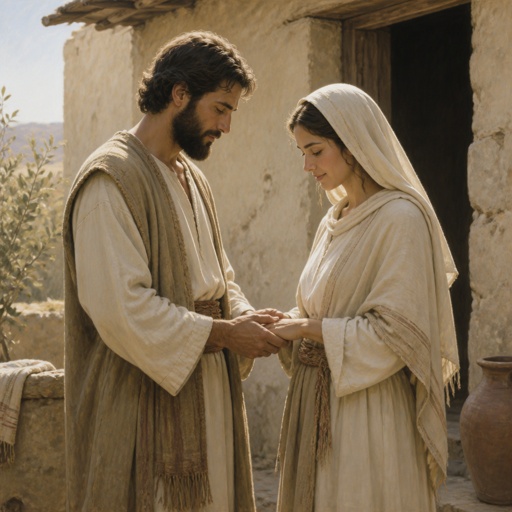
"And there went a man of the house of Levi, and took to wife a daughter of Levi." - Exodus 2:1

Exodus 20:2
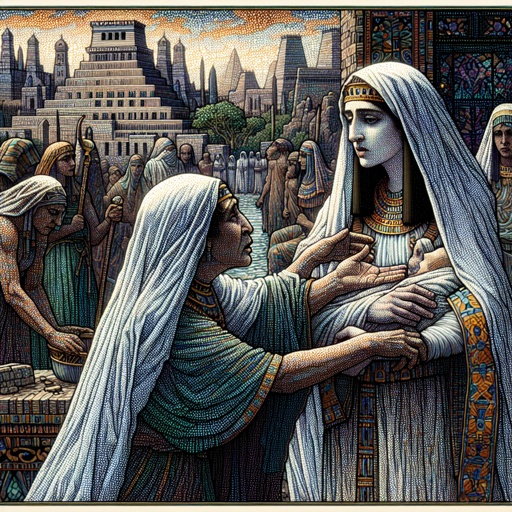
Exodus 2:9

Exodus 2:19

Exodus 2:9

exodus 3

Exodus 19

Exodus 24;16

Exodus 27:1-8

Exodus 24:17

Exodus 4:1-5

exodus 26:1

Exodus 23:20

Exodus 22:28

Exodus 17:3

Exodus 23:4

Exodus 24:16

Exodus 23:28

Exodus 25:16

Exodus 25:31

Exodus 22:28

Exodus 27:20

Exodus 22:28

Exodus 28:4

Exodus 12:33

Exodus 28:4

Exodus 22:28