What does Exodus 24:10 mean?
"And they saw the God of Israel: and there was under his feet as it were a paved work of a sapphire stone, and as it were the body of heaven in his clearness." - Exodus 24:10
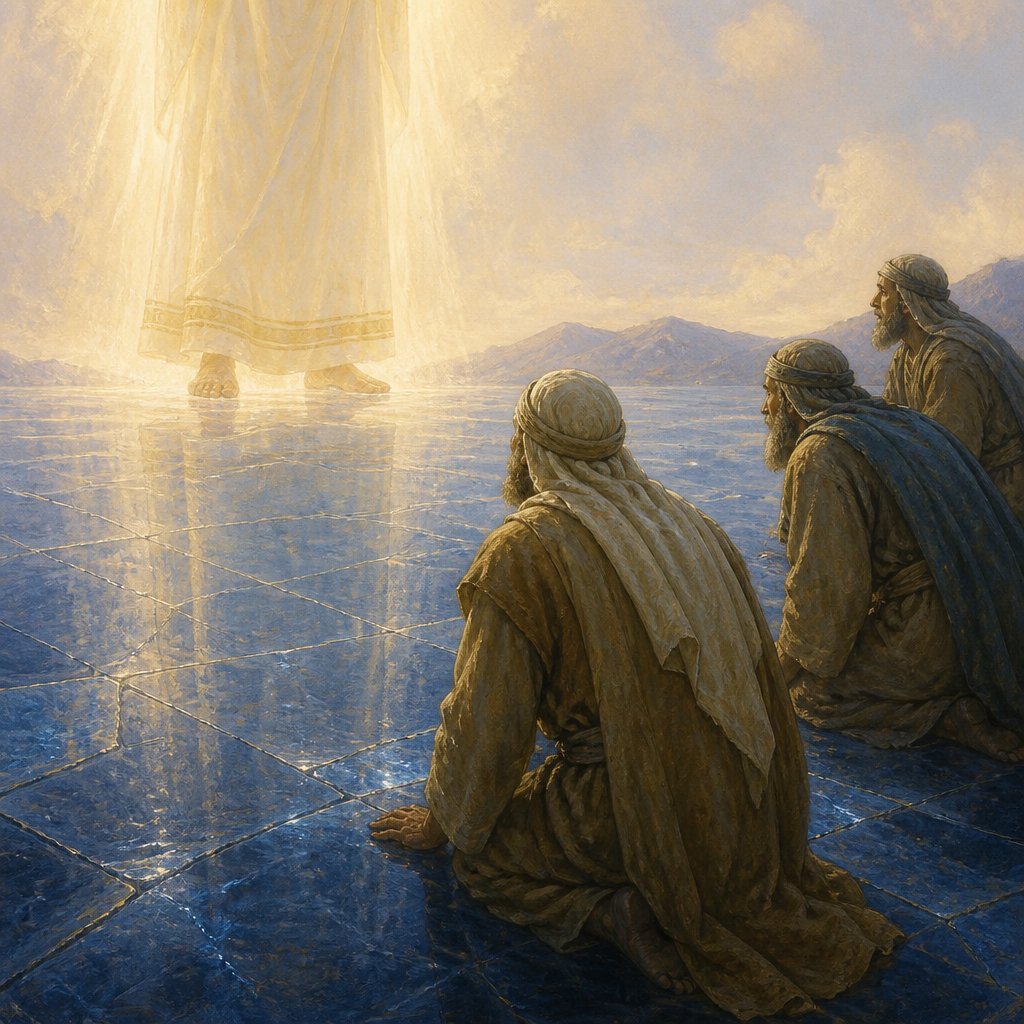
Exodus 24:10 (KJV): "And they saw the God of Israel: and there was under his feet as it were a paved work of a sapphire stone, and as it were the body of heaven in his clearness."
The book of Exodus is one of the foundational texts of the Bible, and Exodus 24:10 is a particularly powerful and enigmatic verse. This verse takes place in the narrative just after Moses and the Israelites have received the Ten Commandments from God at Mount Sinai. The people have committed to following the laws given to them by God, and now they are granted a vision of the divine.
The verse begins with the phrase "And they saw the God of Israel." This is a striking and almost mysterious statement, as the general understanding is that God cannot be seen by mortal eyes. In fact, just a few chapters earlier in Exodus 20:4, God commands "Thou shalt not make unto thee any graven image, or any likeness of any thing that is in heaven above, or that is in the earth beneath, or that is in the water under the earth." It is clear that the very nature of God is beyond human comprehension and representation. This raises the question of what the phrase "they saw the God of Israel" truly means.
The description that follows provides some insight into this encounter. The verse says that under God's feet there was "a paved work of a sapphire stone, and as it were the body of heaven in his clearness." The image of God standing on a pavement of sapphire stone is a vivid and striking one. Sapphire is a precious and beautiful gemstone, and its blue color is often associated with the sky and the divine. In this vision, the sapphire stone under God's feet can be seen as symbolizing the stability, strength, and eternal nature of God's presence. It is a fitting image for the steadfastness and unchanging nature of the divine.
The mention of "the body of heaven in his clearness" further emphasizes the celestial and otherworldly nature of this vision. This description can be seen as representing the purity, majesty, and transcendence of God. It suggests a sense of awe and wonder that must have overwhelmed the Israelites as they beheld this vision. The heavenly imagery also serves to underscore the holiness and supremacy of God, who stands above and beyond the earthly realm.
In this verse, the sapphire stone and the body of heaven can be seen as symbols that point to the incomprehensible nature of God. They evoke a sense of the divine that is beyond human understanding and representation. This encounter with the God of Israel serves to reaffirm the Israelites' commitment to following His commandments and guidance.
In terms of themes, Exodus 24:10 touches on the themes of the divine presence, revelation, and the transcendence of God. It speaks to the mystery and wonder of encountering the divine, and the awe-inspiring nature of God's presence. The verse underscores the significance of the divine-human relationship, as well as the need for reverence and obedience in the face of the divine.
In a broader context, this verse can be seen as part of the larger narrative of God's covenant with the Israelites. The vision of the God of Israel serves as a powerful and defining moment in the establishment of this covenant. It reinforces the Israelites' recognition of God as their one true God and the supreme authority in their lives. This encounter has a lasting impact on the Israelites and shapes their understanding of their relationship with God.
Overall, Exodus 24:10 is a verse that offers a profound and thought-provoking insight into the incomprehensible nature of God. It invites us to contemplate the awe-inspiring and transcendent aspects of the divine, and to consider our own response to encountering the presence of God. This verse holds significance for believers as a reminder of the majesty, holiness, and sovereignty of God.
Have questions about Exodus 24:10?
Dive deeper into this scripture with Bible Chat — an AI-powered tool for exploring God's Word through conversation. Ask questions, get context, and grow in your understanding of the Bible.
Get Our Apps


Exodus 24:10 Artwork

Exodus 24:10 – "Under his feet was something like a pavement made of lapis lazuli, as bright blue as the sky."

Exodus 24:10 - "And they saw the God of Israel: and there was under his feet as it were a paved work of a sapphire stone, and as it were the body of heaven in his clearness."
"And they saw the God of Israel: and there was under his feet as it were a paved work of a sapphire stone, and as it were the body of heaven in his clearness." - Exodus 24:10

Exodus 10:24 - "¶ And Pharaoh called unto Moses, and said, Go ye, serve the LORD; only let your flocks and your herds be stayed: let your little ones also go with you."

Exodus 24:16

Exodus 24:17

Exodus 24:4

Exodus 7:14-24

Exodus 24:9-11

Exodus 6:24 - "And the sons of Korah; Assir, and Elkanah, and Abiasaph: these are the families of the Korhites."

Exodus 24:15 - "And Moses went up into the mount, and a cloud covered the mount."

The Plague of Blood - Exodus 7:14-24

The Plague of Blood - Exodus 7:14-24

The Plague of Blood - Exodus 7:14-24

The Plague of Blood - Exodus 7:14-24

Exodus 7:10

Exodus 7:10

Exodus 21:24 - "Eye for eye, tooth for tooth, hand for hand, foot for foot,"

Exodus 37:24 - "Of a talent of pure gold made he it, and all the vessels thereof."

Exodus 10:12
Exodus 17:10

Exodus 10:12

Exodus 10:12

Genesis 24:10

Exodus 12:24 - "And ye shall observe this thing for an ordinance to thee and to thy sons for ever."

Exodus 15:24 - "And the people murmured against Moses, saying, What shall we drink?"

Exodus 24:9 - "¶ Then went up Moses, and Aaron, Nadab, and Abihu, and seventy of the elders of Israel:"

Exodus 2:24 - "And God heard their groaning, and God remembered his covenant with Abraham, with Isaac, and with Jacob."

Nehemiah 10:24 - "Hallohesh, Pileha, Shobek,"

Exodus 30:24 - "And of cassia five hundred shekels, after the shekel of the sanctuary, and of oil olive an hin:"