What does Exodus 28:34 mean?
“A golden bell and a pomegranate, a golden bell and a pomegranate, upon the hem of the robe round about.” — Exodus 28:34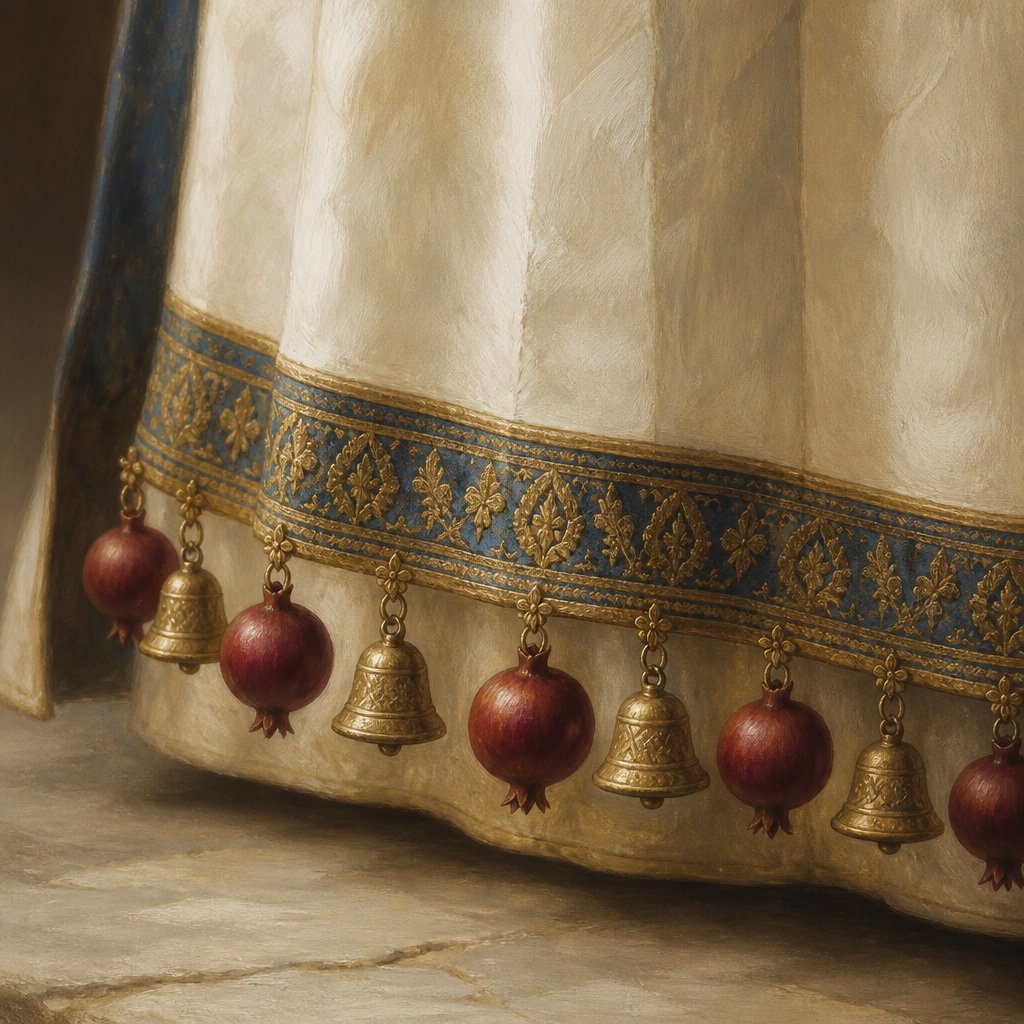
Exodus 28:34 in the King James Version of the Bible states, "A golden bell and a pomegranate, a golden bell and a pomegranate, upon the hem of the robe round about." This verse is a part of a larger passage in the book of Exodus that describes the elaborate garments that the high priest of Israel was to wear when he performed his duties in the tabernacle. These garments were to be made of fine materials and adorned with symbolic elements that held deep religious and spiritual significance.
In this specific verse, the high priest's robe is described as having bells and pomegranates sewn onto the hem. The repeated pattern of a golden bell followed by a pomegranate is meant to represent the consistent nature of the high priest's role and the duality of his responsibilities. The sound of the bells ringing as the high priest moved served as a reminder to the people that he was carrying out his sacred duties in the presence of God.
The symbolism of the pomegranate is also rich and deeply rooted in biblical tradition. The pomegranate is often associated with abundance, fertility, and prosperity in the Bible. It is mentioned in various contexts throughout the Old Testament, and its seeds are believed to represent the commandments of God. The pomegranate's presence on the high priest's garment serves as a reminder of God's blessings and the importance of following His commandments.
The use of gold in the bells and pomegranates also speaks to the high priest's connection with divinity and the sacredness of his role. Gold is a precious metal that is often associated with purity and worth, and its presence on the high priest's robe underscores the holiness of the office he holds. Additionally, the use of gold highlights the significance of the high priest's role as an intermediary between the Israelites and God.
The context of this verse is important for understanding its meaning within the larger narrative of the book of Exodus. The instructions for the high priest's garments are part of the detailed system of worship and sacrifice that God lays out for the Israelites as they journey through the wilderness. As God's chosen people, the Israelites are to maintain a special relationship with God, and the various rituals and symbols described in Exodus are meant to reinforce this relationship.
The theme of holiness and separation is prevalent throughout the book of Exodus, and it is particularly emphasized in the instructions for the high priest's garments. The high priest is set apart from the rest of the Israelites and is given a unique role in mediating between God and the people. The elaborate and symbolic nature of his garments serves as a visual representation of his sacred status and the importance of his work.
In a broader sense, the use of bells and pomegranates in this verse also reflects the importance of tradition and symbolism in religious practice. The Israelites were instructed to follow a specific set of rituals and customs in their worship of God, and the details of the high priest's garments are a part of this larger framework. The repeated pattern of the golden bell and pomegranate serves as a reminder of the continuity and importance of these traditions in the religious life of the Israelites.
In conclusion, Exodus 28:34 in the King James Version of the Bible is a verse that holds deep meaning and significance within the larger narrative of the book of Exodus. The details of the high priest's garments, including the inclusion of bells and pomegranates, reflect the religious and spiritual symbolism that permeates the text. Through these symbols, the verse communicates the holiness of the high priest's role, the importance of tradition and ritual, and the unique relationship between the Israelites and God.
Get our apps


Artwork for Exodus 28:34

Exodus 28:34 - "A golden bell and a pomegranate, a golden bell and a pomegranate, upon the hem of the robe round about."
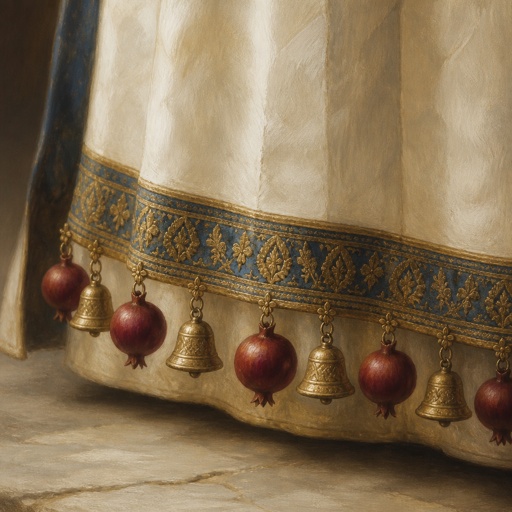
"A golden bell and a pomegranate, a golden bell and a pomegranate, upon the hem of the robe round about." - Exodus 28:34

Exodus 28:31-34

Exodus 28:31-34

Exodus 28:31-34

Exodus 34:28 - "And he was there with the LORD forty days and forty nights; he did neither eat bread, nor drink water. And he wrote upon the tables the words of the covenant, the ten commandments."

Exodus 34:28 - "And he was there with the LORD forty days and forty nights; he did neither eat bread, nor drink water. And he wrote upon the tables the words of the covenant, the ten commandments."

Exodus 40: 34

Genesis 34:28 - "They took their sheep, and their oxen, and their asses, and that which was in the city, and that which was in the field,"

Numbers 34:28 - "And the prince of the tribe of the children of Naphtali, Pedahel the son of Ammihud."

Exodus 34:17 - "Thou shalt make thee no molten gods."

Exodus 22:28

Exodus 28:4

Exodus 22:28

Exodus 23:28

Exodus 32:28

Exodus 22:28

Exodus 22:28

Exodus 22:28

exodus 28 ephod

Exodus 28:4

Exodus 28:4

Exodus 22:28

Exodus 28:4

Exodus 22:28

Exodus 22:28

Exodus 22:28

Exodus 22:28

Exodus 22:28

Exodus 23:28