What does Exodus 28:38 mean?
“And it shall be upon Aaron’s forehead, that Aaron may bear the iniquity of the holy things, which the children of Israel shall hallow in all their holy gifts; and it shall be always upon his forehead, that they may be accepted before the LORD.” — Exodus 28:38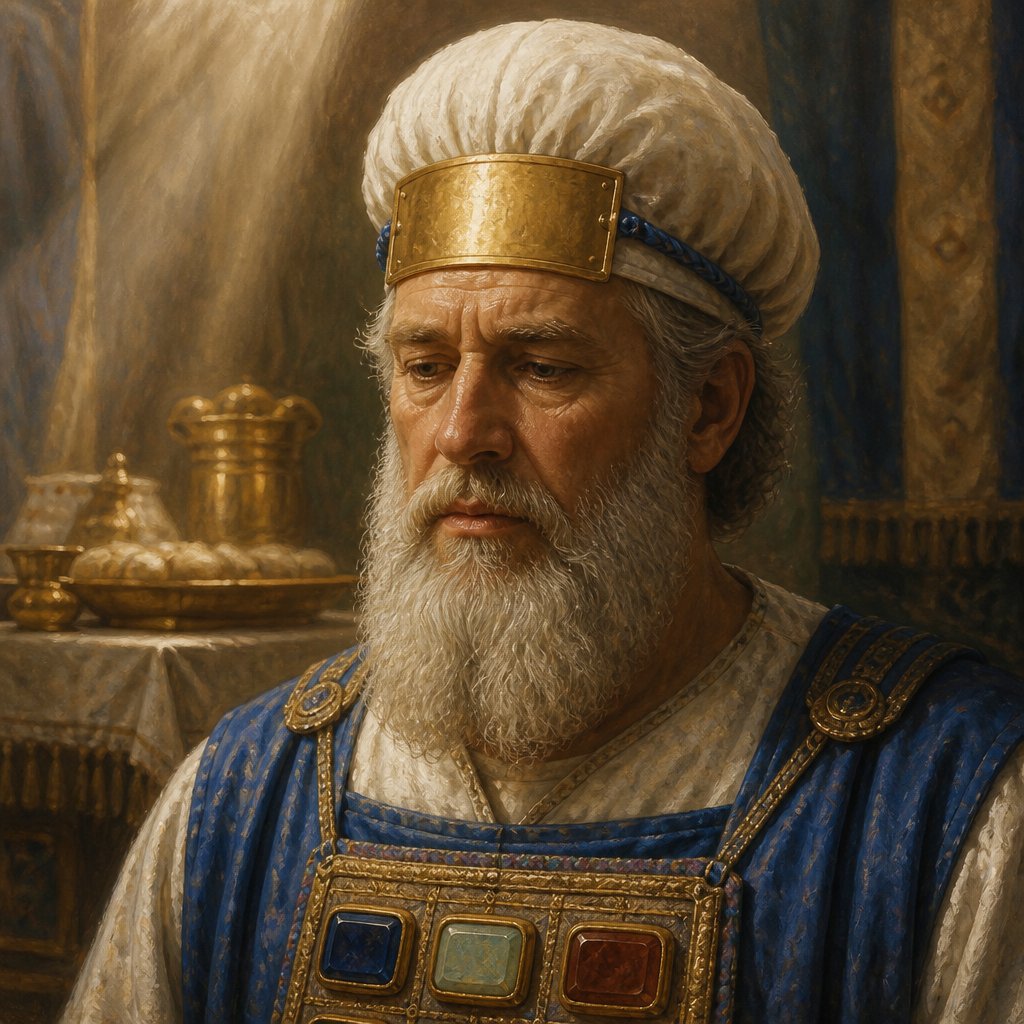
Exodus 28:38 KJV states: "And it shall be upon Aaron's forehead, that Aaron may bear the iniquity of the holy things, which the children of Israel shall hallow in all their holy gifts; and it shall be always upon his forehead, that they may be accepted before the Lord."
This verse is part of a larger passage that describes the garments and accessories that the high priest, Aaron, is to wear as he carries out his duties in the tabernacle. In this particular verse, the focus is on the significance of the gold plate worn on Aaron's forehead, known as the "plate of the holy crown".
First and foremost, this verse emphasizes the role of the high priest as an intermediary between the people of Israel and God. The high priest, by bearing the iniquity of the holy things, is acting as a representative for the people and taking on their sins and transgressions. This concept is central to the role of the high priest in ancient Israelite religion, where he would make atonement for the people and ensure that their offerings and gifts were acceptable to God.
The idea of atonement is central to understanding the meaning of this verse. In the Old Testament, atonement was the process by which sin was forgiven and reconciled, and it often involved a blood sacrifice. The high priest played a crucial role in this process, and his actions were essential for the people to be in right standing with God. The plate on Aaron's forehead symbolized his authority and responsibility in this process, as well as the burden he carried for the people.
Another important theme in this verse is the concept of holiness. The high priest's garments and accessories were intended to set him apart as holy and consecrated for the service of God. The plate on his forehead served as a constant reminder of this separation and dedication to God. Additionally, the verse emphasizes the holiness of the gifts and offerings brought by the people, and the high priest's role in ensuring that they are made acceptable before the Lord.
The context of this verse is also significant for understanding its meaning. The book of Exodus details the establishment of the covenant between God and the people of Israel, as well as the construction of the tabernacle, which served as a sacred space for worship and sacrifice. The instructions for the high priest's garments and accessories were a crucial part of this narrative, setting the stage for the ritual practices that would define Israelite religion for centuries to come.
From a symbolic perspective, the plate on Aaron's forehead can be seen as a representation of his authority and connection to God. The placement of the plate on his forehead, the seat of knowledge and consciousness, suggests a spiritual enlightenment and divine communication. It also signifies the high priest's role as a leader and guide for the people, carrying their burdens and interceding on their behalf before God.
In conclusion, Exodus 28:38 KJV illuminates the significance of the high priest's role in carrying the iniquity of the holy things and ensuring that the people's offerings are acceptable before the Lord. It speaks to the themes of atonement, holiness, and the high priest's authority and responsibility in the religious practices of ancient Israel. The verse's rich symbolism and its place in the broader narrative of Exodus make it a powerful expression of the Israelites' understanding of their relationship with God and the path to reconciliation and righteousness.
Get our apps


Artwork for Exodus 28:38

Exodus 28:38 - "And it shall be upon Aaron's forehead, that Aaron may bear the iniquity of the holy things, which the children of Israel shall hallow in all their holy gifts; and it shall be always upon his forehead, that they may be accepted before the LORD."
"And it shall be upon Aaron's forehead, that Aaron may bear the iniquity of the holy things, which the children of Israel shall hallow in all their holy gifts; and it shall be always upon his forehead, that they may be accepted before the LORD." - Exodus 28:38

Exodus 38:28 - "And of the thousand seven hundred seventy and five shekels he made hooks for the pillars, and overlaid their chapiters, and filleted them."
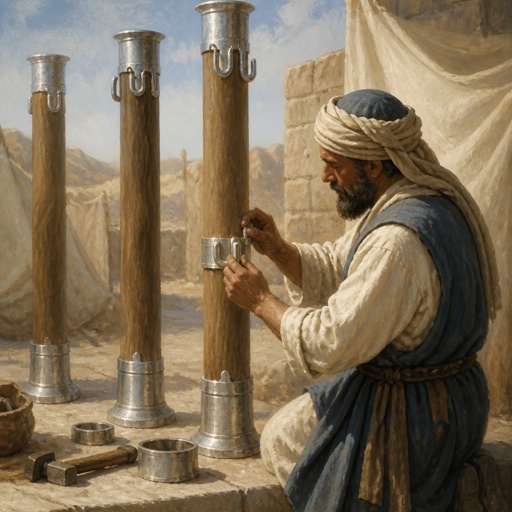
"And of the thousand seven hundred seventy and five shekels he made hooks for the pillars, and overlaid their chapiters, and filleted them." - Exodus 38:28

Exodus 40.17-38

Exodus 38:13 - "And for the east side eastward fifty cubits."

Job 38:28 - "Hath the rain a father? or who hath begotten the drops of dew?"

Exodus 25:38 - "And the tongs thereof, and the snuffdishes thereof, shall be of pure gold."

The Plague on the Firstborn - Exodus 12:29-38

The Plague on the Firstborn - Exodus 12:29-38

The Plague on the Firstborn - Exodus 12:29-38

Exodus 38:6 - "And he made the staves of shittim wood, and overlaid them with brass."

Exodus 38:20 - "And all the pins of the tabernacle, and of the court round about, were of brass."

Exodus 38:29 - "And the brass of the offering was seventy talents, and two thousand and four hundred shekels."

Exodus 38:16 - "All the hangings of the court round about were of fine twined linen."

Exodus 39:38 - "And the golden altar, and the anointing oil, and the sweet incense, and the hanging for the tabernacle door,"

Exodus 22:28

Exodus 28:4

Exodus 23:28

Exodus 22:28

Exodus 32:28

Exodus 22:28

Exodus 22:28

exodus 28 ephod

Exodus 22:28

Exodus 28:4

Exodus 28:4

Exodus 22:28

Exodus 28:4

Exodus 22:28