What does Exodus 30:19 mean?
"For Aaron and his sons shall wash their hands and their feet thereat:" - Exodus 30:19
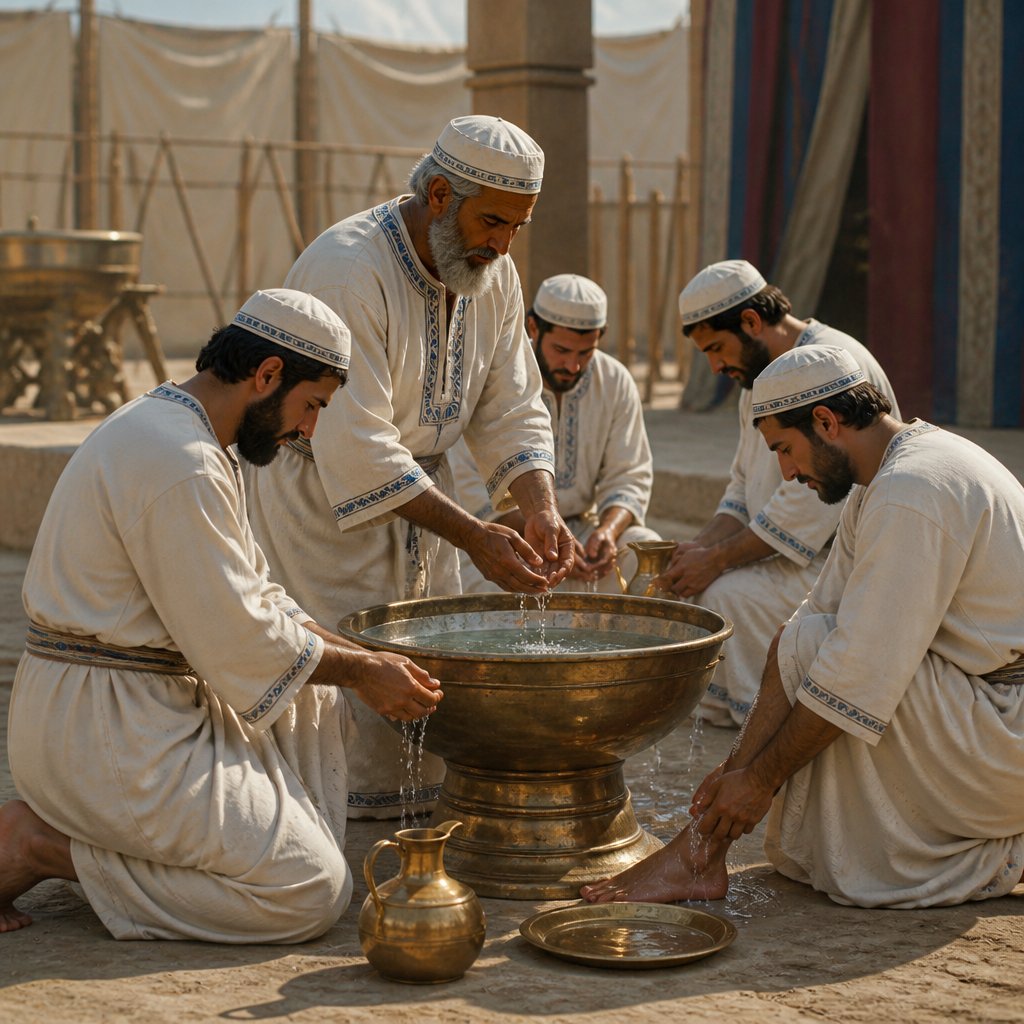
Exodus 30:19 (KJV) says, "For Aaron and his sons shall wash their hands and their feet thereat."
In order to fully understand the significance of this verse, it is important to delve into the context of the book of Exodus and the role of Aaron and his sons in the religious practices of the Israelites. The book of Exodus is the second book in the Hebrew Bible and plays a crucial role in understanding the history and religious practices of the ancient Israelites. This particular verse is part of a larger passage that details the instructions for the construction and use of the tabernacle, the sacred tent that symbolized the presence of God among the Israelites during their time in the wilderness.
Aaron was the older brother of Moses and was appointed as the high priest of the Israelites. His sons, Nadab, Abihu, Eleazar, and Ithamar, served as priests under his leadership. The verse in question is part of a set of instructions given to Moses by God for the consecration of Aaron and his sons as priests. These instructions were meant to signify the holiness and purity required for them to fulfill their roles as mediators between God and the people of Israel.
The act of washing hands and feet was a symbolic ritual that served as a physical and spiritual cleansing before approaching the sacred space of the tabernacle and performing their priestly duties. This act of purification was a way for the priests to acknowledge their own imperfections and the need for spiritual cleanliness in order to stand before a holy God. In this sense, the act of washing served as a reminder of the sacredness of their calling and the need to approach God with reverence and humility.
The themes present in this verse are those of ritual purity, holiness, and reverence for God. In the Hebrew Bible, cleanliness and purity were highly valued concepts that permeated all aspects of life, including religious practices. The act of washing before performing sacred duties was a way of acknowledging the need for spiritual purity and the separation from the impurities of the world. This act symbolized a conscious effort to approach the divine presence with respect and humility, recognizing the inherent holiness of God.
Furthermore, the symbolism of washing in this verse also points to the metaphor of spiritual cleansing and renewal. By engaging in this ritual, Aaron and his sons were not only physically washing away impurities but also symbolically cleansing their souls and renewing their commitment to God and their priestly duties. This act of purification was a constant reminder of the need for spiritual renewal and the continual striving for holiness in their lives.
In conclusion, Exodus 30:19 is a verse that holds deep symbolic and spiritual significance within the religious context of the Israelites. It serves as a reminder of the importance of ritual purity, reverence for God, and the constant need for spiritual cleansing and renewal. The act of washing hands and feet was a tangible expression of the priests' dedication to their sacred calling and their acknowledgement of the holiness of God. This verse continues to hold relevance for modern-day believers as a reminder of the continual need for spiritual purity and the pursuit of holiness in our lives.
Have questions about Exodus 30:19?
Dive deeper into this scripture with Bible Chat — an AI-powered tool for exploring God's Word through conversation. Ask questions, get context, and grow in your understanding of the Bible.
Get Our Apps


Exodus 30:19 Artwork

Exodus 30:19 - "For Aaron and his sons shall wash their hands and their feet thereat:"
"For Aaron and his sons shall wash their hands and their feet thereat:" - Exodus 30:19

Exodus 26:30

Exodus 28:30-43

Exodus 28:15-30

Exodus 30:30 - "And thou shalt anoint Aaron and his sons, and consecrate them, that they may minister unto me in the priest's office."

Genesis 19-30

Deuteronomy 30:19:

Exodus 16:30 - "So the people rested on the seventh day."

Exodus 30:17 - "¶ And the LORD spake unto Moses, saying,"

Exodus 30:11 - "¶ And the LORD spake unto Moses, saying,"

Exodus 19

Philippians 2:19-30

Exodus 30:22 - "¶ Moreover the LORD spake unto Moses, saying,"

Exodus 8:30 - "And Moses went out from Pharaoh, and intreated the LORD."

Exodus 30:26 - "And thou shalt anoint the tabernacle of the congregation therewith, and the ark of the testimony,"

Exodus 30:27 - "And the table and all his vessels, and the candlestick and his vessels, and the altar of incense,"

Exodus 30:5 - "And thou shalt make the staves of shittim wood, and overlay them with gold."

Exodus 25:30 - "And thou shalt set upon the table shewbread before me alway."

Exodus 2:19

Exodus 30:28 - "And the altar of burnt offering with all his vessels, and the laver and his foot."

The Plague on the Firstborn - Exodus 11, 12:1-30

Matthew 19:30 - "But many that are first shall be last; and the last shall be first."

Exodus 30:24 - "And of cassia five hundred shekels, after the shekel of the sanctuary, and of oil olive an hin:"

The Plague on the Firstborn - Exodus 11, 12:1-30

Genesis 30:19 - "And Leah conceived again, and bare Jacob the sixth son."

Exodus 27:19-20

Exodus 12:1-19

Exodus 9:30 - "But as for thee and thy servants, I know that ye will not yet fear the LORD God."

Exodus 40:30 - "¶ And he set the laver between the tent of the congregation and the altar, and put water there, to wash withal."