What does Exodus 30:23 mean?
"Take thou also unto thee principal spices, of pure myrrh five hundred shekels, and of sweet cinnamon half so much, even two hundred and fifty shekels, and of sweet calamus two hundred and fifty shekels," - Exodus 30:23
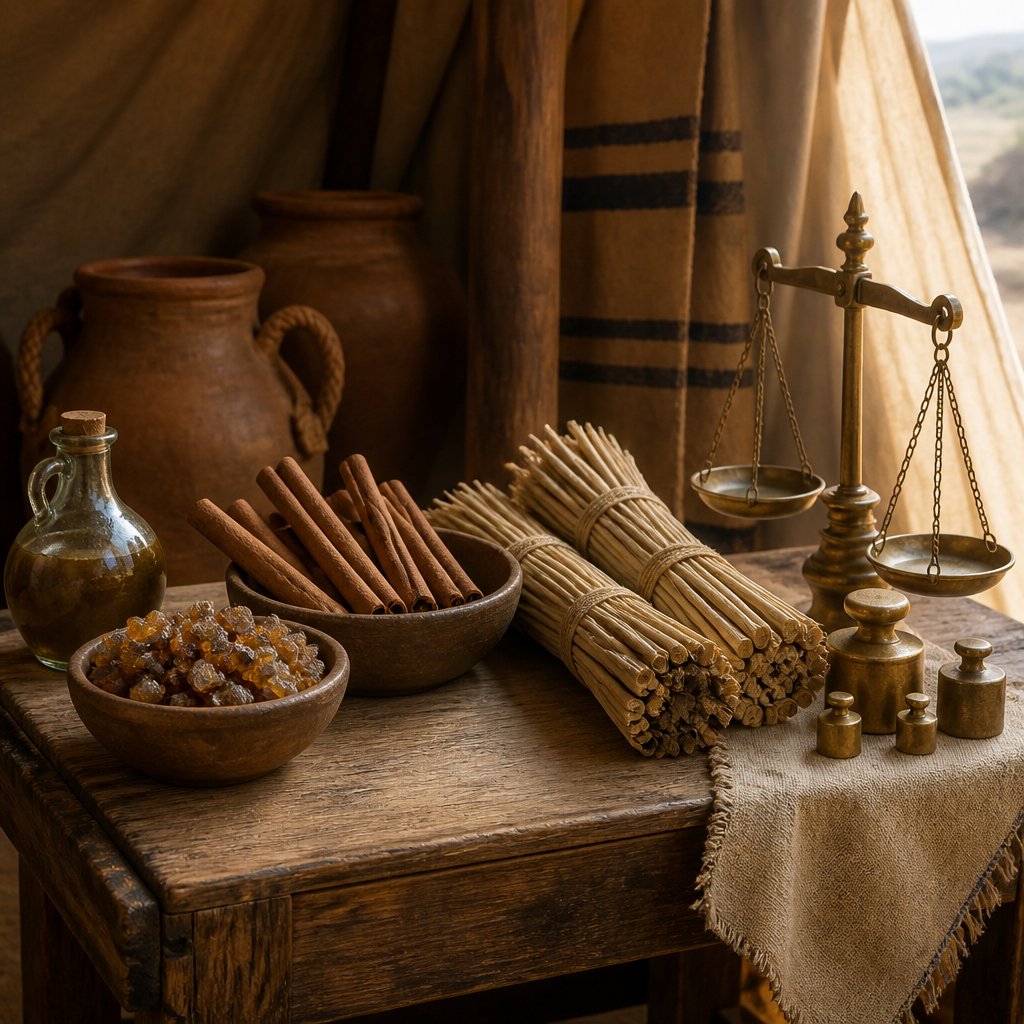
Exodus 30:23 in the King James Version of the Bible reads, "Take thou also unto thee principal spices, of pure myrrh five hundred shekels, and of sweet cinnamon half so much, even two hundred and fifty shekels, and of sweet calamus two hundred and fifty shekels."
This verse is part of the instructions given to Moses by God for the making of the anointing oil. The anointing oil was a special, consecrated oil used for anointing priests, tabernacle furnishings, and various utensils used in the temple worship. The anointing oil was a powerful symbol of the presence and power of God.
In this verse, God specifically commands Moses to take certain principal spices: pure myrrh, sweet cinnamon, and sweet calamus. Each of these components has a specific significance and symbolism within the context of the anointing oil.
Myrrh is a resin obtained from the Commiphora myrrh tree and has a bitter taste and a pleasant smell. Symbolically, myrrh represents bitterness, suffering, and death, but also healing and restoration. In the New Testament, myrrh is one of the gifts presented to Jesus at his birth, prefiguring his sacrificial death and burial.
Cinnamon is a sweet-smelling spice obtained from the bark of trees in the Cinnamomum genus. Symbolically, cinnamon represents sweetness, richness, and the pleasant fragrance of God's presence. In ancient times, cinnamon was highly valued and sought after, often being used as a precious gift or offering.
Calamus, also known as sweet flag, is a fragrant reed that grows in marshy areas. Symbolically, calamus represents joy, sweetness, and the presence of God. Its fragrance and sweetness were thought to be pleasing to God and were used in various spiritual and religious rituals.
These ingredients were to be combined with olive oil to form the anointing oil, creating a fragrant and consecrated mixture that represented the presence and power of God. The use of specific, carefully chosen ingredients underscores the importance of symbolism and ritual within the religious practices of the ancient Israelites.
The anointing oil served several important purposes within the religious context of the Israelites. It was used to consecrate and set apart priests for their sacred duties, symbolizing their special anointing and commissioning by God. The anointing oil was also used to consecrate the tabernacle and its furnishings, signifying their sanctity and holy purpose.
The anointing oil was a tangible representation of the divine presence and power, and it served as a means of connecting the physical and spiritual realms. Its use in the consecration of priests and sacred objects conveyed the idea that God's presence and blessing were being transferred to those things, making them holy and set apart for divine purposes.
In a broader sense, the anointing oil can also be seen as a foreshadowing of Christ, who is described in the New Testament as the "Anointed One" or the Messiah. The use of the anointing oil in the Old Testament points forward to the ultimate anointing of Jesus as the chosen and special representative of God.
In conclusion, Exodus 30:23 and the instructions for the making of the anointing oil provide a rich and symbolic glimpse into the religious practices and beliefs of the ancient Israelites. The specific ingredients and careful preparation of the anointing oil reflect the importance of symbolism and ritual in their worship, as well as the central role of the divine presence and blessing in their religious life. Ultimately, the anointing oil serves as a powerful reminder of the sacred and the divine and points forward to the ultimate anointing of Jesus Christ as the chosen and special representative of God.
Have questions about Exodus 30:23?
Dive deeper into this scripture with Bible Chat — an AI-powered tool for exploring God's Word through conversation. Ask questions, get context, and grow in your understanding of the Bible.
Get Our Apps


Exodus 30:23 Artwork
Exodus 30:23 - "Take thou also unto thee principal spices, of pure myrrh five hundred shekels, and of sweet cinnamon half so much, even two hundred and fifty shekels, and of sweet calamus two hundred and fifty shekels,"
"Take thou also unto thee principal spices, of pure myrrh five hundred shekels, and of sweet cinnamon half so much, even two hundred and fifty shekels, and of sweet calamus two hundred and fifty shekels," - Exodus 30:23
Exodus 23:30 - "By little and little I will drive them out from before thee, until thou be increased, and inherit the land."
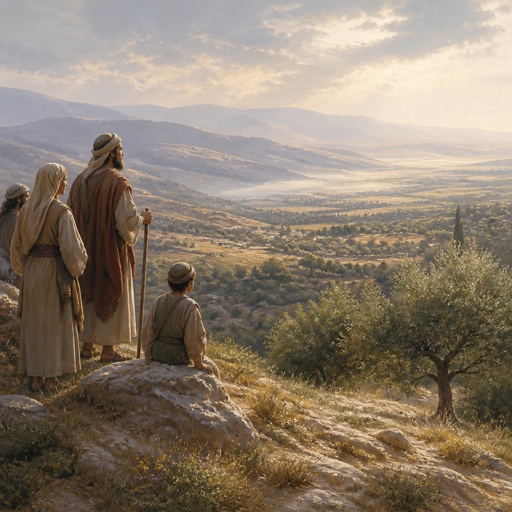
"By little and little I will drive them out from before thee, until thou be increased, and inherit the land." - Exodus 23:30

Exodus 26:30

Numbers 23:30

Exodus 28:30-43

Exodus 28:15-30

Exodus 30:30 - "And thou shalt anoint Aaron and his sons, and consecrate them, that they may minister unto me in the priest's office."

Daniel 2:30-23

Exodus 16:30 - "So the people rested on the seventh day."

Exodus 30:17 - "¶ And the LORD spake unto Moses, saying,"

Exodus 30:11 - "¶ And the LORD spake unto Moses, saying,"

Exodus 30:22 - "¶ Moreover the LORD spake unto Moses, saying,"

Exodus 23:20

Exodus 23:4

Exodus 23:28

Exodus 15:23

2 Samuel 23:30 - "Benaiah the Pirathonite, Hiddai of the brooks of Gaash,"

Exodus 8:30 - "And Moses went out from Pharaoh, and intreated the LORD."

Exodus 23:4
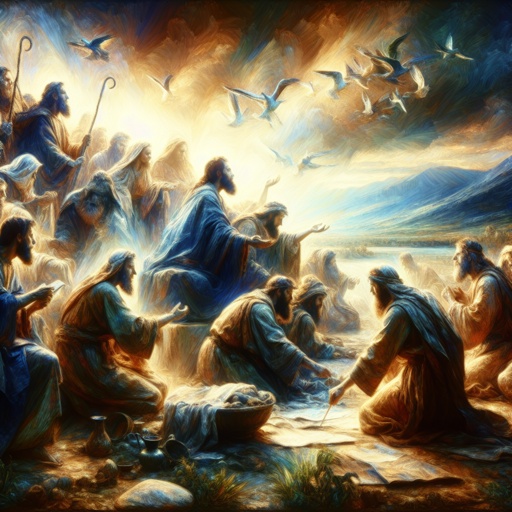
Exodus 15:23

Exodus 23:28

Proverbs 23:30 - "They that tarry long at the wine; they that go to seek mixed wine."

Exodus 30:26 - "And thou shalt anoint the tabernacle of the congregation therewith, and the ark of the testimony,"

Exodus 30:19 - "For Aaron and his sons shall wash their hands and their feet thereat:"

Exodus 23:27-28

Exodus 30:27 - "And the table and all his vessels, and the candlestick and his vessels, and the altar of incense,"

Exodus 30:5 - "And thou shalt make the staves of shittim wood, and overlay them with gold."

Exodus 25:30 - "And thou shalt set upon the table shewbread before me alway."