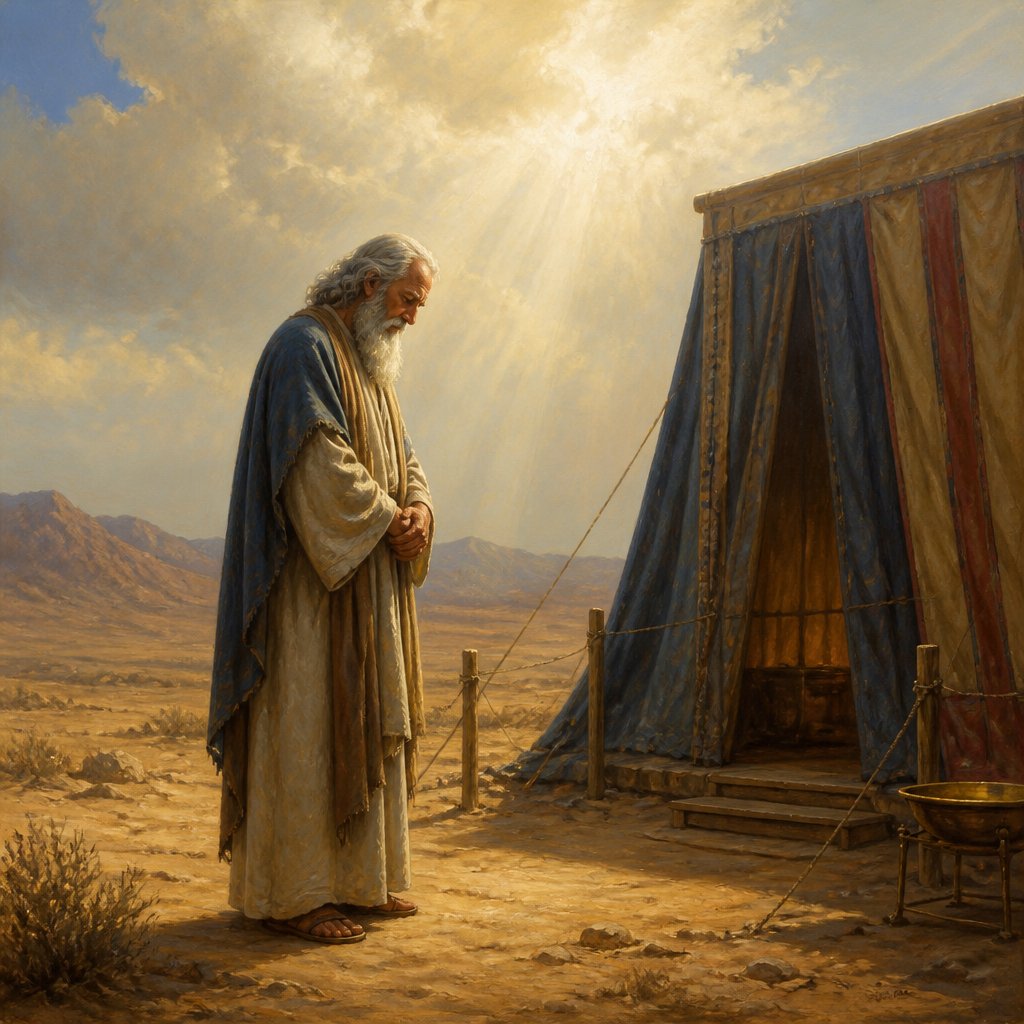
Exodus 30:17 (KJV) states, "And the Lord spake unto Moses, saying, thou shalt also make a laver of brass, and his foot also of brass, to wash withal: and thou shalt put it between the tabernacle of the congregation and the altar, and thou shalt put water therein."
This verse comes from the Book of Exodus in the Old Testament, specifically from the section detailing the instructions for constructing the tabernacle, the holy place of worship for the Israelites during their time in the wilderness. The verse is part of the detailed instructions given to Moses by God for the construction and operation of the tabernacle. In this specific verse, God instructs Moses to create a basin, or laver, made of brass for the priests to use for washing between the tabernacle and the altar.
The first symbolic meaning of this verse is the idea of purification and cleansing. In the religious context of the Old Testament, cleanliness and purity were essential for approaching and serving God. The act of washing with water before performing religious rituals was a physical and symbolic way for the priests to cleanse themselves of impurities and symbolize their readiness to approach God in holiness.
The use of brass for the laver is also significant. Brass is a strong, durable metal, and its use for the laver symbolizes the strength and durability needed for spiritual purification. It also symbolizes the steadfastness and immutability of God's requirements for purity and holiness.
The placement of the laver between the tabernacle and the altar is also symbolic. The tabernacle was the dwelling place of God's presence, and the altar was the place of sacrifice. Placing the laver between these two sacred locations symbolizes the necessary preparation and purification required before approaching God and offering worship and sacrifice.
Additionally, the use of water in the laver is significant. Water is a common symbol of purification, renewal, and life in many religious traditions. In the Christian tradition, water is used in the sacrament of baptism to symbolize the washing away of sin and the new birth in Christ. The use of water in the laver serves as a reminder of the need for spiritual cleansing and renewal in order to approach God in worship and service.
The instructions for the construction and use of the laver in this verse also point to the meticulous attention to detail and the importance of order and structure in the worship of God. God's instructions to Moses for the construction of the tabernacle and its furnishings demonstrate the reverence and respect due to the holiness of God and the need for careful adherence to His commands.
Overall, Exodus 30:17 carries several important themes and symbols, including purification, holiness, preparation, and reverence for God. It serves as a reminder of the importance of spiritual cleansing and purity in approaching God, as well as the need for reverence and obedience in worship and service. The verse also reflects the meticulous care and attention to detail required in the worship of God, emphasizing the holiness and orderliness of His presence.
Get our apps


Artwork for Exodus 30:17

Exodus 30:17 - "¶ And the LORD spake unto Moses, saying,"
"¶ And the LORD spake unto Moses, saying," - Exodus 30:17

Exodus 26:30

Exodus 28:30-43

Exodus 28:15-30

Exodus 30:30 - "And thou shalt anoint Aaron and his sons, and consecrate them, that they may minister unto me in the priest's office."

Exodus 16:30 - "So the people rested on the seventh day."

Exodus 30:11 - "¶ And the LORD spake unto Moses, saying,"

Exodus 30:22 - "¶ Moreover the LORD spake unto Moses, saying,"

Mark 10:17-30

Mark 10:17-30

Exodus 8:30 - "And Moses went out from Pharaoh, and intreated the LORD."

Exodus 30:26 - "And thou shalt anoint the tabernacle of the congregation therewith, and the ark of the testimony,"

Exodus 30:19 - "For Aaron and his sons shall wash their hands and their feet thereat:"
Exodus 17:10

Exodus 17:11

Exodus 17:6

Exodus 17:3

Exodus 17:3
Exodus 17:6

Exodus 17:6

Exodus 24:17

Exodus 17:6

Exodus 30:27 - "And the table and all his vessels, and the candlestick and his vessels, and the altar of incense,"

Exodus 30:5 - "And thou shalt make the staves of shittim wood, and overlay them with gold."

Exodus 25:30 - "And thou shalt set upon the table shewbread before me alway."

Exodus 30:28 - "And the altar of burnt offering with all his vessels, and the laver and his foot."

The Plague on the Firstborn - Exodus 11, 12:1-30

Exodus 30:24 - "And of cassia five hundred shekels, after the shekel of the sanctuary, and of oil olive an hin:"

The Plague on the Firstborn - Exodus 11, 12:1-30