What does Exodus 30:32 mean?
“Upon man’s flesh shall it not be poured, neither shall ye make any other like it, after the composition of it: it is holy, and it shall be holy unto you.” — Exodus 30:32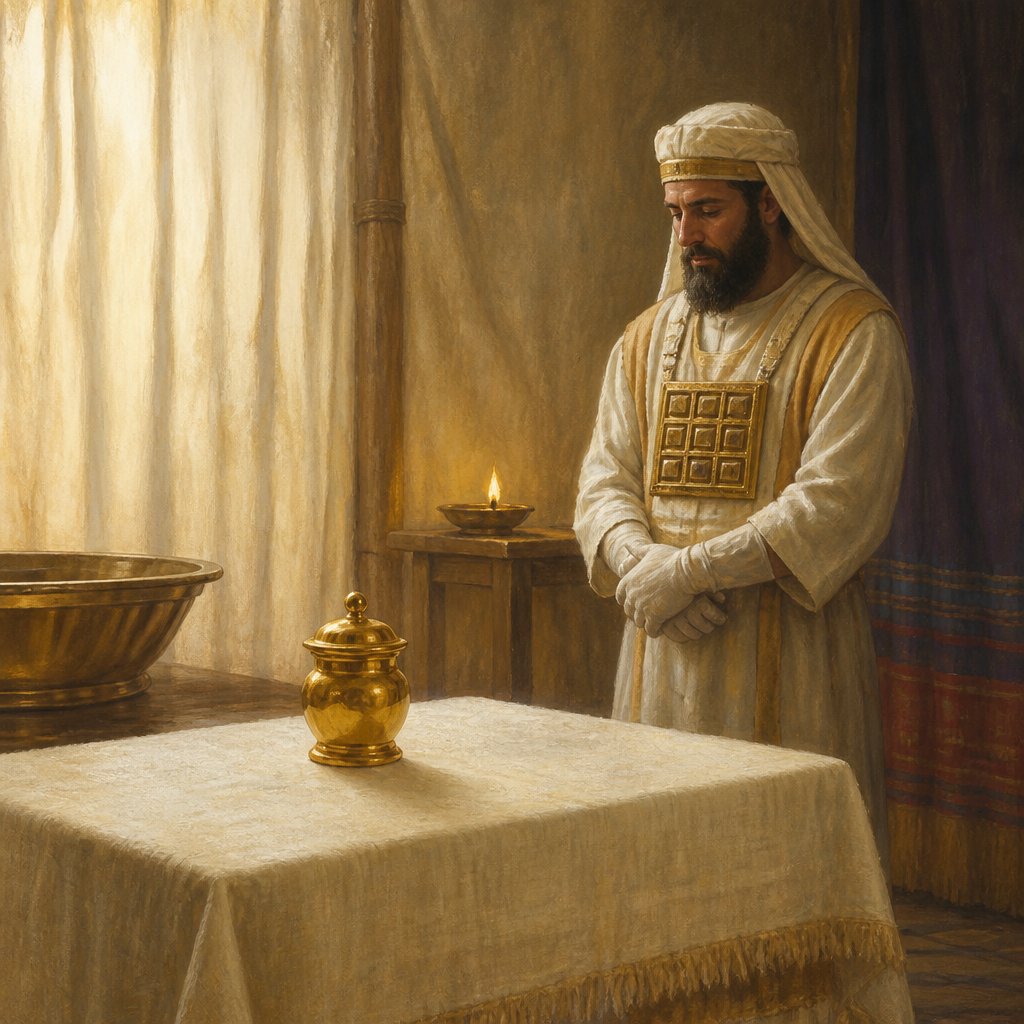
Exodus 30:32 (KJV) states, "Upon man's flesh shall it not be poured, neither shall ye make any other like it, after the composition of it: it is holy, and it shall be holy unto you."
This verse is part of the instructions given by God to Moses for the consecration of the priests and the tabernacle in the Old Testament. The context of this verse is within the broader narrative of God’s covenant with the Israelites and the establishment of the system of sacrificial offerings and worship practices. In this specific passage, God is instructing Moses on the preparation of the holy anointing oil, which is to be used to anoint the priests and the articles of the tabernacle for consecration.
The verse begins with a prohibition against the anointing oil being applied to anyone other than the priests. This underscores the exclusivity and sanctity of the anointing oil, indicating that it is reserved for the consecration of those who have been chosen and set apart for the service of God. This exclusivity serves as a reminder that the priests were set apart for a specific purpose and were expected to live lives of holiness and obedience. Furthermore, the restriction against duplicating the anointing oil emphasizes the uniqueness and sacredness of the oil. It was not to be replicated for common or profane purposes, but was to be used exclusively for the consecration of the priests and the tabernacle.
The verse culminates with the declaration that the anointing oil is holy, and it shall be holy unto the people. This emphasizes the sacred nature of the oil and its significance in the religious practices of the Israelites. The use of the term "holy" underscores the separation and consecration of the oil for divine purposes, designating it as a means of conveying God's blessing and sanctification upon the priests and the tabernacle. It also indicates that those who come into contact with the anointing oil are to regard it with reverence and awe, recognizing its association with the divine presence.
One of the central themes conveyed in Exodus 30:32 is the concept of holiness. The anointing oil is described as holy, signifying its special and set-apart nature. This theme of holiness permeates the entire passage and serves as a reminder of the sacredness and purity that is required in the service of God. It underscores the importance of maintaining reverence and respect for the things that have been dedicated to God's service, as well as the need for personal holiness and dedication to God.
Another significant theme is the idea of exclusivity and divine appointment. The anointing oil is reserved exclusively for the priests and the tabernacle, highlighting the unique role and status of the priesthood within the religious community. This theme underscores the idea that certain individuals and objects have been chosen and set apart for specific purposes within the divine plan. It reinforces the notion that the priests held a special and privileged position in the worship and service of God, and that they were required to conduct themselves in accordance with the standards of holiness and obedience.
Symbolically, the anointing oil can be seen as representing the presence and blessing of God. Its use in the consecration of the priests and the tabernacle signifies the bestowal of divine authority and empowerment. The anointing with oil was a visible sign of being chosen by God and set apart for His service. It symbolized the endowment of spiritual gifts and the enabling of the priests to fulfill their sacred duties. Additionally, the anointing oil can be viewed as a symbol of unity and consecration, as it served to unify the priests and the tabernacle in their shared purpose of worship and service to God. Its application signified the sanctification and dedication of these individuals and objects for worship and service.
In conclusion, Exodus 30:32 provides important insights into the concepts of holiness, exclusivity, and symbolism within the religious practices of the Old Testament. The verse serves to emphasize the sacred nature of the anointing oil and its role in the consecration of the priests and the tabernacle. It underscores the significance of maintaining reverence and respect for the things that have been dedicated to God's service and highlights the unique role and status of the priesthood within the religious community. Additionally, the verse provides symbolic significance to the anointing oil, representing the presence and blessing of God, as well as the unity and consecration of those involved in worship and service.
Get our apps


Artwork for Exodus 30:32

Exodus 30:32 - "Upon man's flesh shall it not be poured, neither shall ye make any other like it, after the composition of it: it is holy, and it shall be holy unto you."
"Upon man's flesh shall it not be poured, neither shall ye make any other like it, after the composition of it: it is holy, and it shall be holy unto you." - Exodus 30:32

Exodus 32:30 - "¶ And it came to pass on the morrow, that Moses said unto the people, Ye have sinned a great sin: and now I will go up unto the LORD; peradventure I shall make an atonement for your sin."

Exodus 32:28

Exodus 32:31-32 So Moses returned to the LORD and said, “Oh, what a great sin these people have committed! They have made gods of gold for themselves. / Yet now, if You would only forgive their sin.... But if not, please blot me out of the book that You have written.” Exodus 32:31-32

Exodus 26:30

Exodus 28:30-43

Exodus 28:15-30

Exodus 30:30 - "And thou shalt anoint Aaron and his sons, and consecrate them, that they may minister unto me in the priest's office."

Exodus 32:32 - "Yet now, if thou wilt forgive their sin--; and if not, blot me, I pray thee, out of thy book which thou hast written."

Exodus 23:32 - "Thou shalt make no covenant with them, nor with their gods."

Exodus 35:32 - "And to devise curious works, to work in gold, and in silver, and in brass,"

Numbers 32:30 - "But if they will not pass over with you armed, they shall have possessions among you in the land of Canaan."

Exodus 16:30 - "So the people rested on the seventh day."

Exodus 9:32 - "But the wheat and the rie were not smitten: for they were not grown up."

The Plague of Flies - Exodus 8:20-32

Exodus 30:17 - "¶ And the LORD spake unto Moses, saying,"

Exodus 30:11 - "¶ And the LORD spake unto Moses, saying,"

The Plague of Flies - Exodus 8:20-32.

The Plague of Flies - Exodus 8:20-32

Exodus 30:22 - "¶ Moreover the LORD spake unto Moses, saying,"

Exodus 32:35 - "And the LORD plagued the people, because they made the calf, which Aaron made."

Exodus 8:30 - "And Moses went out from Pharaoh, and intreated the LORD."

Genesis 32:30 - "And Jacob called the name of the place Peniel: for I have seen God face to face, and my life is preserved."

Exodus 32:16 - "And the tables were the work of God, and the writing was the writing of God, graven upon the tables."

Exodus 32:14 - "And the LORD repented of the evil which he thought to do unto his people."

Exodus 30:26 - "And thou shalt anoint the tabernacle of the congregation therewith, and the ark of the testimony,"

Exodus 30:19 - "For Aaron and his sons shall wash their hands and their feet thereat:"

Exodus 32:9 - "And the LORD said unto Moses, I have seen this people, and, behold, it is a stiffnecked people:"

Exodus 30:27 - "And the table and all his vessels, and the candlestick and his vessels, and the altar of incense,"