What does Exodus 33:4 mean?
“And when the people heard these evil tidings, they mourned: and no man did put on him his ornaments.” — Exodus 33:4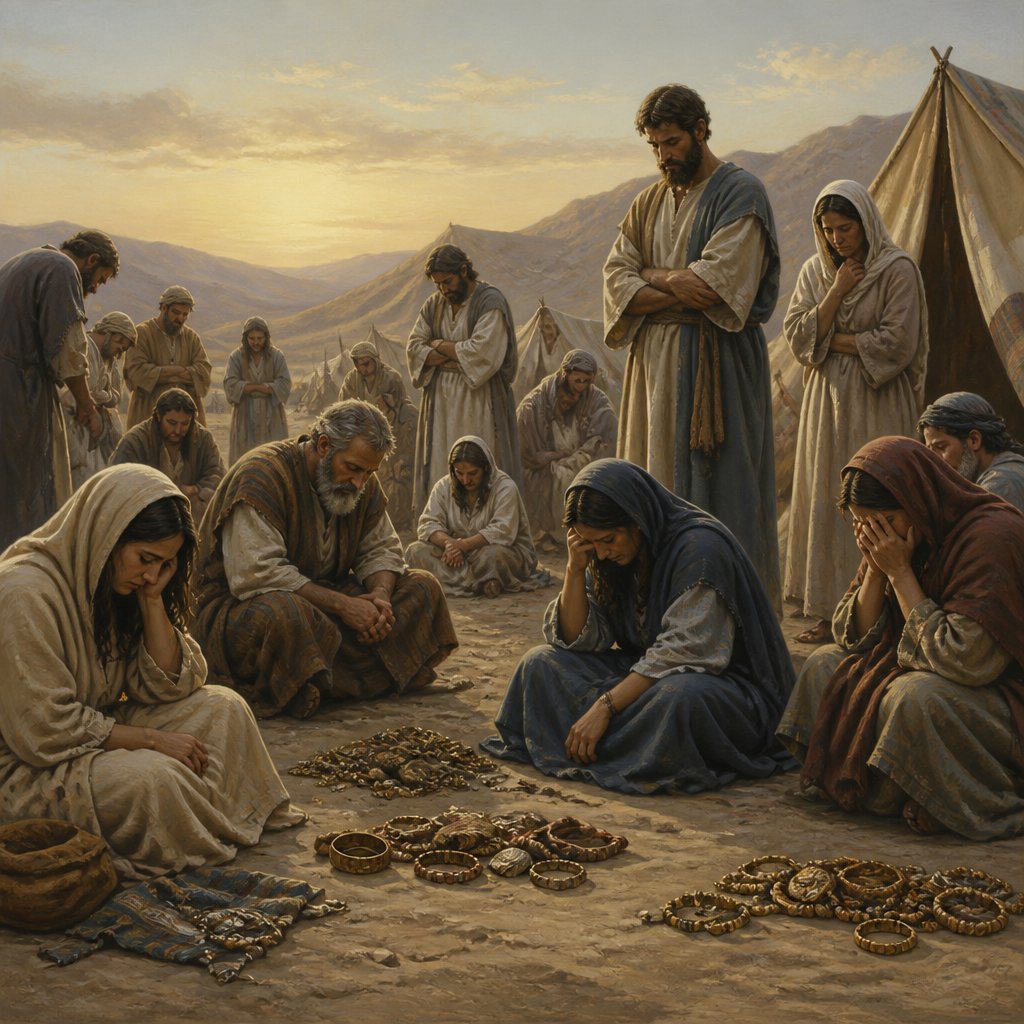
Exodus 33:4 in the King James Version of the Bible reads, "And when the people heard these evil tidings, they mourned: and no man did put on him his ornaments."
This verse is part of the larger context of the story of the Israelites in the book of Exodus. In this particular chapter, the Israelites have just been informed by God that He will not be accompanying them on their journey. This revelation strikes fear and mourning in the hearts of the people, as the presence of God has been their source of strength and protection. In response to this news, the Israelites mourn and remove their ornaments as a symbol of their grief and humility.
The broader theme of this verse and the surrounding passage is the importance of the presence of God in the lives of His people. The Israelites had experienced the power and protection of God firsthand throughout their journey from Egypt, and now the thought of venturing forward without His presence evoked fear and sorrow. This serves as a reminder of the deep reliance of humanity on the divine, and the profound impact that the presence of God has on believers.
The ornaments that the Israelites remove are significant symbols in this context. In ancient culture, ornaments were often indicative of status, wealth, and beauty. By removing their ornaments, the Israelites are displaying a physical sign of their mourning and a stripping away of their worldly possessions and comfort. This action serves as a humble acknowledgment of their dependence on God and a sign of their willingness to forgo earthly adornments in exchange for the presence and favor of the Divine.
The verse also speaks to the idea of repentance and reconciliation. The evil tidings that the Israelites hear prompt them to mourn, and in their mourning, they are demonstrating a sense of sorrow for their past actions and a desire to reconcile with God. This signifies the importance of repentance and turning away from sinful behavior in order to seek forgiveness and restoration with the Almighty.
Furthermore, the removal of ornaments can be viewed as a symbolic act of purification. By shedding their worldly possessions, the Israelites are symbolically purging themselves of any impurities or distractions that may have hindered their relationship with God. This act of cleansing and purifying themselves signifies a desire for a renewed and genuine connection with the Divine.
In a broader sense, this verse can also be seen as a reminder of the transient nature of earthly possessions and the ultimate priority of spiritual matters. The Israelites' willingness to relinquish their ornaments demonstrates their recognition that material possessions are of secondary importance when compared to the presence and favor of God. This speaks to the larger theme of prioritizing spiritual well-being and the pursuit of a deeper connection with the Divine over the pursuit of worldly riches and superficial adornments.
In conclusion, Exodus 33:4 in the King James Version of the Bible holds deep significance in its portrayal of the Israelites' mourning and removal of ornaments. It serves as a powerful reminder of the importance of the presence of God in the lives of His people, the significance of repentance and reconciliation, the concept of purification, and the transient nature of earthly possessions. This verse carries timeless lessons and insights that continue to resonate with believers today, offering a profound reflection on the priorities and desires of the human spirit in relation to the divine.
Get our apps


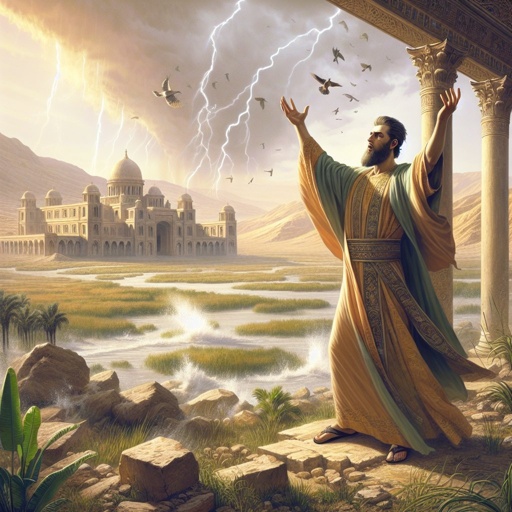
Artwork for Exodus 33:4

Exodus 33:4 - "¶ And when the people heard these evil tidings, they mourned: and no man did put on him his ornaments."
"¶ And when the people heard these evil tidings, they mourned: and no man did put on him his ornaments." - Exodus 33:4

Exodus 12:33

Exodus 26:31-33

Exodus 33:6 - "And the children of Israel stripped themselves of their ornaments by the mount Horeb."

Exodus 33:18 - "And he said, I beseech thee, shew me thy glory."

Exodus 33:21 - "And the LORD said, Behold, there is a place by me, and thou shalt stand upon a rock:"

Exodus 33:14 - "And he said, My presence shall go with thee, and I will give thee rest."

Exodus 34:33 - "And till Moses had done speaking with them, he put a vail on his face."

Exodus 35:33 - "And in the cutting of stones, to set them, and in carving of wood, to make any manner of cunning work."

Exodus 36:33 - "And he made the middle bar to shoot through the boards from the one end to the other."

Exodus 33:15 - "And he said unto him, If thy presence go not with me, carry us not up hence."

Exodus 33:20 - "And he said, Thou canst not see my face: for there shall no man see me, and live."

Exodus 21:33 - "¶ And if a man shall open a pit, or if a man shall dig a pit, and not cover it, and an ox or an ass fall therein;"

Exodus 33:2 - "And I will send an angel before thee; and I will drive out the Canaanite, the Amorite, and the Hittite, and the Perizzite, the Hivite, and the Jebusite:"

Exodus 33:9 - "And it came to pass, as Moses entered into the tabernacle, the cloudy pillar descended, and stood at the door of the tabernacle, and the LORD talked with Moses."

Exodus 32:33 - "And the LORD said unto Moses, Whosoever hath sinned against me, him will I blot out of my book."

Exodus 33:23 - "And I will take away mine hand, and thou shalt see my back parts: but my face shall not be seen."

Exodus 30:33 - "Whosoever compoundeth any like it, or whosoever putteth any of it upon a stranger, shall even be cut off from his people."

Exodus 12:33 - "And the Egyptians were urgent upon the people, that they might send them out of the land in haste; for they said, We be all dead men."

Exodus 29:33 - "And they shall eat those things wherewith the atonement was made, to consecrate and to sanctify them: but a stranger shall not eat thereof, because they are holy."
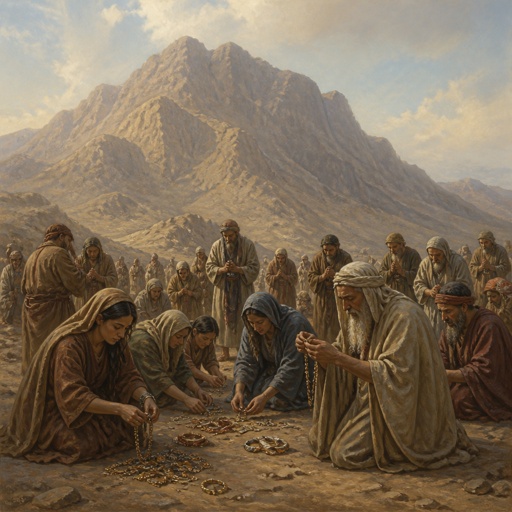
"And the children of Israel stripped themselves of their ornaments by the mount Horeb." - Exodus 33:6
Exodus 23:33 - "They shall not dwell in thy land, lest they make thee sin against me: for if thou serve their gods, it will surely be a snare unto thee."

Exodus 40:33 - "And he reared up the court round about the tabernacle and the altar, and set up the hanging of the court gate. So Moses finished the work."

Deuteronomy 33:4 - "Moses commanded us a law, even the inheritance of the congregation of Jacob."

Psalms 33:4 - "For the word of the LORD is right; and all his works are done in truth."

Exodus 39:33 - "¶ And they brought the tabernacle unto Moses, the tent, and all his furniture, his taches, his boards, his bars, and his pillars, and his sockets,"

Exodus 16:33 - "And Moses said unto Aaron, Take a pot, and put an omer full of manna therein, and lay it up before the LORD, to be kept for your generations."

Exodus 33:10 - "And all the people saw the cloudy pillar stand at the tabernacle door: and all the people rose up and worshipped, every man in his tent door."
Exodus 9:33 - "And Moses went out of the city from Pharaoh, and spread abroad his hands unto the LORD: and the thunders and hail ceased, and the rain was not poured upon the earth."