What does Exodus 40:8 mean?
“And thou shalt set up the court round about, and hang up the hanging at the court gate.” — Exodus 40:8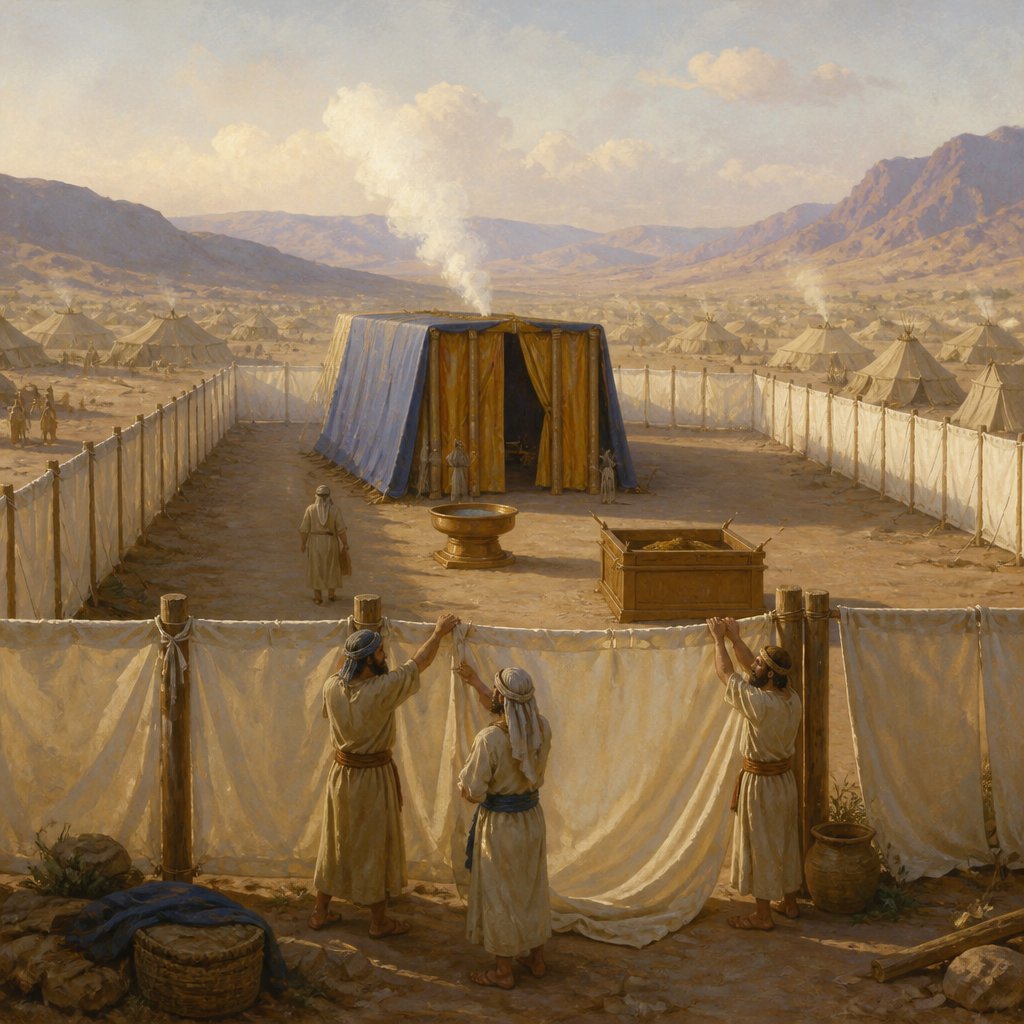
Exodus 40:8 (KJV) says, "And thou shalt set up the court round about, and hang up the hanging at the court gate." This verse comes from the book of Exodus, which is the second book of the Bible and tells the story of the Israelites' delivery from slavery in Egypt and their journey to the Promised Land. In this particular verse, God is giving Moses instructions for the construction and dedication of the Tabernacle, a portable sanctuary where the Israelites could worship God during their time in the wilderness.
The verse is part of a larger passage in Exodus 40 that describes the final preparations for the Tabernacle. In the preceding verses, God instructs Moses to set up the furniture, put the Ark of the Covenant in place, and anoint the Tabernacle and all its furnishings with oil. The verse following Exodus 40:8, states, "And thou shalt bring Aaron and his sons unto the door of the tabernacle of the congregation, and wash them with water" (Exodus 40:12, KJV). These actions were an integral part of consecrating the Tabernacle and its priests for service to God.
The overarching theme of Exodus 40:8 and the surrounding verses is the importance of following God's instructions precisely and reverently. The Tabernacle was a central symbol of God's presence among the Israelites, and its construction and dedication had to be carried out with the utmost care and obedience to God's will. The hanging at the court gate, mentioned specifically in Exodus 40:8, was an essential element in creating the sacred space of the Tabernacle and delineating it from the profane surroundings. This emphasis on details and obedience to God's commands underscores the Israelites' covenant relationship with God and their commitment to worship and serve Him faithfully.
Another significant theme in this verse is the idea of boundaries and separation. The setting up of the court round about and hanging up the hanging at the court gate served to demarcate the sacred space of the Tabernacle from the secular world outside. This physical separation reflected the spiritual separation that the Israelites were called to maintain as God's chosen people. Through their adherence to the laws and rituals surrounding the Tabernacle, the Israelites were to demonstrate their commitment to holiness and their distinction from the surrounding pagan nations.
In a broader theological sense, the construction and dedication of the Tabernacle and its furnishings foreshadowed the coming of Christ and the establishment of a new covenant between God and humanity. The Apostle Paul refers to the Tabernacle as a type or symbol of the heavenly realities revealed in Christ (Hebrews 8:5). Just as the Tabernacle was a place for God to dwell among His people in the Old Testament, so too is the Church the dwelling place of God through the Holy Spirit in the New Testament (Ephesians 2:22).
The King James Version's choice of the phrase "hanging at the court gate" carries a symbolic significance as well. The gate symbolizes access and entry, and the hanging served as a barrier that allowed only those who were properly prepared and purified to enter the Tabernacle. In a similar way, Jesus Christ is described as the gate or door through which believers enter into eternal life (John 10:9). Just as the hanging at the court gate controlled access to the Tabernacle, so Christ, the ultimate mediator between God and humanity, controls access to the Father. Only through faith in Christ and obedience to His teachings can people enter into a reconciled relationship with God.
In conclusion, Exodus 40:8 and the larger context of the Tabernacle's construction and dedication convey important theological themes related to obedience, separation, and access to God. The meticulous instructions for setting up the Tabernacle serve as a powerful reminder of God's holiness and the need for His people to approach Him with reverence. Additionally, the symbolism of the gate and hanging points forward to the fulfillment of God's redemptive plan in Christ, who provides the ultimate access to God and the way to eternal life. This verse continues to be a source of spiritual insight and inspiration for believers today.
Get our apps


Artwork for Exodus 40:8

Exodus 40:8 - "And thou shalt set up the court round about, and hang up the hanging at the court gate."
"And thou shalt set up the court round about, and hang up the hanging at the court gate." - Exodus 40:8

Exodus 40: 34

Exodus 40:9

Exodus 40:1 - "And the LORD spake unto Moses, saying,"

Exodus 40:28 - "¶ And he set up the hanging at the door of the tabernacle."

Exodus 25:31-40 This is an oil lampstand.

Exodus 40:11 - "And thou shalt anoint the laver and his foot, and sanctify it."

Exodus 40:25 - "And he lighted the lamps before the LORD; as the LORD commanded Moses."

Exodus 40:26 - "¶ And he put the golden altar in the tent of the congregation before the vail:"

Exodus 40:34 - "¶ Then a cloud covered the tent of the congregation, and the glory of the LORD filled the tabernacle."

Exodus 40:31 - "And Moses and Aaron and his sons washed their hands and their feet thereat:"

Exodus 40:14 - "And thou shalt bring his sons, and clothe them with coats:"

Exodus 40:27 - "And he burnt sweet incense thereon; as the LORD commanded Moses."

Exodus 40:3 - "And thou shalt put therein the ark of the testimony, and cover the ark with the vail."

Exodus 40:37 - "But if the cloud were not taken up, then they journeyed not till the day that it was taken up."

Exodus 25:40 - "And look that thou make them after their pattern, which was shewed thee in the mount."

Exodus 40:24 - "¶ And he put the candlestick in the tent of the congregation, over against the table, on the side of the tabernacle southward."

Exodus 40:16 - "Thus did Moses: according to all that the LORD commanded him, so did he."

Exodus 40:30 - "¶ And he set the laver between the tent of the congregation and the altar, and put water there, to wash withal."

Exodus 40:22 - "¶ And he put the table in the tent of the congregation, upon the side of the tabernacle northward, without the vail."

Exodus 40:6 - "And thou shalt set the altar of the burnt offering before the door of the tabernacle of the tent of the congregation."

Exodus 12:40 - "¶ Now the sojourning of the children of Israel, who dwelt in Egypt, was four hundred and thirty years."

Exodus 40:23 - "And he set the bread in order upon it before the LORD; as the LORD had commanded Moses."

Exodus 40:2 - "On the first day of the first month shalt thou set up the tabernacle of the tent of the congregation."
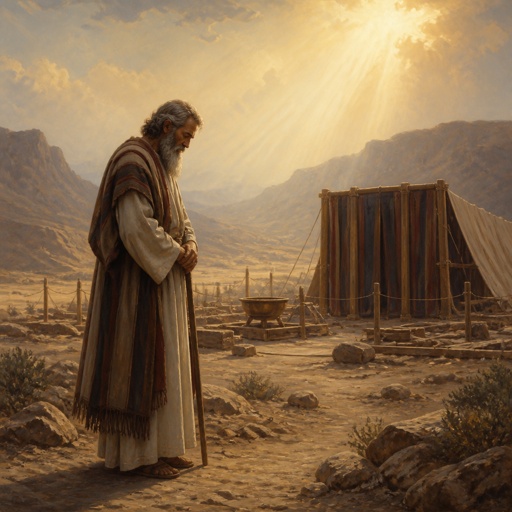
"And the LORD spake unto Moses, saying," - Exodus 40:1

Exodus 40:17 - "¶ And it came to pass in the first month in the second year, on the first day of the month, that the tabernacle was reared up."

Exodus 40:7 - "And thou shalt set the laver between the tent of the congregation and the altar, and shalt put water therein."

Exodus 40:36 - "And when the cloud was taken up from over the tabernacle, the children of Israel went onward in all their journeys:"

Exodus 40:12 - "And thou shalt bring Aaron and his sons unto the door of the tabernacle of the congregation, and wash them with water."