What does Exodus 4:6 mean?
"And the LORD said furthermore unto him, Put now thine hand into thy bosom. And he put his hand into his bosom: and when he took it out, behold, his hand was leprous as snow." - Exodus 4:6
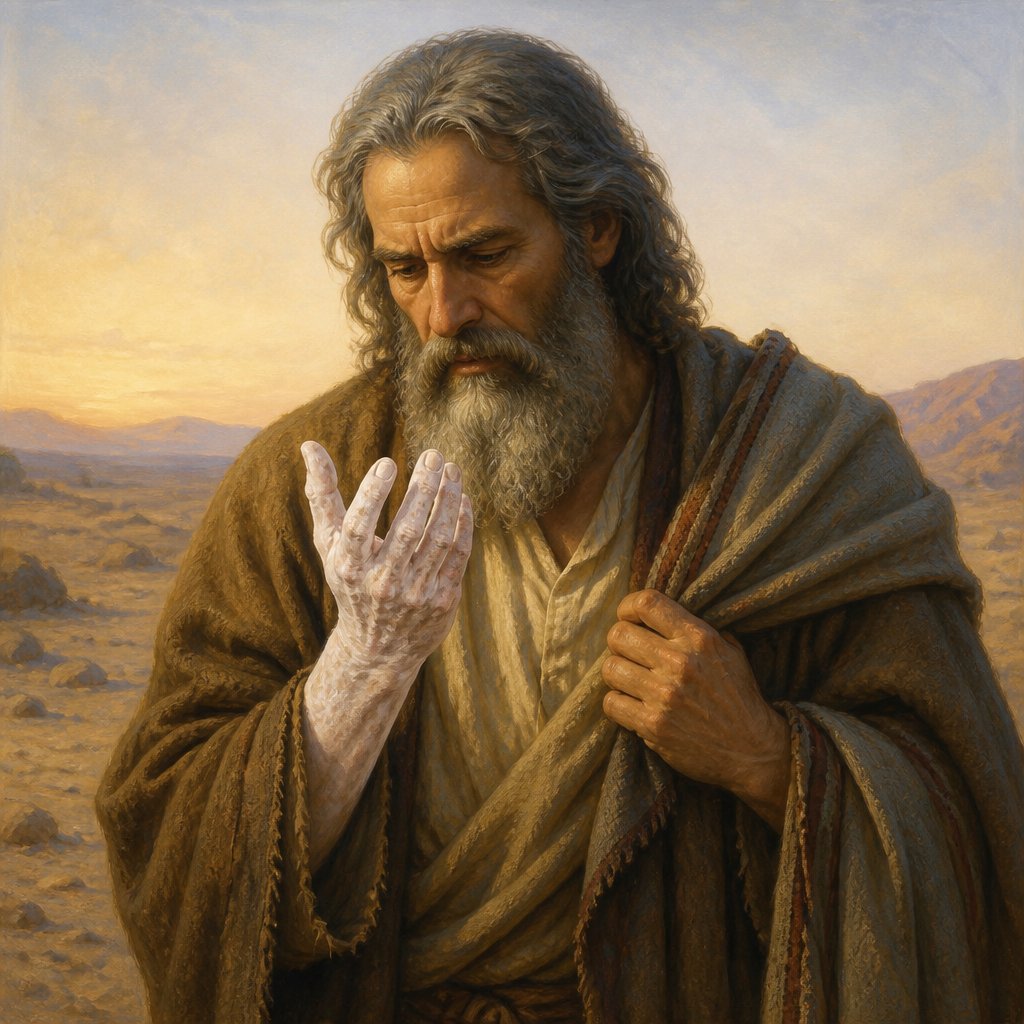
Exodus 4:6 in the King James Version of the Bible states, "And the Lord said furthermore unto him, Put now thine hand into thy bosom. And he put his hand into his bosom: and when he took it out, behold, his hand was leprous as snow."
This verse is part of the conversation between God and Moses at the burning bush, as Moses is being called to lead the Israelites out of Egypt. In this verse, God illustrates his power to Moses by commanding him to put his hand into his bosom, and then miraculously turning his hand leprous, and then healing it again.
The themes of this verse include the power of God, the call to obedience, and the recognition of one's own limitations. The context of this verse is important to understand the significance of its meaning. Moses, a reluctant leader, is in the presence of God and is being called to fulfill a challenging and daunting task. This verse serves as a divine demonstration of God's power to Moses, as a way of convincing him to trust and obey the call to lead the Israelites out of Egypt.
The symbolism in this verse is rich and multi-layered. The act of putting his hand into his bosom represents an act of faith and obedience on Moses' part, as he follows God's command. This action can also be seen as a metaphor for bringing forth something from within oneself, as the bosom traditionally represents the heart or inner self. This moment symbolizes the intimate and personal nature of God's call to Moses, as well as the need for Moses to be willing to expose and surrender his innermost self to God's will.
The transformation of Moses' hand to leprous, a disease seen as unclean and contagious in biblical times, represents the spiritual and moral uncleanness of humanity. This affliction serves as a powerful symbol of sin and the brokenness of the world, which separates humanity from the holiness of God. The sudden appearance of leprosy on Moses' hand also serves as a stark reminder of the consequences of disobedience and the inherent impurity of humanity. It is a demonstration of God's power over life and death, and his ability to judge and cleanse.
The subsequent healing of Moses' hand by God represents the divine power to cleanse and restore. It is a symbol of God's grace, mercy, and forgiveness, as well as his ability to transform and heal that which is broken and unclean. By restoring Moses' hand to its original state "as snow," God demonstrates his authority over all things, including sickness and impurity.
This verse ultimately serves as a powerful lesson for Moses and for all believers. It highlights the need for complete trust and obedience to God's call, as well as the recognition of our own sinfulness and the transformative power of God's grace. It is a reminder of God's sovereignty and his ability to turn the unclean into the clean, the broken into the whole, and the reluctant into the willing.
In conclusion, Exodus 4:6 in the King James Version of the Bible is a poignant and powerful verse that carries deep spiritual and moral significance. It serves as a vivid illustration of God's power, mercy, and call to obedience, and offers profound symbolism for the human condition and the transformative nature of God's grace. This verse continues to resonate with believers as a timeless and universal message of faith, redemption, and the enduring power of God.
Have questions about Exodus 4:6?
Dive deeper into this scripture with Bible Chat — an AI-powered tool for exploring God's Word through conversation. Ask questions, get context, and grow in your understanding of the Bible.
Get Our Apps


Exodus 4:6 Artwork

Exodus 4:6 - "¶ And the LORD said furthermore unto him, Put now thine hand into thy bosom. And he put his hand into his bosom: and when he took it out, behold, his hand was leprous as snow."
"¶ And the LORD said furthermore unto him, Put now thine hand into thy bosom. And he put his hand into his bosom: and when he took it out, behold, his hand was leprous as snow." - Exodus 4:6

Exodus 6:4 - "And I have also established my covenant with them, to give them the land of Canaan, the land of their pilgrimage, wherein they were strangers."
Exodus 17:6

Exodus 17:6

Exodus 17:6

Exodus 17:6

Exodus 23:4

Exodus 28:4

Exodus 28:4

Exodus 28:4

Exodus 28:4

Exodus 24:4

Exodus 23:4

Exodus 6:21 - "¶ And the sons of Izhar; Korah, and Nepheg, and Zichri."

Exodus 6:22 - "And the sons of Uzziel; Mishael, and Elzaphan, and Zithri."

Exodus 6:10 - "And the LORD spake unto Moses, saying,"
"And I have also established my covenant with them, to give them the land of Canaan, the land of their pilgrimage, wherein they were strangers." - Exodus 6:4

Exodus 4:1-5

Exodus 1:4 - "Dan, and Naphtali, Gad, and Asher."

Exodus 6:17 - "The sons of Gershon; Libni, and Shimi, according to their families."

Exodus 35:6 - "And blue, and purple, and scarlet, and fine linen, and goats' hair,"

Exodus 25:6 - "Oil for the light, spices for anointing oil, and for sweet incense,"

Exodus 1:6 - "And Joseph died, and all his brethren, and all that generation."

Exodus 33:6 - "And the children of Israel stripped themselves of their ornaments by the mount Horeb."

Exodus 6:24 - "And the sons of Korah; Assir, and Elkanah, and Abiasaph: these are the families of the Korhites."

Ephesians 4:4-6

Ephesians 4:4-6

Exodus 38:6 - "And he made the staves of shittim wood, and overlaid them with brass."

Exodus 23:6 - "Thou shalt not wrest the judgment of thy poor in his cause."