What does Exodus 4:9 mean?
"And it shall come to pass, if they will not believe also these two signs, neither hearken unto thy voice, that thou shalt take of the water of the river, and pour it upon the dry land: and the water which thou takest out of the river shall become blood upon the dry land." - Exodus 4:9
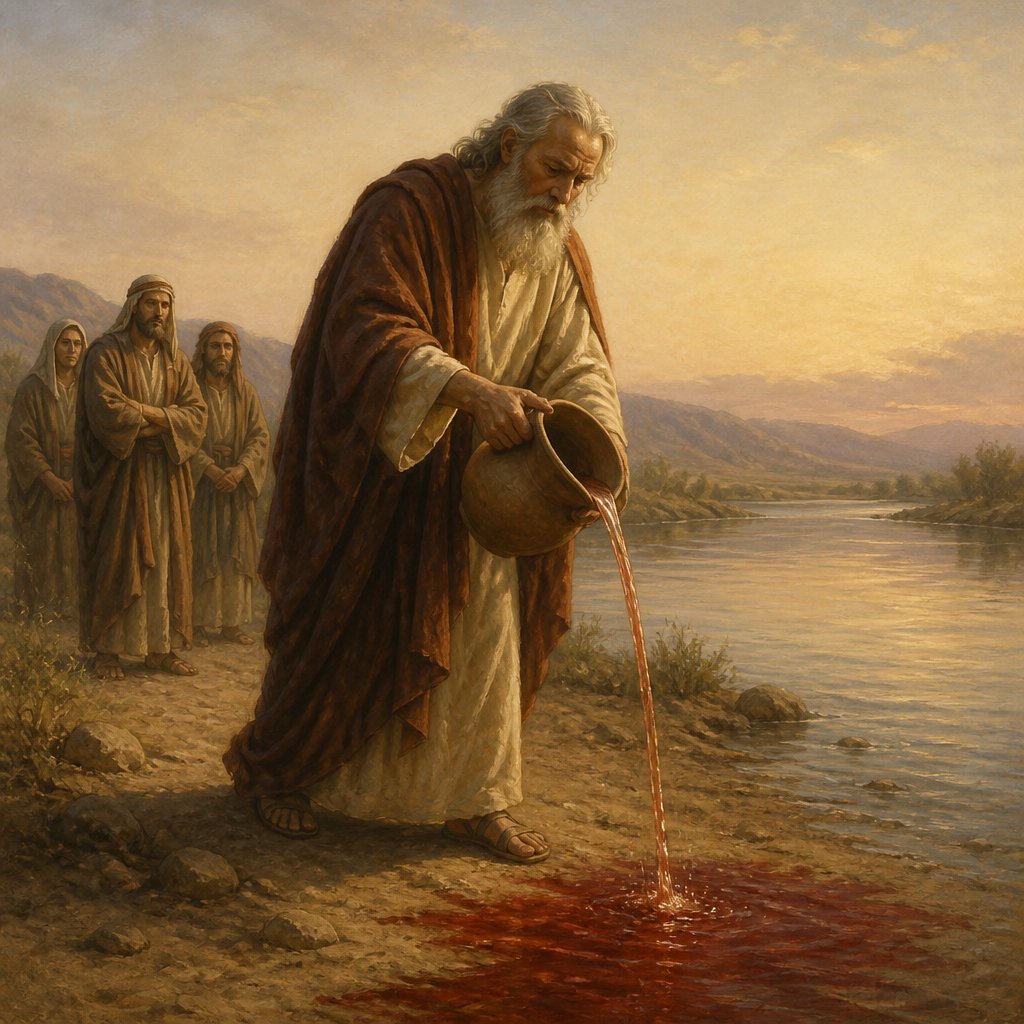
Exodus 4:9 in the King James Version (KJV) states: "And it shall come to pass, if they will not believe also these two signs, neither hearken unto thy voice, that thou shalt take of the water of the river, and pour it upon the dry land: and the water which thou takest out of the river shall become blood upon the dry land."
This verse is part of the conversation between God and Moses at the burning bush. Moses has been given the task of leading the Israelites out of Egypt, but he is hesitant and lacks confidence in his ability to convince the Israelites to follow him. In response to Moses' doubts, God grants him the ability to perform miraculous signs to prove his authority and authenticity as a messenger of God.
The verse speaks to the themes of faith, obedience, and the power of God. The signs that God gives to Moses are intended to serve as evidence of his divine authority and to strengthen Moses' faith and resolve. They are also a demonstration of God's power and ability to perform miracles.
The context of this verse is significant. The Israelites had been enslaved in Egypt for generations, and Moses' task was to lead them out of bondage to the Promised Land. However, the Israelites had become accustomed to their way of life in Egypt and were understandably skeptical of Moses' claim that God had sent him to deliver them. The signs were meant to reassure the Israelites that God was with them and that Moses was indeed his chosen servant.
The symbolism in this verse is profound. The water turning to blood is a powerful and unsettling image that symbolizes both judgment and transformation. The Nile River was a source of life and sustenance for the Egyptians, and turning its waters into blood was a direct challenge to their belief in the power of their gods. It was also a symbol of the suffering and judgment that would come upon Egypt as a result of their oppression of the Israelites.
The transformation of water into blood also foreshadows the ultimate liberation of the Israelites. It represents the drastic and transformative change that would occur as a result of God's intervention. The miraculous signs that God grants to Moses serve as a reminder that nothing is impossible with God, and that his power transcends the limitations of the natural world.
This verse also speaks to the importance of obedience to God's will. God instructs Moses to perform these signs, and Moses is expected to follow through with obedience and faith. It is a reminder that God equips and empowers those whom he calls to fulfill his purposes, and that obedience to his commands is essential for carrying out his plans.
In conclusion, Exodus 4:9 is a powerful and significant verse that highlights the themes of faith, obedience, and the power of God. It serves as a reminder that God is able to perform miracles and signs to confirm his authority and presence, and that those who are called by God are equipped and empowered to fulfill his purposes. The symbolism in this verse underscores the transformative and profound nature of God's intervention, and the importance of trusting in his power and following his will.
Have questions about Exodus 4:9?
Dive deeper into this scripture with Bible Chat — an AI-powered tool for exploring God's Word through conversation. Ask questions, get context, and grow in your understanding of the Bible.
Get Our Apps


Exodus 4:9 Artwork

Exodus 4:9 - "And it shall come to pass, if they will not believe also these two signs, neither hearken unto thy voice, that thou shalt take of the water of the river, and pour it upon the dry land: and the water which thou takest out of the river shall become blood upon the dry land."
"And it shall come to pass, if they will not believe also these two signs, neither hearken unto thy voice, that thou shalt take of the water of the river, and pour it upon the dry land: and the water which thou takest out of the river shall become blood upon the dry land." - Exodus 4:9

Exodus 9:4 - "And the LORD shall sever between the cattle of Israel and the cattle of Egypt: and there shall nothing die of all that is the children's of Israel."

Exodus 40:9
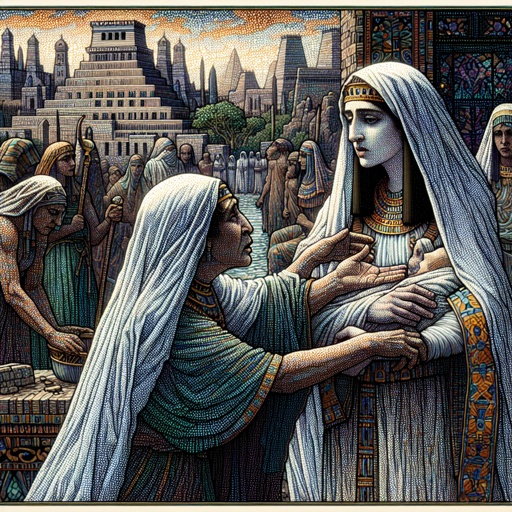
Exodus 2:9

Exodus 2:9
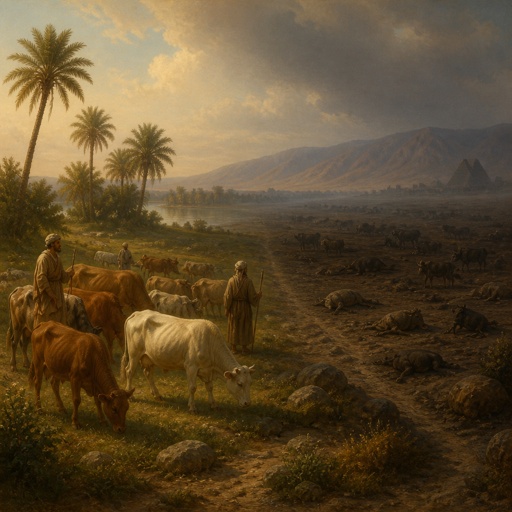
"And the LORD shall sever between the cattle of Israel and the cattle of Egypt: and there shall nothing die of all that is the children's of Israel." - Exodus 9:4

Exodus 24:9-11

Exodus 23:4

Exodus 28:4

Exodus 28:4

Exodus 28:4

Exodus 28:4

Exodus 24:4

Exodus 23:4

Exodus 35:9 - "And onyx stones, and stones to be set for the ephod, and for the breastplate."

Exodus 4:1-5

Exodus 9:31 - "And the flax and the barley was smitten: for the barley was in the ear, and the flax was bolled."

Exodus 9:32 - "But the wheat and the rie were not smitten: for they were not grown up."

Exodus 1:4 - "Dan, and Naphtali, Gad, and Asher."

The Plague of Boils - Exodus 9:8-12

The Plague of Boils - Exodus 9:8-12

The Plague of Boils - Exodus 9:8-12.

The Plague of Hail - Exodus 9:13-35

The Plague of Boils - Exodus 9:8-12

The Plague of Hail - Exodus 9:13-35

The Plague of Boils - Exodus 9:8-12

The Plague on Livestock - Exodus 9:1-7

The Plague of Hail - Exodus 9:13-35

The Plague of Hail - Exodus 9:13-35