What does Exodus 5:19 mean?
"And the officers of the children of Israel did see that they were in evil case, after it was said, Ye shall not minish ought from your bricks of your daily task." - Exodus 5:19
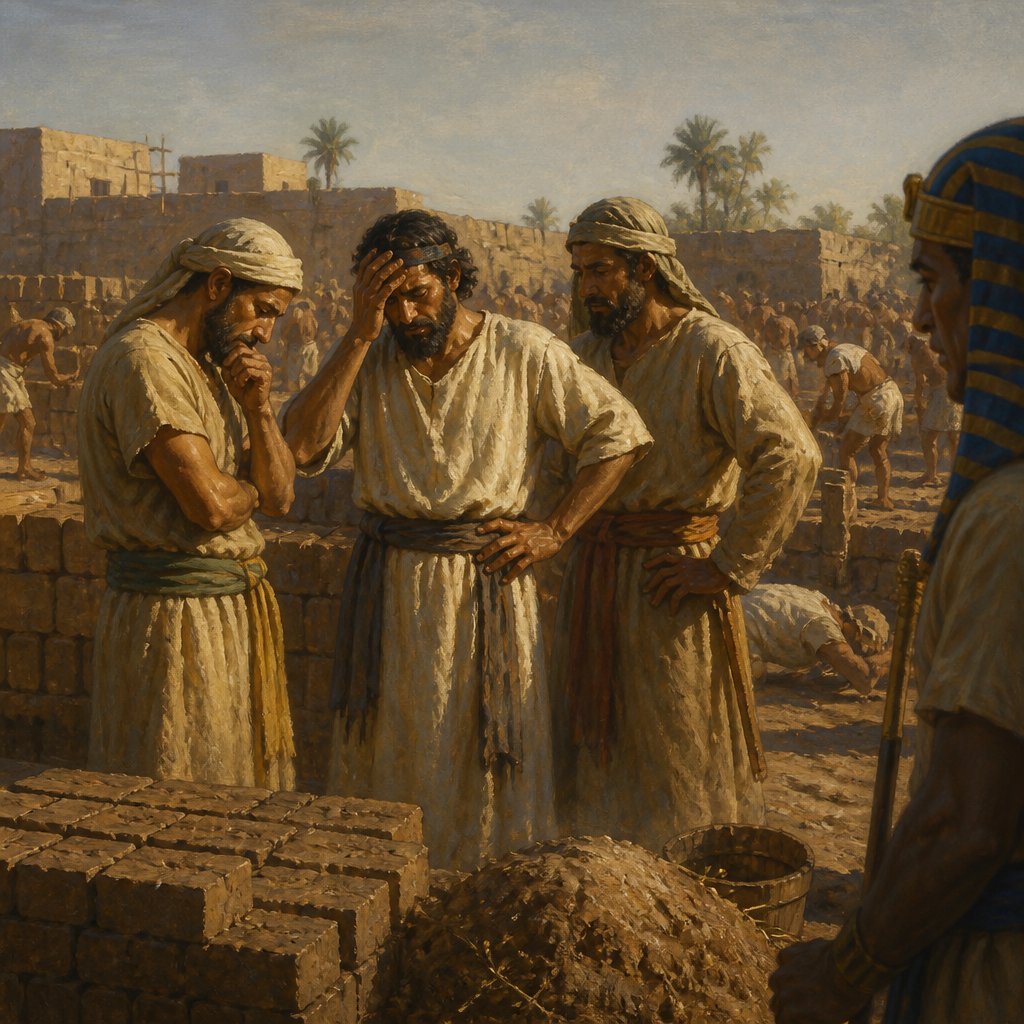
Exodus 5:19 (KJV) says, "And the officers of the children of Israel did see that they were in evil case, after it was said, Ye shall not minish ought from your bricks of your daily task."
This verse comes in the context of the Israelites' oppression in Egypt under the rule of Pharaoh. The Israelites had been enslaved, and they were forced to work as laborers, particularly in making bricks for the construction work that Pharaoh had ordered. Pharaoh had commanded that the Israelites produce a certain quota of bricks every day, and if they failed to meet that quota, they were punished severely. This verse specifically focuses on the response of the officers of the children of Israel when they realize that their situation has worsened after Pharaoh's command to not decrease the number of bricks they were making each day.
The verse reveals the deep despair and helplessness that the Israelites felt under the harsh rule of Pharaoh. It reflects their hopelessness and the realization that their situation had gone from bad to worse. They had been subjected to harsh conditions and forced labor, and now Pharaoh's command made their already unbearable situation even more difficult. This verse captures the frustration and misery of the Israelites as they struggled under the oppressive rule of Pharaoh.
One of the key themes of this verse is the theme of oppression and suffering. The Israelites were enduring immense suffering and hardship as a result of their enslavement in Egypt. Their labor was backbreaking, their conditions were harsh, and they were being treated with cruelty and injustice by the Egyptians. This verse highlights the desperation and anguish of the Israelites as they faced the unrelenting oppression of their oppressors.
Another theme present in this verse is the theme of faith and obedience. Despite the unbearable circumstances they found themselves in, the Israelites remained obedient to Pharaoh's commands, continuing to toil in their laborious work. This obedience was a testament to the resilience and faith of the Israelites, as they endured unimaginable suffering while still striving to fulfill their duties as commanded by Pharaoh.
Additionally, this verse also touches on the theme of God's faithfulness and deliverance. Although the Israelites were in a seemingly hopeless situation, God had promised to deliver them from their oppression and lead them to the promised land. This verse serves as a reminder of the Israelites' faith in God's promises, even in the midst of their suffering. It foreshadows the eventual liberation of the Israelites from their bondage in Egypt, and the fulfillment of God's covenant with his people.
In terms of symbolism, the bricks that the Israelites were tasked to make can represent the burdens and hardships that the Israelites bore under the oppressive rule of Pharaoh. The bricks they were forced to produce symbolize the weight of their suffering and the heavy burden of their enslavement. The unyielding demand for these bricks by Pharaoh reflects the relentless oppression and cruelty of their captors.
In conclusion, Exodus 5:19 (KJV) offers a poignant depiction of the Israelites' suffering and oppression in Egypt. It conveys the depth of their despair and the unimaginable hardships they endured under the rule of Pharaoh. While it reflects the Israelites' anguish and hopelessness, it also captures their steadfast faith and obedience, as well as the eventual promise of deliverance and liberation by God. This verse serves as a powerful reminder of the enduring faith and resilience of the Israelites, as well as the faithfulness of God in fulfilling his promises to his people.
Have questions about Exodus 5:19?
Dive deeper into this scripture with Bible Chat — an AI-powered tool for exploring God's Word through conversation. Ask questions, get context, and grow in your understanding of the Bible.
Get Our Apps


Exodus 5:19 Artwork

Exodus 5:19 - "And the officers of the children of Israel did see that they were in evil case, after it was said, Ye shall not minish ought from your bricks of your daily task."
"And the officers of the children of Israel did see that they were in evil case, after it was said, Ye shall not minish ought from your bricks of your daily task." - Exodus 5:19

"Now therefore, if ye will obey my voice indeed, and keep my covenant, then ye shall be a peculiar treasure unto me above all people: for all the earth is mine:" - Exodus 19:5

Exodus 19:5 - "Now therefore, if ye will obey my voice indeed, and keep my covenant, then ye shall be a peculiar treasure unto me above all people: for all the earth is mine:"

Exodus 19

Exodus 2:19

Exodus 27:19-20

Exodus 12:1-19

Exodus 19:16-20

Exodus 27:19-21

Exodus 19:19 - "And when the voice of the trumpet sounded long, and waxed louder and louder, Moses spake, and God answered him by a voice."

Exodus 28:19 - "And the third row a ligure, an agate, and an amethyst."

Exodus 15:5

Exodus 16:19 - "And Moses said, Let no man leave of it till the morning."

Exodus 22:19 - "¶ Whosoever lieth with a beast shall surely be put to death."

Exodus 22:5

Exodus 22:5

Exodus 22:5

The Plague of Gnats - Exodus 8:16-19

Exodus 6:19 - "And the sons of Merari; Mahali and Mushi: these are the families of Levi according to their generations."

Exodus 30:19 - "For Aaron and his sons shall wash their hands and their feet thereat:"

Romans 5:19

Exodus 4:1-5

Exodus 19:25 - "So Moses went down unto the people, and spake unto them."

Exodus 5:5 - "And Pharaoh said, Behold, the people of the land now are many, and ye make them rest from their burdens."

Genesis 19-5

Romans 5:19

Exodus 3:19 - "¶ And I am sure that the king of Egypt will not let you go, no, not by a mighty hand."

Exodus 19:14 - "¶ And Moses went down from the mount unto the people, and sanctified the people; and they washed their clothes."

Exodus 19:15 - "And he said unto the people, Be ready against the third day: come not at your wives."