What does Exodus 5:4 mean?
"And the king of Egypt said unto them, Wherefore do ye, Moses and Aaron, let the people from their works? get you unto your burdens." - Exodus 5:4
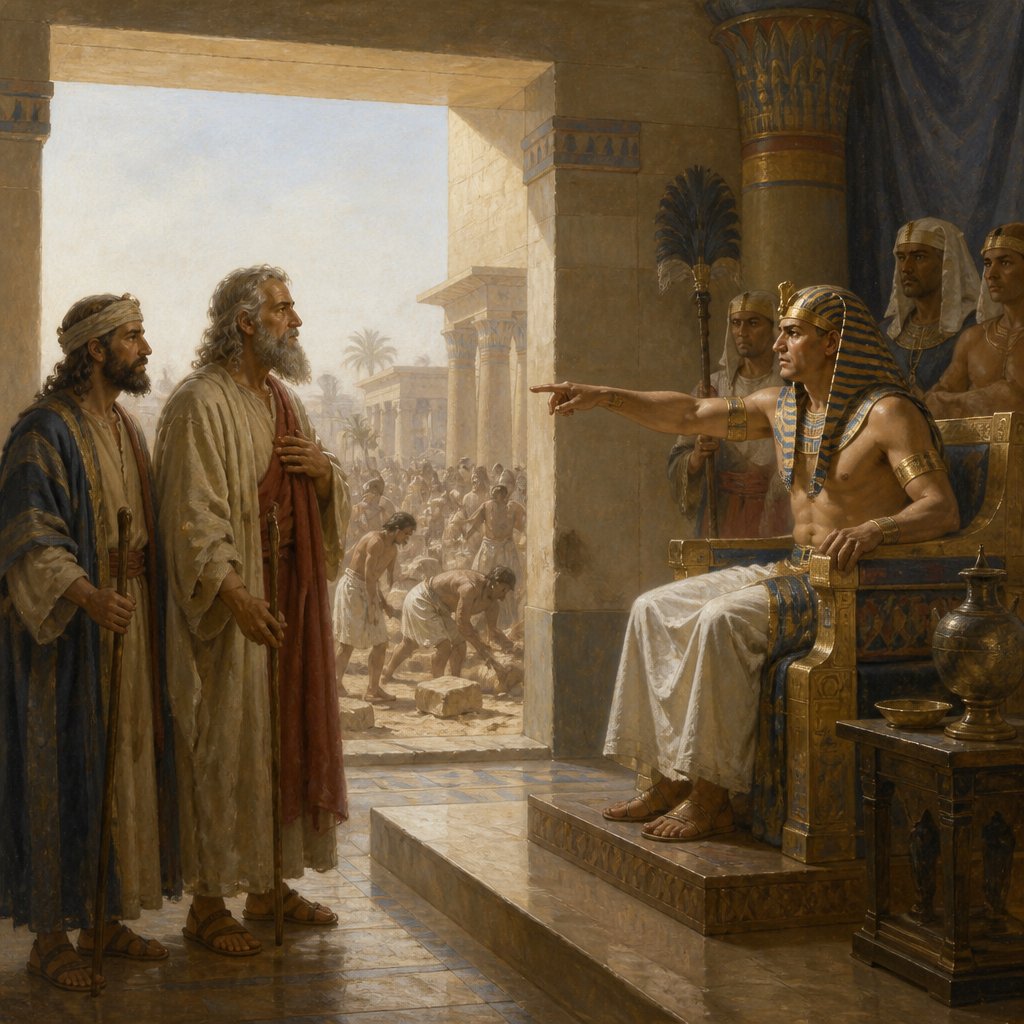
Exodus 5:4 in the King James Version of the Bible states, "And the king of Egypt said unto them, Wherefore do ye, Moses and Aaron, let the people from their works? get you unto your burdens."
This verse is from the book of Exodus, which tells the story of the Israelites' enslavement in Egypt and their subsequent deliverance by God through the leadership of Moses. This particular verse comes at a pivotal moment in the narrative, where Moses and Aaron have just approached Pharaoh, the king of Egypt, with a request to let the Israelites go into the wilderness to worship their God. Pharaoh's response, as recorded in this verse, reflects the deepening conflict between the Israelites and the Egyptians, and sets the stage for the escalating tension and dramatic events that follow.
The theme of oppression and injustice is central to the interpretation of this verse. The Israelites, who had been living in Egypt for generations, had become enslaved and oppressed by the ruling Egyptians. Pharaoh's harsh response to Moses and Aaron's request reflects the attitudes and actions of a ruler who is determined to maintain his power and authority at the expense of the oppressed people under his control. This theme is often seen as a reflection of the broader struggle for justice and freedom, and serves as a reminder of the enduring relevance of the Exodus story in the face of contemporary examples of oppression and injustice.
The context of this verse is also significant in understanding its meaning. The Israelites' request to worship their God in the wilderness is not simply a matter of religious practice, but is intimately connected to the broader issue of freedom and liberation. The Israelites' desire to be released from their bondage in Egypt is closely tied to their desire to serve and worship God in accordance with their beliefs and traditions. This context underscores the importance of religious freedom as a fundamental human right, and highlights the ways in which religious identity and practice can intersect with issues of social justice and liberation.
Symbolism in this verse is also worth exploring. Pharaoh's command to Moses and Aaron to "get you unto your burdens" can be seen as symbolic of the burden of oppression and suffering that the Israelites were forced to bear under Egyptian rule. This burden is not only physical, in the form of hard labor and harsh treatment, but also emotional and spiritual, as the Israelites longed for freedom and the ability to live in accordance with their faith. This symbolism serves as a powerful reminder of the enduring human struggle for freedom and dignity in the face of oppressive systems and structures.
In summary, Exodus 5:4 in the King James Version of the Bible holds rich and profound meaning within the larger narrative of the Israelites' exodus from Egypt. It speaks to the themes of oppression and injustice, the significance of religious freedom, and the enduring human struggle for liberation. Its context within the larger story of the Exodus and its symbolism of the burden of oppression all contribute to its timeless relevance and enduring significance for readers and believers today.
Have questions about Exodus 5:4?
Dive deeper into this scripture with Bible Chat — an AI-powered tool for exploring God's Word through conversation. Ask questions, get context, and grow in your understanding of the Bible.
Get Our Apps


Exodus 5:4 Artwork

Exodus 5:4 - "And the king of Egypt said unto them, Wherefore do ye, Moses and Aaron, let the people from their works? get you unto your burdens."
"And the king of Egypt said unto them, Wherefore do ye, Moses and Aaron, let the people from their works? get you unto your burdens." - Exodus 5:4

Exodus 4:1-5

Exodus 4:5 - "That they may believe that the LORD God of their fathers, the God of Abraham, the God of Isaac, and the God of Jacob, hath appeared unto thee."

Exodus 15:5

Exodus 22:5

Exodus 22:5

Exodus 22:5

Exodus 23:4

Exodus 28:4

Exodus 28:4

Exodus 28:4

Exodus 28:4

Exodus 24:4

Exodus 23:4

Exodus 5:5 - "And Pharaoh said, Behold, the people of the land now are many, and ye make them rest from their burdens."
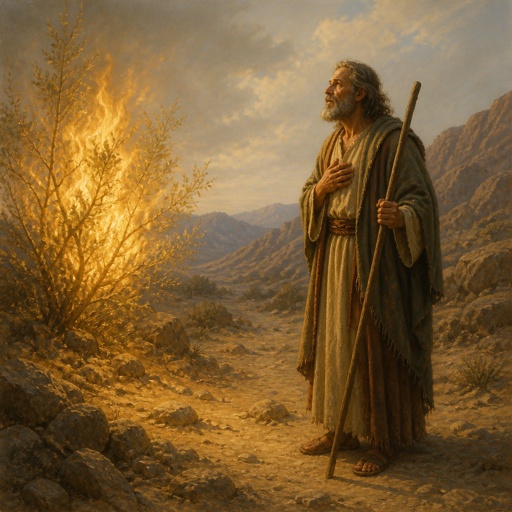
"That they may believe that the LORD God of their fathers, the God of Abraham, the God of Isaac, and the God of Jacob, hath appeared unto thee." - Exodus 4:5

Exodus 1:4 - "Dan, and Naphtali, Gad, and Asher."

Deuteronomy 23:4-5 (KJVA) 4 Because they met you not with bread and with water in the way, when ye came forth out of Egypt; and because they hired against thee Balaam the son of Beor of Pethor of Mesopotamia, to curse thee. 5 Nevertheless the LORD thy God would not hearken unto Balaam; but the LORD thy God turned the curse into a blessing unto thee, because the LORD thy God loved thee.

Exodus 15:5 - "The depths have covered them: they sank into the bottom as a stone."

Exodus 34:5 - "And the LORD descended in the cloud, and stood with him there, and proclaimed the name of the LORD."

Ephesians 4:4-5

Exodus 13:4 - "This day came ye out in the month Abib."

Exodus 37:5 - "And he put the staves into the rings by the sides of the ark, to bear the ark."

Exodus 28:5 - "And they shall take gold, and blue, and purple, and scarlet, and fine linen."

Exodus 5:6 - "And Pharaoh commanded the same day the taskmasters of the people, and their officers, saying,"

Exodus 25:5 - "And rams' skins dyed red, and badgers' skins, and shittim wood,"

Exodus 30:5 - "And thou shalt make the staves of shittim wood, and overlay them with gold."

Exodus 25:4 - "And blue, and purple, and scarlet, and fine linen, and goats' hair,"

2 Kings 4:4-5