What does Exodus 7:2 mean?
“Thou shalt speak all that I command thee: and Aaron thy brother shall speak unto Pharaoh, that he send the children of Israel out of his land.” — Exodus 7:2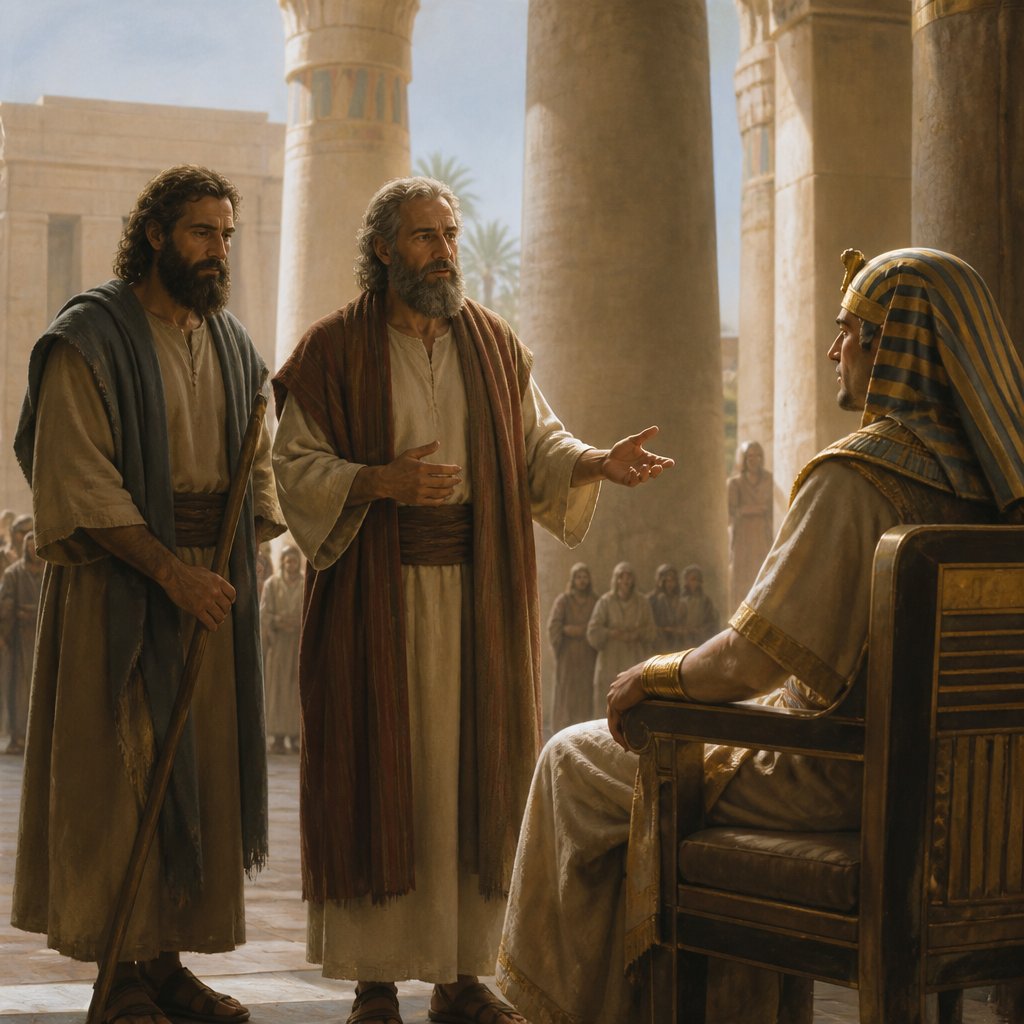
Exodus 7:2 KJV: "Thou shalt speak all that I command thee: and Aaron thy brother shall speak unto Pharaoh, that he send the children of Israel out of his land."
In this verse, God is instructing Moses to deliver a message to Pharaoh through his brother Aaron. The message is a demand for the release of the Israelite people from their enslavement in Egypt. This verse is an important part of the overall narrative of the exodus of the Israelites from Egypt, which is a central theme in the Old Testament.
This verse is situated in the larger context of the Book of Exodus, which details the story of the Israelites' deliverance from bondage and their journey to the Promised Land. The book is a foundational text in the Jewish and Christian faiths, and the events it describes are commemorated in the Jewish holiday of Passover.
The verse can be interpreted on several levels. On a literal level, it is a specific instruction from God to Moses. This verse is part of a series of encounters between God and Moses, in which God reveals his plan for the liberation of the Israelites and gives Moses the authority and power to carry it out.
On a broader level, this verse is about the concept of liberation and freedom. The Israelites were a people in bondage, and God's command to Pharaoh through Moses and Aaron represents the demand for justice and the right of oppressed people to be free. This theme of liberation is central to the Exodus story and continues to be a powerful and resonant idea in the modern world.
The verse also has symbolic significance. In the Christian tradition, Moses is often seen as a prefiguration of Jesus Christ, a liberator who leads his people to freedom. This verse can be seen as a foreshadowing of Christ's mission to release humanity from the bondage of sin and death.
Furthermore, the verse speaks to the concept of prophetic authority. Moses and Aaron are acting as God's representatives, delivering a message to a powerful ruler. This highlights the role of prophets and spiritual leaders in challenging injustice and speaking truth to power.
In addition, the verse raises questions about the nature of power and authority. Pharaoh is a figure of immense political and social power, yet he is being challenged by a higher authority - the God of the Israelites. This can be seen as a commentary on the limitations of human power and the ultimate authority of divine justice.
Overall, Exodus 7:2 is a key verse in the biblical narrative of the exodus, and it speaks to themes of liberation, prophetic authority, and the struggle between earthly and divine power. It is a foundation for the broader theological and ethical principles that are central to both Judaism and Christianity, and it continues to be a source of inspiration and guidance for those who seek freedom and justice in the world.
Get our apps


Artwork for Exodus 7:2

Exodus 7:2 - "Thou shalt speak all that I command thee: and Aaron thy brother shall speak unto Pharaoh, that he send the children of Israel out of his land."
"Thou shalt speak all that I command thee: and Aaron thy brother shall speak unto Pharaoh, that he send the children of Israel out of his land." - Exodus 7:2
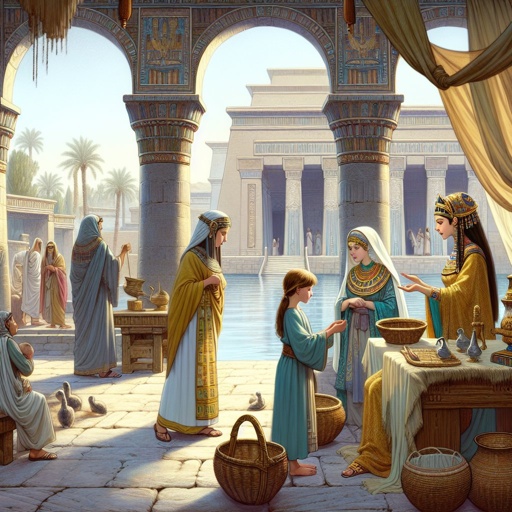
Exodus 2:7 - "Then said his sister to Pharaoh's daughter, Shall I go and call to thee a nurse of the Hebrew women, that she may nurse the child for thee?"

Exodus 7:10

Exodus 7:10

Exodus 12:7

Exodus 12:7

Exodus 7:14-24

Exodus 2: 7 Miriam asked Pharaoh's daughter whether she could go and get a hebrew nurse with river, pyramids in background. Maids looking on

Exodus 7:7 - "And Moses was fourscore years old, and Aaron fourscore and three years old, when they spake unto Pharaoh."

Exodus 25:7 - "Onyx stones, and stones to be set in the ephod, and in the breastplate."

Exodus 7:8 - "¶ And the LORD spake unto Moses and unto Aaron, saying,"

The Plague of Blood - Exodus 7:14-24

The Plague on Livestock - Exodus 9:1-7

The Plague on Livestock - Exodus 9:1-7

Exodus Chapter 7 Verses 8-10

The Plague of Blood - Exodus 7:14-24

The Plague of Blood - Exodus 7:14-24

Exodus 35:7 - "And rams' skins dyed red, and badgers' skins, and shittim wood,"

Exodus 36:7 - "For the stuff they had was sufficient for all the work to make it, and too much."

The Plague of Blood - Exodus 7:14-24

Exodus 7:6 - "And Moses and Aaron did as the LORD commanded them, so did they."

Exodus 7:25 - "And seven days were fulfilled, after that the LORD had smitten the river."

The Plague Death on Livestock - Exodus 9:1-7

The Plague Death on Livestock - Exodus 9:1-7

Exodus 8:7 - "And the magicians did so with their enchantments, and brought up frogs upon the land of Egypt."

Exodus 31:7 - "The tabernacle of the congregation, and the ark of the testimony, and the mercy seat that is thereupon, and all the furniture of the tabernacle,"

Exodus 20:2

Exodus 27:7 - "And the staves shall be put into the rings, and the staves shall be upon the two sides of the altar, to bear it."

Exodus 7:3 - "And I will harden Pharaoh's heart, and multiply my signs and my wonders in the land of Egypt."