What does Exodus 9:4 mean?
"And the LORD shall sever between the cattle of Israel and the cattle of Egypt: and there shall nothing die of all that is the children’s of Israel." - Exodus 9:4
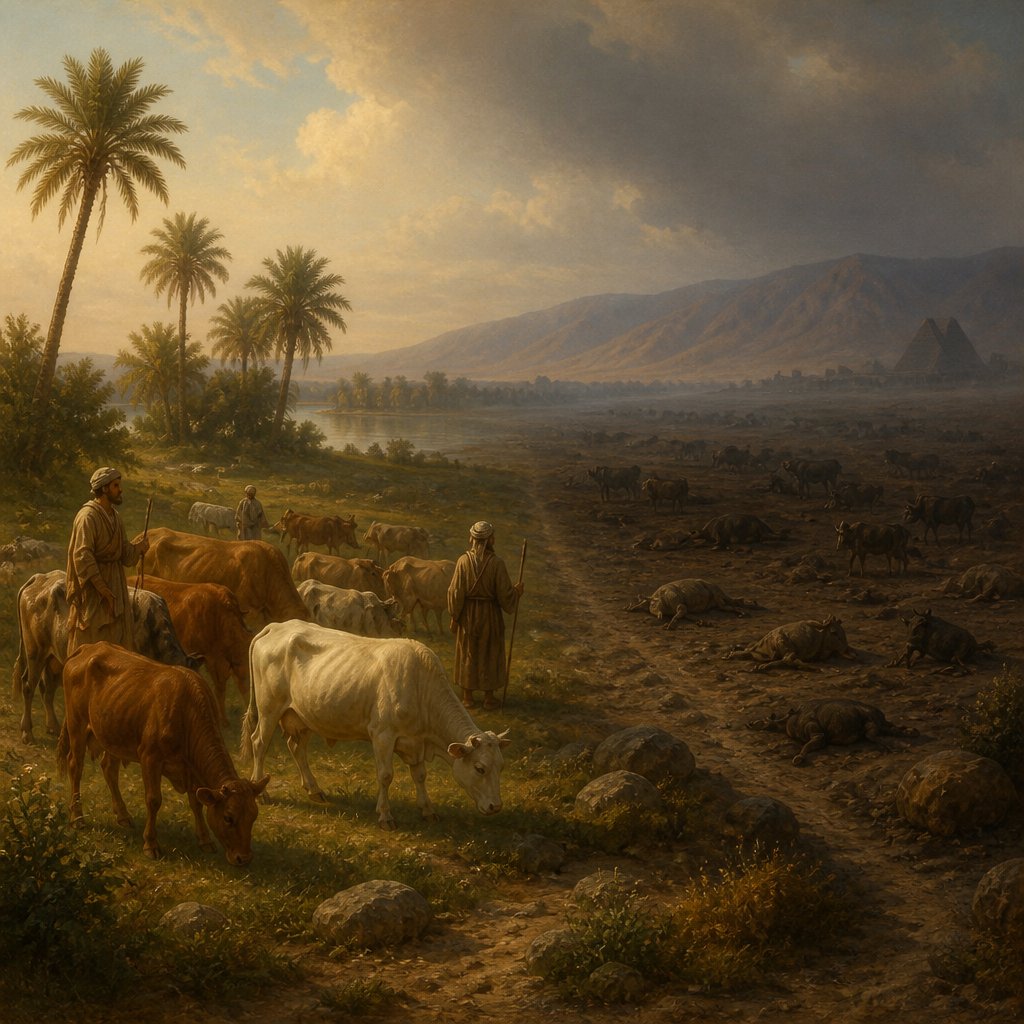
Exodus 9:4 from the King James Version of the Bible reads, "And the Lord shall sever between the cattle of Israel and the cattle of Egypt: and there shall nothing die of all that is the children's of Israel."
This particular verse comes from a passage in the book of Exodus, which tells the story of the Israelites' exodus from Egypt. In this specific chapter, God is speaking to Moses and commanding him to go to Pharaoh and demand the release of the Israelites. As part of the negotiations between Moses and Pharaoh, God sends various plagues upon the Egyptians to show His power and to compel Pharaoh to let His people go. This verse is part of the fifth plague, in which God brings a deadly pestilence upon the livestock of Egypt.
The deeper meaning and commentary of this verse ties into the broader context of the story. Throughout the book of Exodus, God demonstrates His power and sovereignty over the gods of Egypt. Each plague serves as a direct rebuke to the various Egyptian deities, showing that there is no power or being that can stand against the one true God of Israel. In this instance, the fifth plague directly targets the wealth and livelihood of the Egyptian people, as their livestock was a major source of their prosperity and sustenance.
The symbolism and themes within this verse and the broader story of Exodus are rich and profound. One of the key themes is the contrast between the people of Israel and the people of Egypt. Throughout the narrative, the Israelites are set apart as God's chosen people, and He demonstrates His protection and favor upon them. This verse specifically highlights the distinction between the cattle of the Israelites and the cattle of the Egyptians, as God protects the livestock of the Israelites while bringing death to the animals of the Egyptians.
This theme of distinction and separation is also carried forward into the broader biblical narrative, as God continually calls His people to be separate from the ways of the world and to live according to His commandments. In the New Testament, this theme is further developed, as believers are called to be "in the world, but not of the world" (John 17:14-16), reflecting the idea of being set apart and holy unto the Lord.
The theme of God's sovereignty and power is also prominently displayed in this verse. The fact that God is able to specifically target the livestock of the Egyptians without harming the animals of the Israelites underscores His complete control over all creation. This demonstrates His ability to bring judgment upon the unrighteous while simultaneously providing protection for His people. This concept of God's sovereignty and the contrast between His righteous judgment and His grace is a recurring theme throughout the Bible.
Furthermore, the symbolism of the livestock in this verse carries multiple layers of meaning. In the ancient Near Eastern context, livestock was a sign of wealth and prosperity. By targeting the cattle of the Egyptians, God strikes at the very heart of their economy and stability. This serves as a powerful reminder of the fleeting nature of worldly wealth and the futility of putting one's trust in material possessions.
In addition, the concept of sacrificial animals is prevalent throughout the Old Testament, and the livestock played a central role in the sacrificial system of Israel. By targeting the animals of the Egyptians, God may also be signaling a disruption in their ability to conduct their religious practices and rituals, further emphasizing His power over the false gods of Egypt.
In conclusion, Exodus 9:4 is a verse rich in symbolism, themes, and contextual significance. It serves as a powerful demonstration of God's sovereignty, His protection of His chosen people, and His ability to bring judgment upon the unrighteous. The broader narrative of the Exodus story and the biblical themes of separation, God's power, and the futility of worldly wealth all come to bear in this powerful and evocative verse.
Have questions about Exodus 9:4?
Dive deeper into this scripture with Bible Chat — an AI-powered tool for exploring God's Word through conversation. Ask questions, get context, and grow in your understanding of the Bible.
Get Our Apps


Exodus 9:4 Artwork

Exodus 9:4 - "And the LORD shall sever between the cattle of Israel and the cattle of Egypt: and there shall nothing die of all that is the children's of Israel."
"And the LORD shall sever between the cattle of Israel and the cattle of Egypt: and there shall nothing die of all that is the children's of Israel." - Exodus 9:4

Exodus 40:9
Exodus 2:9

Exodus 2:9

Exodus 24:9-11

Exodus 23:4

Exodus 28:4

Exodus 28:4

Exodus 4:9 - "And it shall come to pass, if they will not believe also these two signs, neither hearken unto thy voice, that thou shalt take of the water of the river, and pour it upon the dry land: and the water which thou takest out of the river shall become blood upon the dry land."

Exodus 28:4

Exodus 28:4

Exodus 24:4

Exodus 23:4

Exodus 35:9 - "And onyx stones, and stones to be set for the ephod, and for the breastplate."

Exodus 4:1-5

Exodus 9:31 - "And the flax and the barley was smitten: for the barley was in the ear, and the flax was bolled."

Exodus 9:32 - "But the wheat and the rie were not smitten: for they were not grown up."

Exodus 1:4 - "Dan, and Naphtali, Gad, and Asher."

The Plague of Boils - Exodus 9:8-12

The Plague of Boils - Exodus 9:8-12

The Plague of Boils - Exodus 9:8-12.

The Plague of Boils - Exodus 9:8-12

The Plague of Hail - Exodus 9:13-35

The Plague of Hail - Exodus 9:13-35

The Plague of Boils - Exodus 9:8-12

The Plague on Livestock - Exodus 9:1-7

The Plague of Hail - Exodus 9:13-35

The Plague of Hail - Exodus 9:13-35

The Plague of Boils - Exodus 9:8-12