What does Exodus 9:22 mean?
“And the LORD said unto Moses, Stretch forth thine hand toward heaven, that there may be hail in all the land of Egypt, upon man, and upon beast, and upon every herb of the field, throughout the land of Egypt.” — Exodus 9:22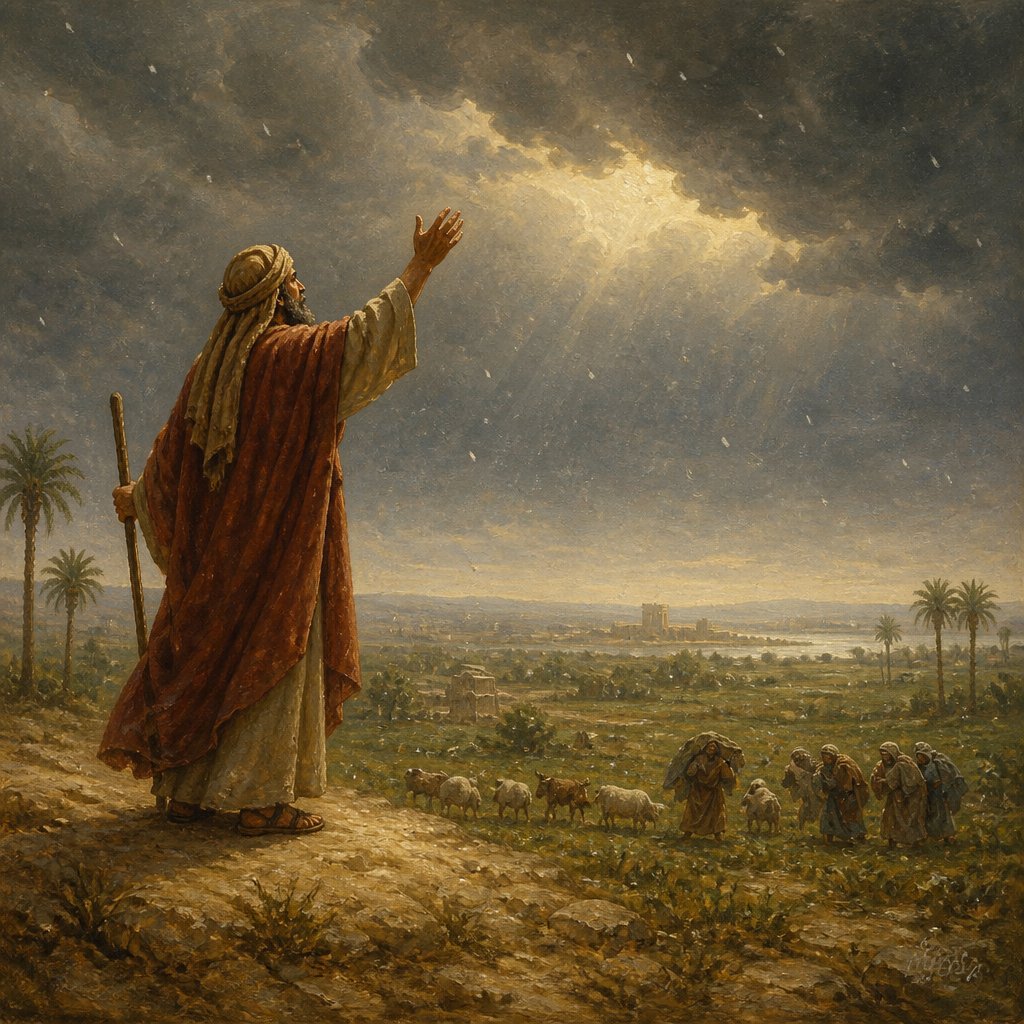
Exodus 9:22 in the King James Version reads, "And the Lord said unto Moses, Stretch forth thine hand toward heaven, that there may be hail in all the land of Egypt, upon man, and upon beast, and upon every herb of the field, throughout the land of Egypt.' This verse comes from the story of the plagues of Egypt, where God sent a series of devastating disasters to convince Pharaoh to release the Israelites from slavery.
In this verse, we see God commanding Moses to stretch forth his hand toward the heavens in order to bring about a specific plague - hail - upon the land of Egypt. This exemplifies God’s power and authority over the natural world. Furthermore, it demonstrates the intimate relationship between God and Moses, as God specifically instructs Moses to be the instrument of His divine will.
The theme of divine judgment is prevalent throughout this verse as well. The plagues sent by God upon Egypt were a direct result of Pharaoh's refusal to release the Israelites. This verse serves as a reminder of the consequences of defying God's will and the inevitable judgment that follows disobedience.
The context of this verse is important in understanding its significance. At this point in the narrative, the Israelites had been enslaved in Egypt for centuries, and God had sent Moses to demand their release. Pharaoh, however, repeatedly refused to comply, even after witnessing several miraculous signs. The plagues served as both a punishment for Pharaoh's defiance and a demonstration of God's power to the Egyptian people.
Symbolism also plays a significant role in this verse. The hail can be seen as a symbol of God's wrath and judgment upon the land of Egypt. Additionally, the hail's destructive nature serves as a physical representation of the devastation that comes from opposing God. This act of God's sending forth hail as a plague is a demonstration of His sovereignty and power over the elements, reinforcing His authority to the people of Egypt.
Furthermore, the act of stretching forth one's hand can be interpreted as a symbol of obedience and faith. By following God's command, Moses demonstrates his unwavering trust and submission to God's will. This act serves as a reminder to readers of the importance of obedience and faith in carrying out God's purposes.
In a broader sense, this verse speaks to the larger theme of God's justice and mercy. Despite the severity of the plagues, they were ultimately a means to an end - the liberation of the Israelites from bondage. God's ultimate goal was to rescue His people and lead them to freedom, even though it required a display of His divine power and judgment. This demonstrates God's faithfulness to His promises and His commitment to deliver His people from oppression.
In conclusion, Exodus 9:22 is a powerful verse that captures the themes of divine judgment, obedience, and ultimately, God's unwavering commitment to deliver His people. It serves as a reminder of the consequences of defying God's will and the importance of faith and obedience in carrying out His purposes. This verse also highlights the symbolism of God's sovereignty and power over the natural world, as well as His desire to bring justice and liberation to those who are oppressed.
Get our apps


Artwork for Exodus 9:22

Exodus 9:22 - "¶ And the LORD said unto Moses, Stretch forth thine hand toward heaven, that there may be hail in all the land of Egypt, upon man, and upon beast, and upon every herb of the field, throughout the land of Egypt."
"¶ And the LORD said unto Moses, Stretch forth thine hand toward heaven, that there may be hail in all the land of Egypt, upon man, and upon beast, and upon every herb of the field, throughout the land of Egypt." - Exodus 9:22

Exodus 22:22 - "¶ Ye shall not afflict any widow, or fatherless child."

Exodus 15:22

Exodus 22:28

Exodus 22:28

Exodus 22:28

Exodus 22:28

Exodus 22:28

Exodus 22:28

Exodus 22:28

Exodus 22:5

Exodus 22:28

Exodus 22:28

Exodus 22:28

Exodus 22:28

Exodus 22:28

Exodus 22:5

Exodus 22:28

Exodus 22:28

Exodus 22:5

Exodus 25:10-22

Exodus 22:9 - "For all manner of trespass, whether it be for ox, for ass, for sheep, for raiment, or for any manner of lost thing, which another challengeth to be his, the cause of both parties shall come before the judges; and whom the judges shall condemn, he shall pay double unto his neighbour."

Exodus 6:22 - "And the sons of Uzziel; Mishael, and Elzaphan, and Zithri."

Exodus 22:18 - "¶ Thou shalt not suffer a witch to live."

Exodus 30:22 - "¶ Moreover the LORD spake unto Moses, saying,"

Exodus 40:9
Exodus 2:9

Exodus 2:9

Exodus 22:19 - "¶ Whosoever lieth with a beast shall surely be put to death."