What does Ezekiel 10:20 mean?
“This is the living creature that I saw under the God of Israel by the river of Chebar; and I knew that they were the cherubims.” — Ezekiel 10:20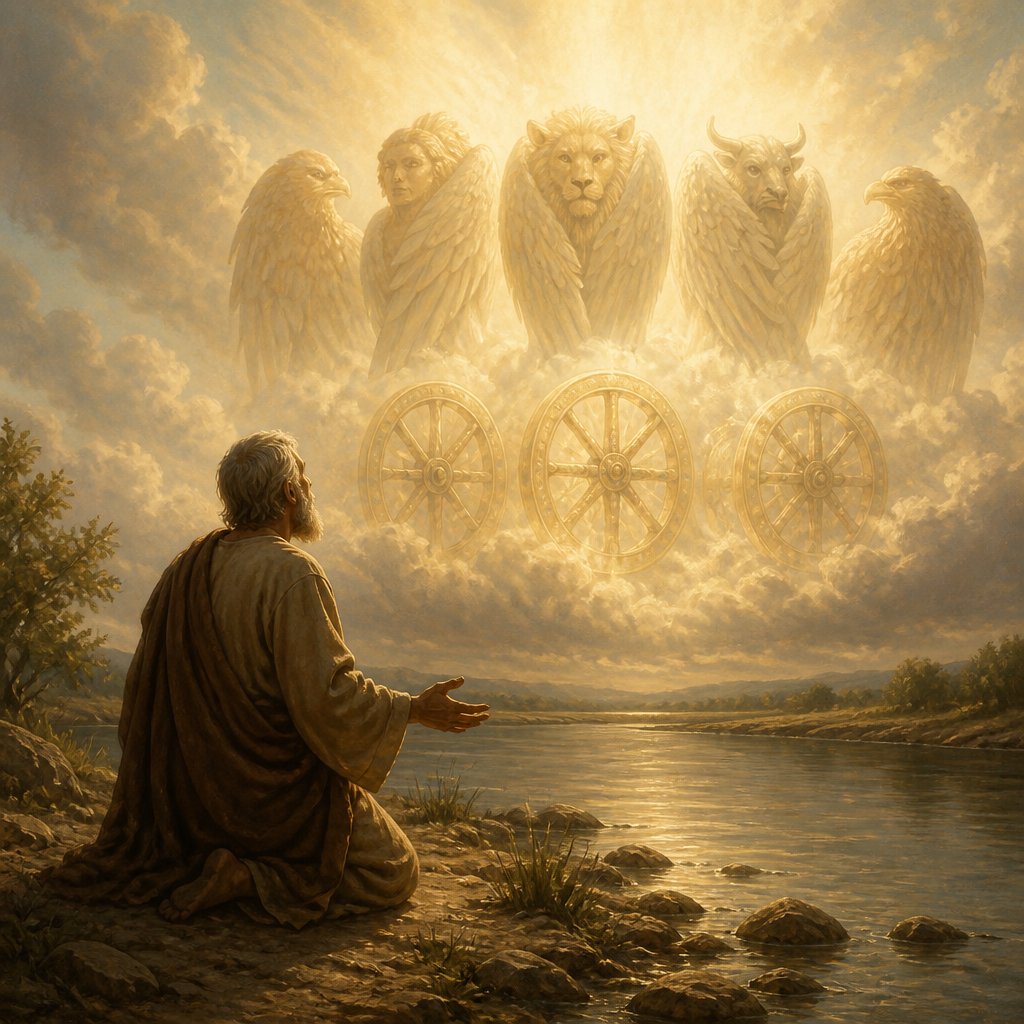
Ezekiel 10:20 (KJV) states, "This is the living creature that I saw under the God of Israel by the river of Chebar; and I knew that they were the cherubims."
In order to truly understand the depth and meaning of this verse, it is important to look at the context in which it was written and the symbolism it holds within the larger biblical narrative. The book of Ezekiel is filled with vivid and often perplexing visions that the prophet Ezekiel experienced. In this particular verse, Ezekiel is describing a vision he had of living creatures, which he identifies as cherubims, while in exile by the river Chebar. These creatures are described in more detail earlier in the chapter, in verses 5-17, as having a human-like form, with four faces – that of a cherub, a human, a lion, and an eagle. These creatures are also depicted as having wheels and being covered in eyes.
The mention of cherubims in the Bible is significant, as they are an important symbol and figure within the Judeo-Christian tradition. Cherubims are often associated with guarding and protecting sacred spaces, and are often depicted as being close to the presence of God. In the Old Testament, cherubims are said to have been placed in the Garden of Eden after Adam and Eve were expelled, to guard the way to the tree of life. In the book of Exodus, cherubims are also described as adorning the mercy seat, the top of the Ark of the Covenant, representing the presence of God.
Furthermore, the river of Chebar itself holds symbolic significance in the book of Ezekiel. It was by the river of Chebar that Ezekiel had his visions, and it was also there that he was called by God to be a prophet. The river of Chebar can be seen as a representation of exile and displacement, as Ezekiel was living in a foreign land during his prophetic ministry.
In the broader context of the book of Ezekiel, the vision of the living creatures serves to convey the majesty and glory of God. The vivid and otherworldly imagery of the cherubims and their surroundings serves to emphasize the divine nature of Ezekiel's encounters. Additionally, the presence of the living creatures by the river of Chebar can be seen as a reassurance of God's proximity even in the midst of exile and uncertainty.
From a thematic standpoint, this verse speaks to the presence of divine beings in the world, and the idea of God's constant watchful care. The description of the living creatures as cherubims underscores the idea of protection and guardianship, as well as the nearness of God. This theme of divine presence and protection amidst adversity is one that resonates throughout the Bible, offering comfort and hope to believers.
In summary, Ezekiel 10:20 presents a powerful and symbolic image of divine creatures by the river of Chebar, underscoring the majesty and nearness of God. Through its rich symbolism, this verse speaks to the themes of divine presence and protection, and holds a significant place within the larger narrative of Ezekiel's prophetic visions.
Get our apps


Artwork for Ezekiel 10:20

Ezekiel 10:20 - "This is the living creature that I saw under the God of Israel by the river of Chebar; and I knew that they were the cherubims."

"This is the living creature that I saw under the God of Israel by the river of Chebar; and I knew that they were the cherubims." - Ezekiel 10:20

Ezekiel 20:10 - "¶ Wherefore I caused them to go forth out of the land of Egypt, and brought them into the wilderness."

"¶ Wherefore I caused them to go forth out of the land of Egypt, and brought them into the wilderness." - Ezekiel 20:10

Ezekiel 10:10

Ezekiel 10:10

Ezekiel 10:10

Ezekiel 10:10

Ezekiel 20:41

Ezekiel 20:41

Ezekiel 20:40

Ezekiel 20:41

Ezekiel 20:40

Ezekiel 20:40

Ezekiel 20:41

Ezekiel 20:41

Ezekiel 20:40

Ezekiel 20:41

Ezekiel 27:20 - "Dedan was thy merchant in precious clothes for chariots."

Ezekiel 20:2 - "Then came the word of the LORD unto me, saying,"

Ezekiel 28:20 - "¶ Again the word of the LORD came unto me, saying,"

Ezekiel 20:45 - "¶ Moreover the word of the LORD came unto me, saying,"

Ezekiel 20:20 - "And hallow my sabbaths; and they shall be a sign between me and you, that ye may know that I am the LORD your God."

Ezekiel 10:10 - "And as for their appearances, they four had one likeness, as if a wheel had been in the midst of a wheel."

ezekiel 47:8-10

ezekiel 47:8-10

ezekiel 47:8-10

ezekiel 47:8-10

Ezekiel 37:1-10 – The valley of dry bones.

Ezekiel 37:1-10 – The vision of the valley of dry bones.