What does Ezekiel 13:12 mean?
“Lo, when the wall is fallen, shall it not be said unto you, Where is the daubing wherewith ye have daubed it?” — Ezekiel 13:12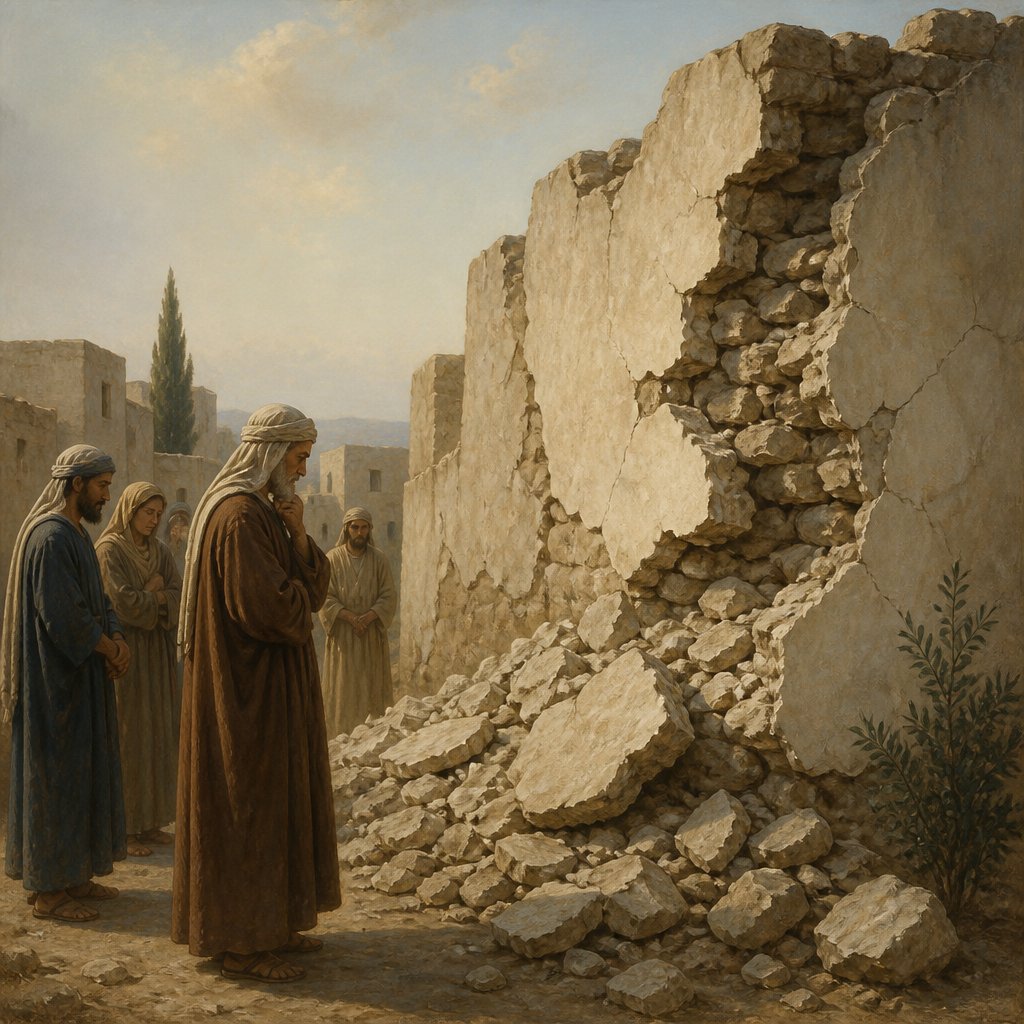
Ezekiel 13:12 in the King James Version of the Bible reads, "Lo, when the wall is fallen, shall it not be said unto you, Where is the daubing wherewith ye have daubed it?"
This verse is part of a larger passage in the book of Ezekiel in which the prophet is delivering a message from God to the people of Israel. In this particular section, Ezekiel is speaking out against false prophets who are deceiving the people with their lies and promises of security and peace. The image of the fallen wall in this verse is a metaphor for the destruction and chaos that will come as a result of the false prophets' empty and deceitful promises.
The verse begins with the word "Lo," which is a signal to pay attention or take notice. This alerts the reader that the message being delivered is of great importance. The imagery of the fallen wall is powerful and evocative. In ancient times, city walls were vital for protection and security, so the idea of a fallen wall would have been deeply troubling to the people. The wall represents the false sense of security that the people have been led to believe in by the false prophets.
The question posed in the second half of the verse, "Where is the daubing wherewith ye have daubed it?" is a rhetorical one, meant to emphasize the emptiness and futility of the false prophets' promises. Daubing refers to the act of covering or adorning something with a sticky or viscous substance. In this context, it is a reference to the false assurances and lies that the prophets have used to deceive the people. The question implies that the promises that were used to cover up the truth and give a false sense of security are now nowhere to be found.
The overall message of this passage is a warning against false prophets and the dangers of putting our trust in empty promises and false assurances. The consequences of following these false prophets are dire, as indicated by the image of the fallen wall. The verse serves as a reminder that true security and peace can only be found in God, and that we must be wary of those who would lead us astray with their deceitful words.
In a broader sense, this passage can also be seen as a commentary on the nature of truth and deception. In a world full of conflicting messages and ideologies, it is important to discern the truth from the lies and not be swayed by those who would deceive us for their own gain. The fallen wall serves as a stark reminder of the consequences of putting our trust in falsehoods.
Symbolically, the fallen wall can also be seen as a representation of the moral and spiritual decay that comes from straying from the path of righteousness. Just as a city without walls is vulnerable to attack, so too are we vulnerable when we abandon the truth and place our trust in falsehoods.
In conclusion, Ezekiel 13:12 is a sobering reminder of the dangers of false prophets and the consequences of trusting in deceitful promises. The image of the fallen wall serves as a powerful metaphor for the destruction and chaos that comes from being led astray by lies and falsehoods. It is a call to remain steadfast in the truth and to be wary of those who would deceive us with their empty words. Ultimately, the verse points us towards the importance of seeking and holding onto the truth in a world full of deception and falsehood.
Get our apps


Artwork for Ezekiel 13:12

Ezekiel 13:12 - "Lo, when the wall is fallen, shall it not be said unto you, Where is the daubing wherewith ye have daubed it?"
"Lo, when the wall is fallen, shall it not be said unto you, Where is the daubing wherewith ye have daubed it?" - Ezekiel 13:12

Ezekiel 12:13 - "My net also will I spread upon him, and he shall be taken in my snare: and I will bring him to Babylon to the land of the Chaldeans; yet shall he not see it, though he shall die there."
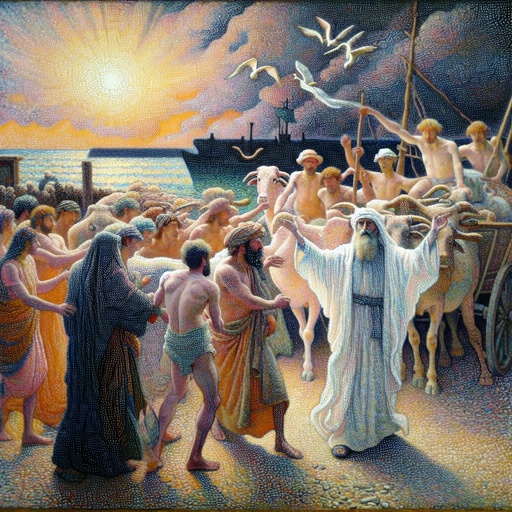
Ezekiel 7:12-13 (KJVA) 12 The time is come, the day draweth near: let not the buyer rejoice, nor the seller mourn: for wrath is upon all the multitude thereof. 13 For the seller shall not return to that which is sold, although they were yet alive: for the vision is touching the whole multitude thereof, which shall not return; neither shall any strengthen himself in the iniquity of his life.

Ezekiel 28:13

Ezekiel 1:6-13

ezekiel 47:1-12

ezekiel 47:1-12

ezekiel 47:1-12

ezekiel 47:1-12

ezekiel 47:1-12

Ezekiel 47:1-12

ezekiel 47:1-12

ezekiel 47:1-12

ezekiel 47:1-12

ezekiel 47:1-12

ezekiel 47:1-12

ezekiel 47:1-12

ezekiel 47:1-12

ezekiel 47:1-12

1 Corinthians 12:12-13

Ezekiel 13:1 - "And the word of the LORD came unto me, saying,"

Ezekiel 12:17 - "¶ Moreover the word of the LORD came to me, saying,"

Ezekiel 14:12 - "¶ The word of the LORD came again to me, saying,"

Ezekiel 47:1-9, 12

Ezekiel 13:4 - "O Israel, thy prophets are like the foxes in the deserts."

Ezekiel 19:13 - "And now she is planted in the wilderness, in a dry and thirsty ground."

Ezekiel 12:26 - "¶ Again the word of the LORD came to me, saying,"

Ezekiel 12:21 - "¶ And the word of the LORD came unto me, saying,"

Ezekiel 12:1 - "The word of the LORD also came unto me, saying,"