What does Ezekiel 16:9 mean?
“Then washed I thee with water; yea, I throughly washed away thy blood from thee, and I anointed thee with oil.” — Ezekiel 16:9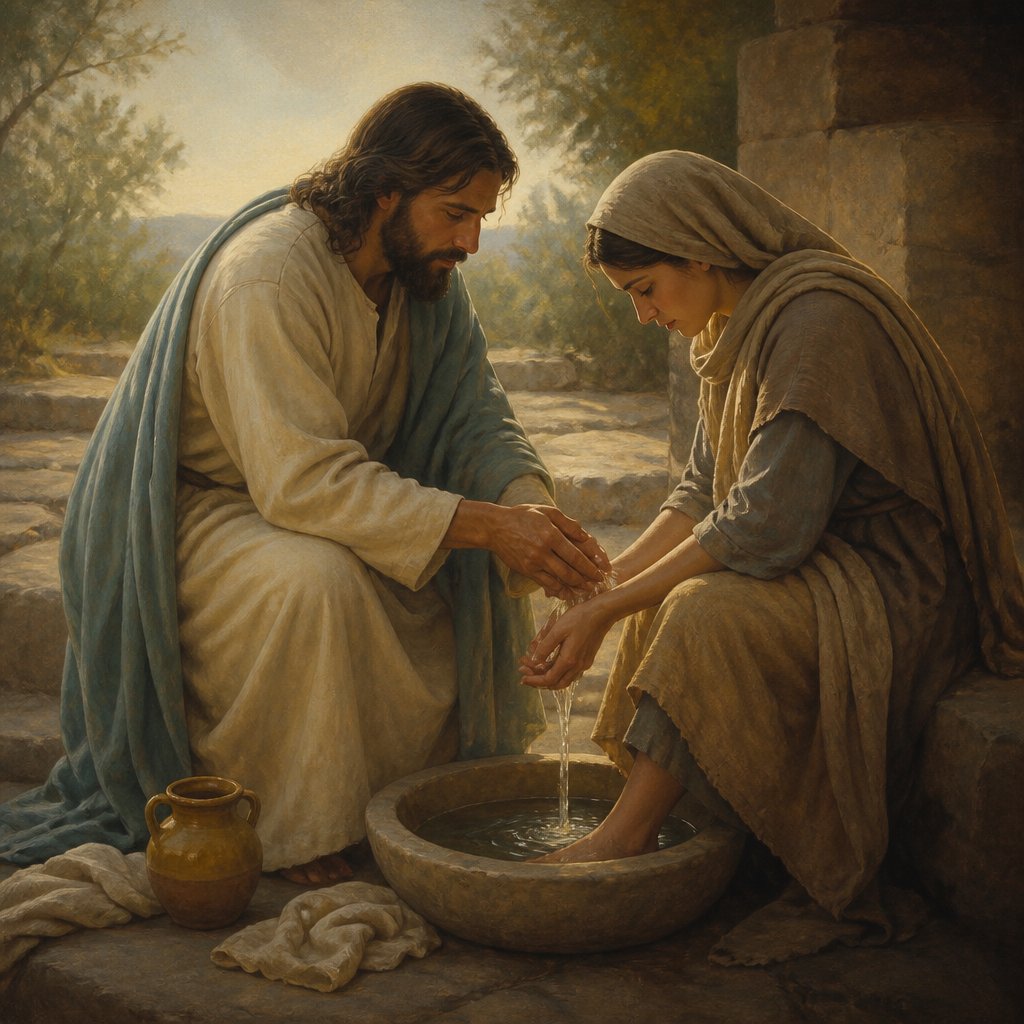
Ezekiel 16:9 (KJV) states, "Then washed I thee with water; yea, I thoroughly washed away thy blood from thee, and I anointed thee with oil."
This verse comes from the book of Ezekiel in the Old Testament. In this chapter, Ezekiel delivers a message from God to the people of Jerusalem, using the metaphor of a young woman who is abandoned and neglected, only to be loved and cared for by a kind and generous suitor. In this context, Ezekiel 16:9 can be seen as a part of God's love and grace for His people, despite their history of unfaithfulness and sin.
The verse begins with the imagery of washing with water. Water, in the biblical context, is often associated with purification, cleansing, and renewal. In this case, the washing away of blood can be seen as a symbol of the forgiveness and removal of sin. This powerful image communicates God's act of grace and mercy towards His people. Despite their sinfulness and spiritual unfaithfulness, God offers them purification and restoration.
Furthermore, the act of anointing with oil was a significant ritual in the Old Testament, often associated with consecration and empowerment for service. In this context, God's anointing of His people with oil suggests His favor, blessing, and empowerment for a new and meaningful life. It conveys the idea of God's provision and care for His people, even in the midst of their unfaithfulness.
Overall, Ezekiel 16:9 reflects the themes of God's grace, forgiveness, and restoration. It speaks to the unmerited love and kindness of God towards His people, despite their shortcomings and failures. The verse serves as a powerful reminder of God's willingness to forgive and restore those who turn to Him in repentance.
In a broader context, this verse also speaks to the larger narrative of God's relationship with His people throughout the Old Testament. Despite their repeated disobedience and unfaithfulness, God continues to extend His love and grace, always seeking to bring His people back into a close relationship with Him.
The message of Ezekiel 16:9 is timeless and universal. It speaks to the human experience of sin, forgiveness, and redemption. It reminds us that no matter how far we may have strayed, God's love and grace are always available to us. It challenges us to turn away from our sin and to embrace God's gift of forgiveness and restoration.
Symbolically, the washing with water and anointing with oil in Ezekiel 16:9 can be seen as a foreshadowing of the ultimate act of cleansing and empowerment through the atoning sacrifice of Jesus Christ. In the New Testament, the symbolism of water and oil is brought to fulfillment in the sacraments of baptism and anointing with oil for healing and empowerment. Thus, Ezekiel 16:9 also points to the redemptive work of Christ and the offer of salvation to all who believe in Him.
In conclusion, Ezekiel 16:9 is a powerful reminder of God's unfailing love and grace. It speaks to the human experience of sin and redemption, offering hope and encouragement to all who turn to God in repentance. This verse serves as a testament to God's unchanging character and His desire to restore and renew all who come to Him in faith.
Get our apps


Artwork for Ezekiel 16:9
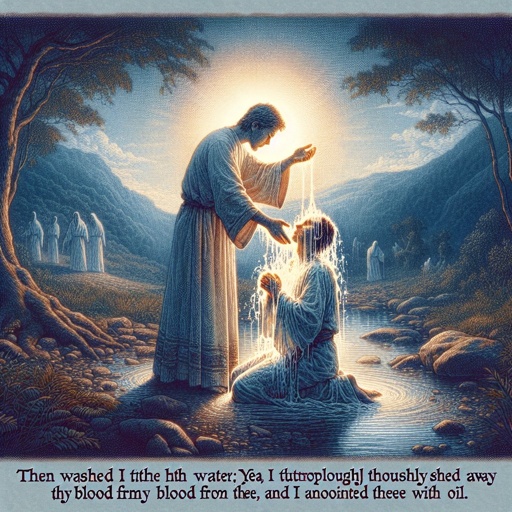
Ezekiel 16:9 - "Then washed I thee with water; yea, I throughly washed away thy blood from thee, and I anointed thee with oil."
"Then washed I thee with water; yea, I throughly washed away thy blood from thee, and I anointed thee with oil." - Ezekiel 16:9

Ezekiel 33:3-9

Ezekiel 16:35 - "¶ Wherefore, O harlot, hear the word of the LORD:"

Ezekiel 16:2 - "Son of man, cause Jerusalem to know her abominations,"

Ezekiel 36:16 - "¶ Moreover the word of the LORD came unto me, saying,"

Ezekiel 16:1 - "Again the word of the LORD came unto me, saying,"

Ezekiel 45:16 - "All the people of the land shall give this oblation for the prince in Israel."

Ezekiel 47:1-9, 12

Ezekiel 16:56 - "For thy sister Sodom was not mentioned by thy mouth in the day of thy pride,"

Ezekiel 39:16 - "And also the name of the city shall be Hamonah. Thus shall they cleanse the land."

Ezekiel 16:32 - "But as a wife that committeth adultery, which taketh strangers instead of her husband!"

Ezekiel 16:58 - "Thou hast borne thy lewdness and thine abominations, saith the LORD."

Ezekiel 34:9 - "Therefore, O ye shepherds, hear the word of the LORD;"

Genesis 16:9

Rev 9:16

Ezekiel 16:16 - "And of thy garments thou didst take, and deckedst thy high places with divers colours, and playedst the harlot thereupon: the like things shall not come, neither shall it be so."

Ezekiel 43:16 - "And the altar shall be twelve cubits long, twelve broad, square in the four squares thereof."

Ezekiel 3:16 - "And it came to pass at the end of seven days, that the word of the LORD came unto me, saying,"

Ezekiel 16:62 - "And I will establish my covenant with thee; and thou shalt know that I am the LORD:"

John 16:9 - "Of sin, because they believe not on me;"

Ezekiel 8:9 - "And he said unto me, Go in, and behold the wicked abominations that they do here."

Ezekiel 16:23 - "And it came to pass after all thy wickedness, (woe, woe unto thee! saith the Lord GOD;)"

Ezekiel 21:16 - "Go thee one way or other, either on the right hand, or on the left, whithersoever thy face is set."

Ezekiel 16:21 - "That thou hast slain my children, and delivered them to cause them to pass through the fire for them?"

Ezekiel 42:16 - "He measured the east side with the measuring reed, five hundred reeds, with the measuring reed round about."

Ezekiel 16:12 - "And I put a jewel on thy forehead, and earrings in thine ears, and a beautiful crown upon thine head."

Joshua And The Walls Of Jericho 16:9

"¶ Wherefore, O harlot, hear the word of the LORD:" - Ezekiel 16:35

Ezekiel 47:16 - "Hamath, Berothah, Sibraim, which is between the border of Damascus and the border of Hamath; Hazar-hatticon, which is by the coast of Hauran."