What does Ezekiel 26:21 mean?
“I will make thee a terror, and thou shalt be no more: though thou be sought for, yet shalt thou never be found again, saith the Lord GOD.” — Ezekiel 26:21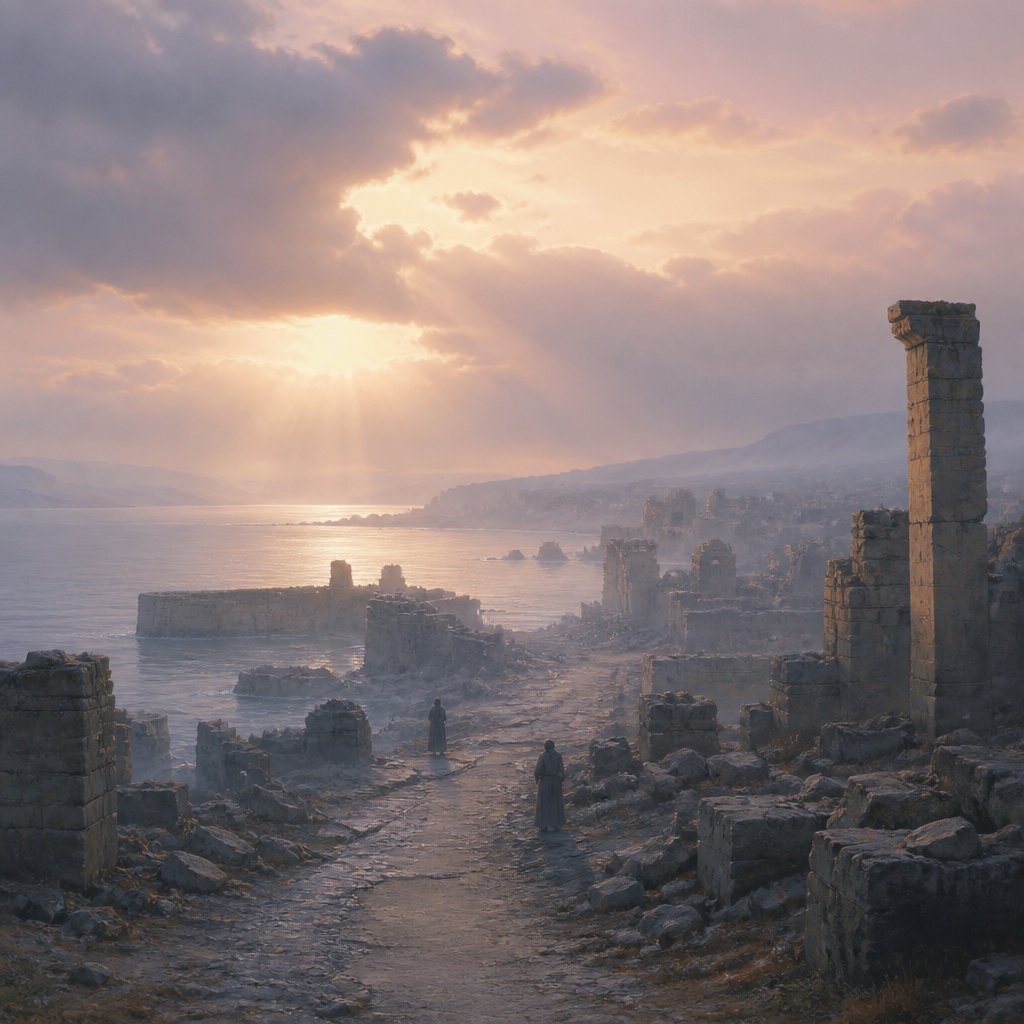
Ezekiel 26:21 from the King James Version (KJV) of the Bible reads: "I will make thee a terror, and thou shalt be no more: though thou be sought for, yet shalt thou never be found again, saith the Lord God."
This verse comes at the end of a prophecy against the city of Tyre, which was a prominent and wealthy trading city in the ancient world. The prophecy of Ezekiel describes the downfall of Tyre, which was ultimately fulfilled when the city was conquered and destroyed by Alexander the Great in 332 BC.
The verse itself is a declaration of the complete and final destruction of Tyre. The language used here is dramatic and intense, conveying the severity of the judgment that God has decreed upon this city. The phrase "I will make thee a terror" suggests that Tyre will become a byword for fear and destruction, a cautionary tale for other nations. The statement "thou shalt be no more" emphasizes the utter devastation and annihilation that is to come upon Tyre. The final declaration "though thou be sought for, yet shalt thou never be found again" reinforces the finality of the city's destruction, suggesting that it will be impossible to even locate remnants of what once was a thriving metropolis.
One of the key themes in this verse is the concept of divine judgment. Throughout the Bible, there are numerous examples of nations and cities facing the consequences of their actions, and this verse is a stark illustration of the consequences of Tyre's arrogance, pride, and sinful behavior. The verse serves as a reminder that God is just and will hold individuals, communities, and even nations accountable for their actions.
In addition to the theme of divine judgment, this verse also highlights the transient nature of human power and wealth. Tyre was a city known for its prosperity and influence, but this verse emphasizes the impermanence of such worldly success. It serves as a warning against pride and self-reliance, reminding readers that all earthly achievements are ultimately fleeting and insignificant in the face of God's ultimate authority.
Symbolically, the imagery in this verse can be interpreted as a representation of the broader spiritual truth that any nation or individual that exalts itself against God will ultimately face destruction. The fate of Tyre serves as a cautionary tale, highlighting the consequences of forgetting or defying God. This verse also serves as a reminder of the ultimate sovereignty of God over all earthly powers and principalities.
In terms of historical context, the destruction of Tyre by Alexander the Great is a well-documented event. Ezekiel's prophecy, which was written several hundred years before this event took place, serves as a powerful example of the accuracy and reliability of biblical prophecy. The fulfillment of this prophecy stands as a testament to the divine inspiration of scripture and the faithfulness of God's word.
In conclusion, Ezekiel 26:21 is a verse that conveys a powerful message about divine judgment, the transient nature of earthly power, and the sovereignty of God. It serves as a warning to nations and individuals who exalt themselves against God, and a reminder of the consequences of sin and pride. This verse also stands as a testament to the faithfulness and reliability of biblical prophecy, as evidenced by the historical fulfillment of the destruction of Tyre.
Get our apps


Artwork for Ezekiel 26:21

Ezekiel 26:21 - "I will make thee a terror, and thou shalt be no more: though thou be sought for, yet shalt thou never be found again, saith the Lord GOD."
"I will make thee a terror, and thou shalt be no more: though thou be sought for, yet shalt thou never be found again, saith the Lord GOD." - Ezekiel 26:21

Ezekiel 21:26 - "Thus saith the Lord GOD; Remove the diadem, and take off the crown: this shall not be the same: exalt him that is low, and abase him that is high."

Genesis 21-26

Ezekiel 21:7
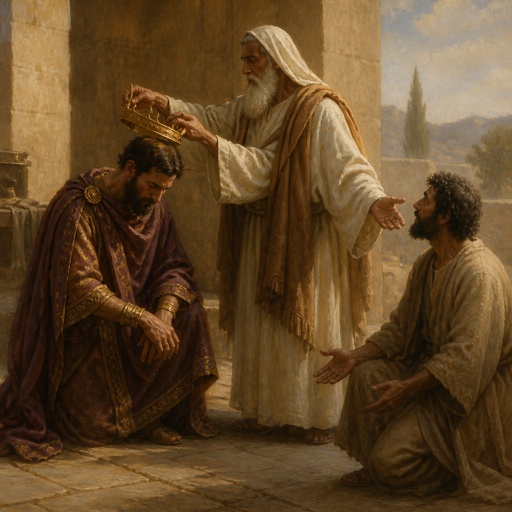
"Thus saith the Lord GOD; Remove the diadem, and take off the crown: this shall not be the same: exalt him that is low, and abase him that is high." - Ezekiel 21:26

Luke 6:21-26

Luke 6:21-26

Ezekiel 12:26 - "¶ Again the word of the LORD came to me, saying,"

Revelation 21:26 - "And they shall bring the glory and honour of the nations into it."

Ezekiel 44:26 - "And after he is cleansed, they shall reckon unto him seven days."

"A new heart also will I give you, and a new spirit will I put within you: and I will take away the stony heart out of your flesh, and I will give you an heart of flesh." - Ezekiel 36:26

Ezekiel 21:1 - "And the word of the LORD came unto me, saying,"

Ezekiel 12:21 - "¶ And the word of the LORD came unto me, saying,"

Ezekiel 48:26 - "And by the border of Issachar, from the east side unto the west side, Zebulun a portion."

Ezekiel 21:18 - "¶ The word of the LORD came unto me again, saying,"

Ezekiel 21:8 - "¶ Again the word of the LORD came unto me, saying,"
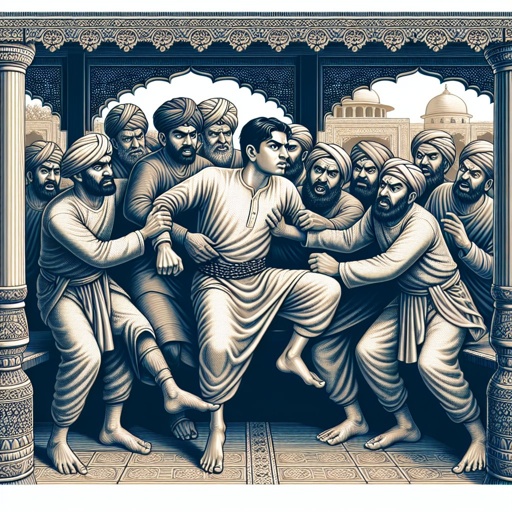
Acts 26:21 - "For these causes the Jews caught me in the temple, and went about to kill me."

Proverbs 21:26 - "He coveteth greedily all the day long: but the righteous giveth and spareth not."

Joshua 21:26 - "All the cities were ten with their suburbs for the families of the children of Kohath that remained."

Job 21:26 - "They shall lie down alike in the dust, and the worms shall cover them."

Numbers 26:21 - "And the sons of Pharez were; of Hezron, the family of the Hezronites: of Hamul, the family of the Hamulites."

Genesis 26:21 - "And they digged another well, and strove for that also: and he called the name of it Sitnah."

Ezekiel 24:26 - "That he that escapeth in that day shall come unto thee, to cause thee to hear it with thine ears?"

Ezekiel 26:13 - "And I will cause the noise of thy songs to cease; and the sound of thy harps shall be no more heard."

Ezekiel 26:6 - "And her daughters which are in the field shall be slain by the sword; and they shall know that I am the LORD."

Ezekiel 23:26 - "They shall also strip thee out of thy clothes, and take away thy fair jewels."

Proverbs 26:21 - "As coals are to burning coals, and wood to fire; so is a contentious man to kindle strife."

Ezekiel 28:21 - "Son of man, set thy face against Zidon, and prophesy against it,"

Ezekiel 26:1 - "And it came to pass in the eleventh year, in the first day of the month, that the word of the LORD came unto me, saying,"