What does Ezekiel 27:13 mean?
“Javan, Tubal, and Meshech, they were thy merchants: they traded the persons of men and vessels of brass in thy market.” — Ezekiel 27:13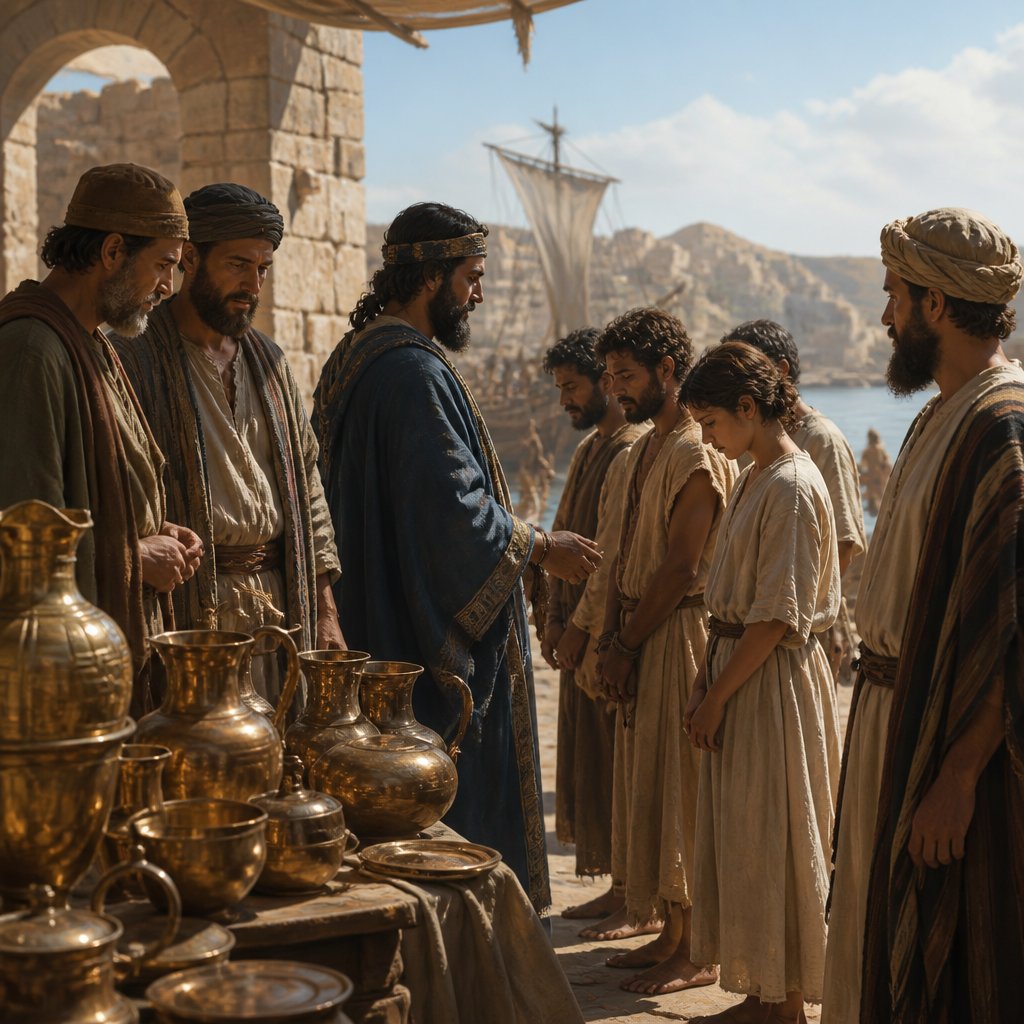
Ezekiel 27:13 (KJV) reads, "Javan, Tubal, and Meshech, they were thy merchants: they traded the persons of men and vessels of brass in thy market."
This verse is part of a larger lamentation about the fall of Tyre, a prominent and wealthy trading city in the ancient world. In this passage, the prophet Ezekiel is lamenting the downfall of Tyre, using the metaphor of a ship to describe the city's prosperity and power. The verse specifically mentions Javan, Tubal, and Meshech as merchants who traded with Tyre, and highlights their exploitation of human lives and the trade of brass vessels.
In order to fully understand the meaning and commentary of this verse, it is important to consider the historical and cultural context in which it was written. Tyre was a thriving trading city in the ancient world, known for its wealth, luxury, and influence. It was a major hub for commerce and trade, and its merchants were known for their success and prosperity. However, Tyre's success also led to moral and ethical corruption, as the city became involved in exploitative and unjust practices, including the trade of human beings.
The mention of Javan, Tubal, and Meshech as merchants in this verse is significant, as these names are associated with specific regions and peoples in the ancient world. Javan is commonly identified with Greece, Tubal with the region of modern-day Turkey, and Meshech with the people of the northern Caucasus region. These were all significant trading partners of Tyre, and their involvement in the exploitation of human lives and the trade of brass vessels highlights the extent of the city's unethical practices.
The mention of the trade of "persons of men" in this verse is particularly poignant, as it reflects the dehumanization and commodification of individuals for profit. This likely refers to the practice of slavery, which was common in the ancient world and was often intertwined with the trading activities of prosperous cities like Tyre. The trade of brass vessels also represents the material wealth and luxury that characterized Tyre's commercial activities, but it is juxtaposed with the dehumanization of individuals, emphasizing the city's moral bankruptcy.
This verse serves as a cautionary tale about the dangers of unchecked greed and the pursuit of wealth at the expense of human dignity and justice. It condemns the exploitation of vulnerable individuals for the sake of profit, and it serves as a reminder of the consequences of such unethical practices. The downfall of Tyre, as described by Ezekiel, is ultimately attributed to its moral corruption and disregard for moral and ethical principles.
In addition to its historical and moral significance, this verse also carries symbolic and spiritual meaning. It can be interpreted as a warning against the temptation of material wealth and the ethical compromises that often accompany the pursuit of prosperity. It serves as a reminder of the importance of prioritizing ethical and moral principles in economic and commercial activities and resisting the allure of unjust gain.
Overall, Ezekiel 27:13 (KJV) is a powerful and evocative verse that offers a sharp critique of the moral and ethical failings of a prosperous but corrupt trading city. It serves as a cautionary tale and a reminder of the consequences of prioritizing wealth and prosperity at the expense of human dignity and justice. Its message resonates across time and serves as a relevant and timeless warning against the dangers of greed and exploitation.
Get our apps


Artwork for Ezekiel 27:13

Ezekiel 27:13 - "Javan, Tubal, and Meshech, they were thy merchants: they traded the persons of men and vessels of brass in thy market."
"Javan, Tubal, and Meshech, they were thy merchants: they traded the persons of men and vessels of brass in thy market." - Ezekiel 27:13

Ezekiel 27:20 - "Dedan was thy merchant in precious clothes for chariots."

Ezekiel 27:28 - "The suburbs shall shake at the sound of the cry of thy pilots."

Ezekiel 27:1 - "The word of the LORD came again unto me, saying,"

Ezekiel 27:14 - "They of the house of Togarmah traded in thy fairs with horses and horsemen and mules."

Ezekiel 27:2 - "Now, thou son of man, take up a lamentation for Tyrus;"

Ezekiel 28:13

Psalm 27:13-14

Luke 13:28-27

Luke 13:28-27

Luke 13:28-27

Ezekiel 27:23 - "Haran, and Canneh, and Eden, the merchants of Sheba, Asshur, and Chilmad, were thy merchants."

Ezekiel 48:27 - "And by the border of Zebulun, from the east side unto the west side, Gad a portion."

Ezekiel 27:4 - "Thy borders are in the midst of the seas, thy builders have perfected thy beauty."

Ezekiel 37:27 - "My tabernacle also shall be with them: yea, I will be their God, and they shall be my people."

Ezekiel 1:6-13

Ezekiel 27:21 - "Arabia, and all the princes of Kedar, they occupied with thee in lambs, and rams, and goats: in these were they thy merchants."

Ezekiel 27:36 - "The merchants among the people shall hiss at thee; thou shalt be a terror, and never shalt be any more."

Ezekiel 27:35 - "All the inhabitants of the isles shall be astonished at thee, and their kings shall be sore afraid, they shall be troubled in their countenance."

Exodus 27:13 - "And the breadth of the court on the east side eastward shall be fifty cubits."

Ezekiel 13:1 - "And the word of the LORD came unto me, saying,"

Ezekiel 40:27 - "And there was a gate in the inner court toward the south: and he measured from gate to gate toward the south an hundred cubits."
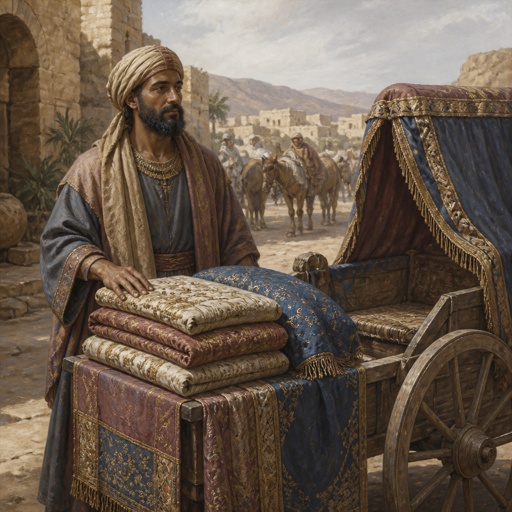
"Dedan was thy merchant in precious clothes for chariots." - Ezekiel 27:20

Ezekiel 27:26 - "¶ Thy rowers have brought thee into great waters: the east wind hath broken thee in the midst of the seas."

Ezekiel 27:18 - "Damascus was thy merchant in the multitude of the wares of thy making, for the multitude of all riches; in the wine of Helbon, and white wool."

Ezekiel 21:27 - "I will overturn, overturn, overturn, it: and it shall be no more, until he come whose right it is; and I will give it him."

Ezekiel 27:25 - "The ships of Tarshish did sing of thee in thy market: and thou wast replenished, and made very glorious in the midst of the seas."

Ezekiel 27:19 - "Dan also and Javan going to and fro occupied in thy fairs: bright iron, cassia, and calamus, were in thy market."

Ezekiel 22:27 - "Her princes in the midst thereof are like wolves ravening the prey, to shed blood, and to destroy souls, to get dishonest gain."