What does Ezekiel 38:17 mean?
“Thus saith the Lord GOD; Art thou he of whom I have spoken in old time by my servants the prophets of Israel, which prophesied in those days many years that I would bring thee against them?” — Ezekiel 38:17
The verse Ezekiel 38:17 in the King James Version (KJV) of the Bible states: "Thus saith the Lord God; Art thou he of whom I have spoken in old time by my servants the prophets of Israel, which prophesied in those days many years that I would bring thee against them?"
This verse is part of a larger passage in the book of Ezekiel that describes a prophecy against Gog, the chief prince of Meshech and Tubal. It is important to understand the context of this verse in order to fully grasp its meaning and significance.
The book of Ezekiel is part of the Old Testament and is often referred to as a book of prophecy. The prophet Ezekiel received a vision from God in which he was commanded to deliver a message to the people of Israel. The overall theme of the book is one of judgment and restoration. The people of Israel had turned away from God and were facing the consequences of their actions. However, God also promised to eventually restore them to their land and to a right relationship with Him.
In this particular passage, God is speaking through the prophet Ezekiel to address Gog, the chief prince of Meshech and Tubal. Gog is seen as a symbol of the enemies of God's people and is often associated with an end-time enemy of Israel. The verse in question is a rhetorical question posed by God to Gog, asking if he is the one of whom God had spoken through His prophets in the past. This question serves to emphasize that the events unfolding are part of God's plan and have been foretold by the prophets.
The use of the phrase "my servants the prophets of Israel" highlights the notion of God's sovereignty and foreknowledge. Throughout the history of Israel, God had raised up prophets to speak His word and to declare His plans and purposes to the people. The reference to the prophets of Israel serves to underscore the authority and reliability of the message being delivered to Gog. This also reinforces the idea that God's plan for judgment and redemption has been established from ancient times and is being fulfilled in the present situation.
The use of prophecy in the Bible is a significant theme that runs throughout both the Old and New Testaments. Prophecy serves as a means for God to communicate His will and intentions to His people. It also demonstrates His faithfulness to fulfill His promises. In the case of the verse in question, the reference to the prophets of Israel carries important implications. It asserts that the current events involving Gog and the judgment of Israel are in line with God's predetermined plan and are a direct result of His word spoken through His prophets.
Furthermore, the verse can be seen as a demonstration of God's sovereignty over the nations. The mention of Gog, a powerful and threatening figure, serves as a reminder that even the mighty rulers of the earth are subject to God's authority. The rhetorical question posed to Gog conveys the idea that God is in control and that His plans will come to pass, regardless of the actions or intentions of earthly powers.
In addition to its immediate context, the verse can also be seen as having broader implications in the biblical narrative. It can be interpreted as a foreshadowing of the ultimate defeat of evil and the establishment of God's kingdom. The mention of the prophetic word spoken through the servants of God points forward to the culmination of all prophecy in the fulfillment of God's purposes through Jesus Christ. In this sense, the verse carries a message of hope and reassurance for God's people, affirming that His plans will prevail and that His ultimate victory is assured.
In conclusion, the verse Ezekiel 38:17 in the King James Version of the Bible is a powerful statement of God's sovereignty, foreknowledge, and faithfulness. It emphasizes the role of prophecy in communicating God's will and underscores His control over the nations. Its implications extend beyond its immediate context to encompass the broader narrative of God's redemptive plan for His people. As such, it serves as a reminder of the trustworthiness of God's word and the certainty of His promises.
Get our apps


Artwork for Ezekiel 38:17
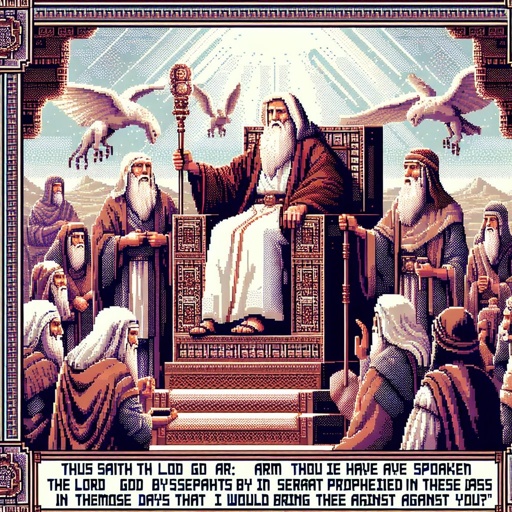
Ezekiel 38:17 - "Thus saith the Lord GOD; Art thou he of whom I have spoken in old time by my servants the prophets of Israel, which prophesied in those days many years that I would bring thee against them?"

"Thus saith the Lord GOD; Art thou he of whom I have spoken in old time by my servants the prophets of Israel, which prophesied in those days many years that I would bring thee against them?" - Ezekiel 38:17

Ezekiel 38:1-3

Isaiah 38:17

Ezekiel 38:1 - "And the word of the LORD came unto me, saying,"

Ezekiel 38:5 - "Persia, Ethiopia, and Libya with them; all of them with shield and helmet:"

1 Samuel 17:38-40

Ezekiel 40:38 - "And the chambers and the entries thereof were by the posts of the gates, where they washed the burnt offering."

Psalms 38:17 - "For I am ready to halt, and my sorrow is continually before me."

"And the word of the LORD came unto me, saying," - Ezekiel 38:1

Ezekiel 38:6 - "Gomer, and all his bands; the house of Togarmah of the north quarters, and all his bands: and many people with thee."

Ezekiel 38:7 - "Be thou prepared, and prepare for thyself, thou, and all thy company that are assembled unto thee, and be thou a guard unto them."

Ezekiel 38:19 - "For in my jealousy and in the fire of my wrath have I spoken, Surely in that day there shall be a great shaking in the land of Israel;"

Ezekiel 16:38 - "And I will judge thee, as women that break wedlock and shed blood are judged; and I will give thee blood in fury and jealousy."

Ezekiel 23:38 - "Moreover this they have done unto me: they have defiled my sanctuary in the same day, and have profaned my sabbaths."

Ezekiel 38:23 - "Thus will I magnify myself, and sanctify myself; and I will be known in the eyes of many nations, and they shall know that I am the LORD."

Ezekiel 38:3 - "And say, Thus saith the Lord GOD; Behold, I am against thee, O Gog, the chief prince of Meshech and Tubal:"

Job 38:17 - "Have the gates of death been opened unto thee? or hast thou seen the doors of the shadow of death?"

Ezekiel 3:17

Ezekiel 38:2 - "Son of man, set thy face against Gog, the land of Magog, the chief prince of Meshech and Tubal, and prophesy against him,"

2 Kings 17:38 - "And the covenant that I have made with you ye shall not forget; neither shall ye fear other gods."

"Persia, Ethiopia, and Libya with them; all of them with shield and helmet:" - Ezekiel 38:5

Ezekiel 38:9 - "Thou shalt ascend and come like a storm, thou shalt be like a cloud to cover the land, thou, and all thy bands, and many people with thee."

Ezekiel 38:21 - "And I will call for a sword against him throughout all my mountains, saith the Lord GOD: every man's sword shall be against his brother."

Ezekiel 36:38 - "As the holy flock, as the flock of Jerusalem in her solemn feasts; so shall the waste cities be filled with flocks of men: and they shall know that I am the LORD."

Ezekiel 38:10 - "Thus saith the Lord GOD; It shall also come to pass, that at the same time shall things come into thy mind, and thou shalt think an evil thought:"

Exodus 38:17 - "And the sockets for the pillars were of brass; the hooks of the pillars and their fillets of silver; and the overlaying of their chapiters of silver; and all the pillars of the court were filleted with silver."

Ezekiel 38:14 - "¶ Therefore, son of man, prophesy and say unto Gog, Thus saith the Lord GOD; In that day when my people of Israel dwelleth safely, shalt thou not know it?"

Ezekiel 17:1 - "And the word of the LORD came unto me, saying,"

Ezekiel 22:17 - "And the word of the LORD came unto me, saying,"