What does Ezra 10:19 mean?
“And they gave their hands that they would put away their wives; and being guilty, they offered a ram of the flock for their trespass.” — Ezra 10:19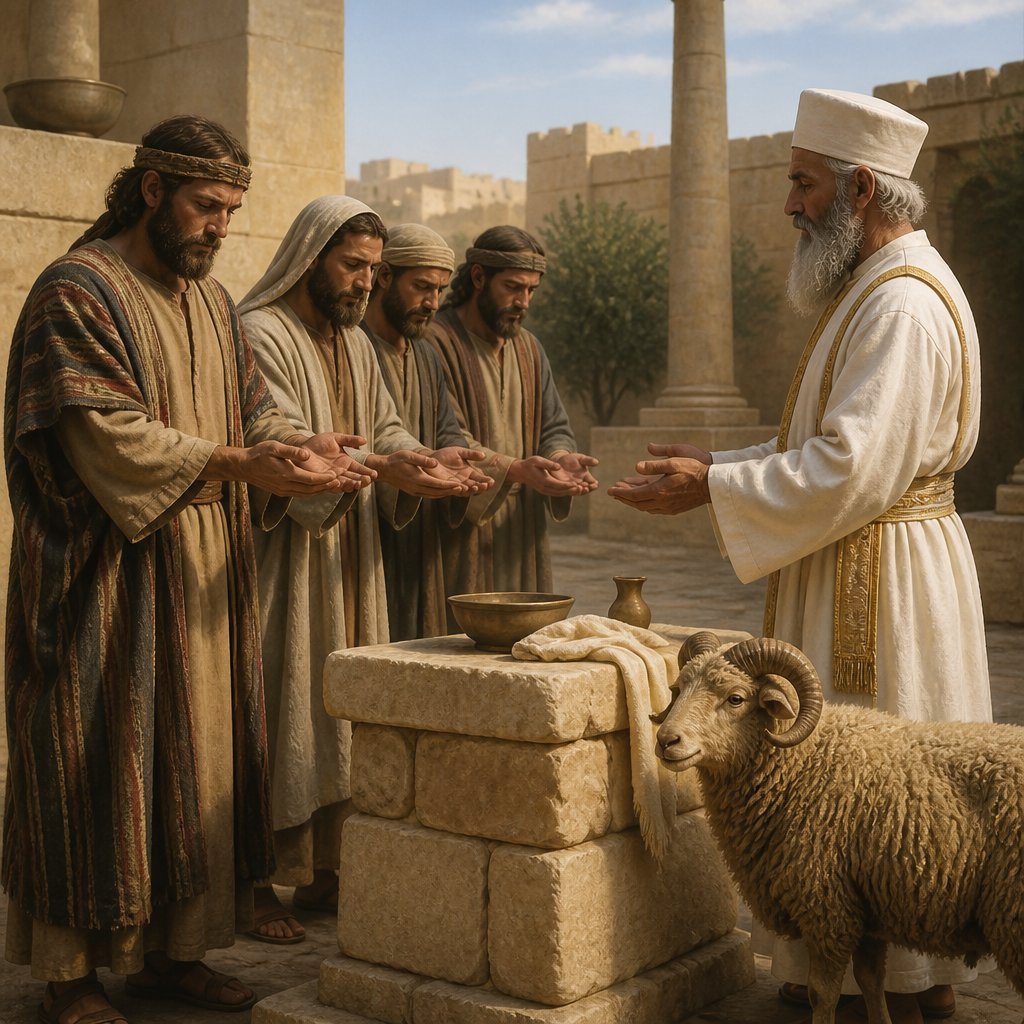
Ezra 10:19 (KJV) says, "And they gave their hands that they would put away their wives; and being guilty, they offered a ram of the flock for their trespass."
The book of Ezra is one of the historical books of the Old Testament and focuses on the return of the Israelites from exile in Babylon and the re-establishment of the Jewish community in Jerusalem. The verse Ezra 10:19 is part of the account of a great assembly that took place in Jerusalem, where the people of Israel gathered to confess their sin of intermarriage with foreign wives and to seek reconciliation with God.
The theme of the verse revolves around the concept of repentance and reconciliation. The Israelites had married foreign women, which was in direct violation of God's commandments (Deuteronomy 7:3-4). In confessing their sin and making a solemn pledge to put away their foreign wives, the Israelites were demonstrating their desire to repent and turn back to God. The act of "giving their hands" symbolizes their commitment to making things right with God and following His laws.
The offering of a ram from the flock for their trespass is significant in several ways. Firstly, it demonstrates the Israelites' recognition of the severity of their sin. In the Old Testament, animal sacrifices were a central part of Israelite worship and were offered as a means of atonement for sin. The ram offered by the guilty men represented their desire for forgiveness and cleansing from their transgressions. It also symbolized the cost of their actions and their willingness to make amends.
The verse also highlights the importance of accountability and taking responsibility for one's actions. The Israelites did not make excuses for their disobedience but instead took decisive action to rectify the situation. Their willingness to separate from their foreign wives, despite the potential personal and social consequences, reflects their commitment to honoring God above all else.
In a broader context, the verse speaks to the universal human experience of sin, repentance, and the need for reconciliation. The Israelites' struggle with intermarriage serves as a reminder of the ongoing tension between the desire to follow God's commands and the allure of worldly influences. Their collective response of repentance and seeking reconciliation with God provides a powerful example for all believers.
The verse also offers a poignant reflection on the complexities of relationships and the impact of individual choices on the community. The Israelites' disobedience in marrying foreign wives had far-reaching implications for the spiritual and social fabric of their community. By acknowledging their wrongdoing and taking steps to address it, they sought to restore integrity and wholeness within their community.
In conclusion, Ezra 10:19 is a powerful testament to the themes of repentance, accountability, and the pursuit of reconciliation with God. It serves as a poignant reminder of the human struggle with sin and the transformative power of genuine repentance. The verse's rich symbolism and profound theological significance continue to resonate with believers today, inspiring a commitment to align with God's will and seek forgiveness for our transgressions.
Get our apps


Artwork for Ezra 10:19

Ezra 10:19 - "And they gave their hands that they would put away their wives; and being guilty, they offered a ram of the flock for their trespass."
"And they gave their hands that they would put away their wives; and being guilty, they offered a ram of the flock for their trespass." - Ezra 10:19

Ezra 10:10-12

Ezra 10:10 - "And Ezra the priest stood up, and said unto them, Ye have transgressed, and have taken strange wives, to increase the trespass of Israel."

Ezra 10:3

Ezra 3:10

Ezra 10:3

Ezra 10:5 - "Then arose Ezra, and made the chief priests, the Levites, and all Israel, to swear that they should do according to this word. And they sware."

Ezra 7:10 - "For Ezra had prepared his heart to seek the law of the LORD, and to do it, and to teach in Israel statutes and judgments."

Ezra 10:38 - "And Bani, and Binnui, Shimei,"

Ezra 10:37 - "Mattaniah, Mattenai, and Jaasau,"

Ezra 10:40 - "Machnadebai, Shashai, Sharai,"

Ezra 10:32 - "Benjamin, Malluch, and Shemariah."

Ezra 2:19 - "The children of Hashum, two hundred twenty and three."

Ezra 10:35 - "Benaiah, Bedeiah, Chelluh,"

Ezra 10:41 - "Azareel, and Shelemiah, Shemariah,"

Ezra 10:36 - "Vaniah, Meremoth, Eliashib,"

Ezra 10:42 - "Shallum, Amariah, and Joseph."

Ezra 10:39 - "And Shelemiah, and Nathan, and Adaiah,"

Ezra 10:20 - "And of the sons of Immer; Hanani, and Zebadiah."

Ezra 10:34 - "Of the sons of Bani; Maadai, Amram, and Uel,"

Ezra 6:19 - "And the children of the captivity kept the passover upon the fourteenth day of the first month."

Ezra 8:19 - "And Hashabiah, and with him Jeshaiah of the sons of Merari, his brethren and their sons, twenty;"

Ezra 2:10 - "The children of Bani, six hundred forty and two."

Ezra 10:24 - "Of the singers also; Eliashib: and of the porters; Shallum, and Telem, and Uri."

Ezra 10:21 - "And of the sons of Harim; Maaseiah, and Elijah, and Shemaiah, and Jehiel, and Uzziah."

Ezra 10:31 - "And of the sons of Harim; Eliezer, Ishijah, Malchiah, Shemaiah, Shimeon,"

Ezra 10:28 - "Of the sons also of Bebai; Jehohanan, Hananiah, Zabbai, and Athlai."

"Azareel, and Shelemiah, Shemariah," - Ezra 10:41

"And Bani, and Binnui, Shimei," - Ezra 10:38