What does Ezra 10:2 mean?
“And Shechaniah the son of Jehiel, one of the sons of Elam, answered and said unto Ezra, We have trespassed against our God, and have taken strange wives of the people of the land: yet now there is hope in Israel concerning this thing.” — Ezra 10:2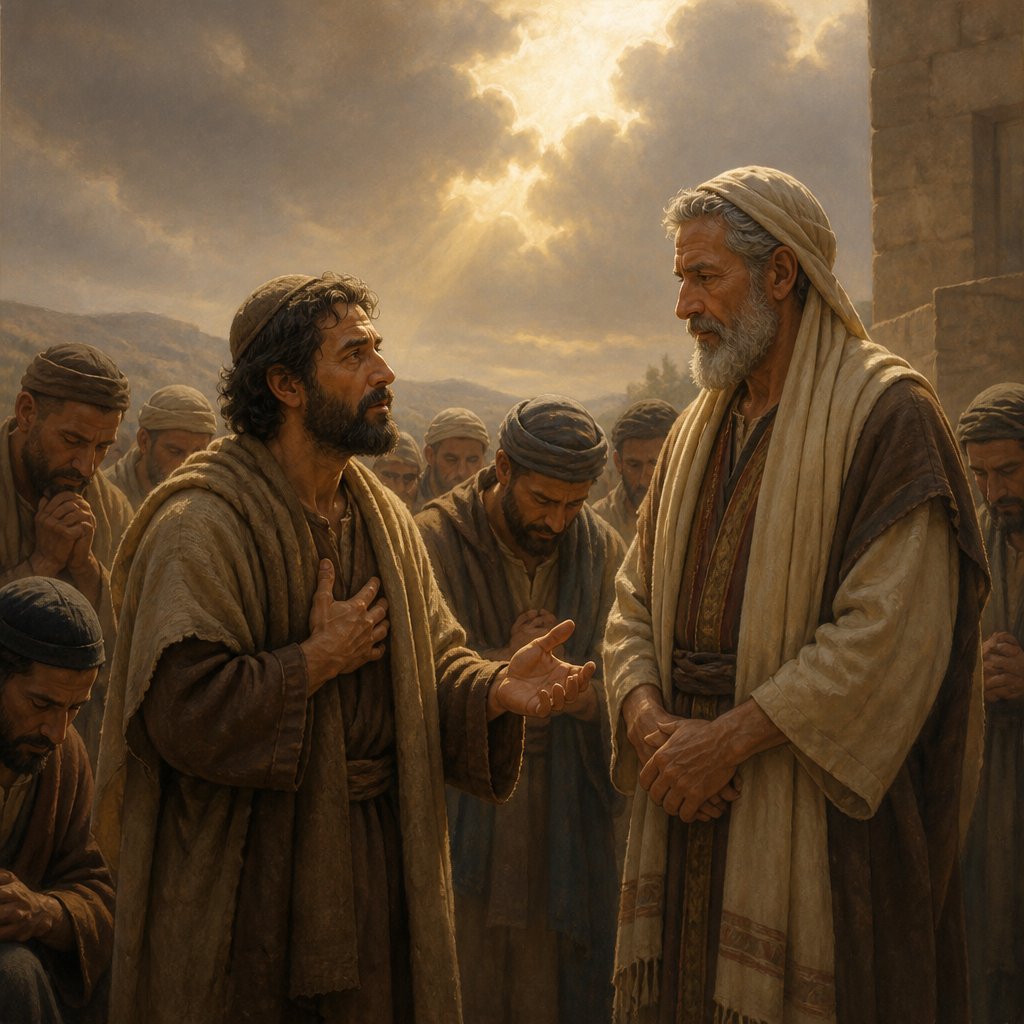
Ezra 10:2 in the King James Version of the Bible reads, "And Shechaniah the son of Jehiel, one of the sons of Elam, answered and said unto Ezra, We have trespassed against our God, and have taken strange wives of the people of the land: yet now there is hope in Israel concerning this thing." This verse comes from the book of Ezra, which is a historical and prophetic book in the Hebrew Bible. It depicts the return of the exiles from Babylon to Jerusalem and the rebuilding of the temple.
In this particular verse, Shechaniah, a descendant of Elam, approaches Ezra, a prominent priest and scribe, to confess and acknowledge the wrongdoing of the Israelites in taking foreign wives, which was against the laws and traditions of their faith. Shechaniah expresses remorse for their disobedience to God and recognizes the gravity of their actions. He also conveys a sense of optimism, stating that there is hope for Israel despite their transgressions.
The themes present in this verse are repentance, obedience, and hope. The profound theme of repentance is evident in Shechaniah's acknowledgement of the Israelites' wrongdoing and his desire to seek forgiveness from God. The concept of obedience to God's laws and commandments is highlighted through the recognition of their transgressions and the need to rectify their actions. Shechaniah's proclamation of hope reflects the belief that God's mercy and forgiveness are available to those who sincerely seek reconciliation and restoration.
The context of this verse is essential for understanding its significance. During the time of Ezra, the Israelites had returned from their exile in Babylon to rebuild their community and reestablish their covenant with God. However, they faced many challenges, including the prevalence of intermarriage with non-Israelite women, which was forbidden by the Mosaic law. This violation of their religious and cultural identity threatened the purity of their faith and the integrity of their community.
Shechaniah's confession to Ezra underscores the seriousness of the issue and the need for collective repentance and restoration. His acknowledgment of their trespass against God and their acknowledgment of their wrongdoing demonstrate a commitment to spiritual renewal and fidelity to their faith. Through Shechaniah's admission, the Israelites are prompted to address the consequences of their actions and seek reconciliation with God.
Symbolism is also present in this verse, particularly in the significance of the names mentioned. Shechaniah, whose name means "dweller with God," and Elam, which was a region known for its wealth and prosperity, carry symbolic connotations. Shechaniah's confession reflects a desire to dwell with God and seek spiritual renewal, while his lineage from Elam may underscore the contrast between material wealth and spiritual fidelity. The symbolism of hope in Israel amid their transgressions reflects the belief in divine redemption and the promise of restoration.
In conclusion, Ezra 10:2 from the King James Version of the Bible conveys a message of repentance, obedience, and hope. Shechaniah's acknowledgment of the Israelites' wrongdoing and his plea for reconciliation with God encapsulates the themes of spiritual renewal and fidelity to their faith. The verse's context within the book of Ezra illustrates the challenges faced by the Israelites in maintaining their religious and cultural identity. Through the symbolism of names and the expression of hope, this verse emphasizes the enduring belief in divine redemption and the promise of restoration for those who seek forgiveness.
Get our apps


Artwork for Ezra 10:2
Ezra 10:2 - "And Shechaniah the son of Jehiel, one of the sons of Elam, answered and said unto Ezra, We have trespassed against our God, and have taken strange wives of the people of the land: yet now there is hope in Israel concerning this thing."
"And Shechaniah the son of Jehiel, one of the sons of Elam, answered and said unto Ezra, We have trespassed against our God, and have taken strange wives of the people of the land: yet now there is hope in Israel concerning this thing." - Ezra 10:2

Ezra 2:10 - "The children of Bani, six hundred forty and two."
"The children of Bani, six hundred forty and two." - Ezra 2:10

Ezra 10:10-12

Ezra 10:10 - "And Ezra the priest stood up, and said unto them, Ye have transgressed, and have taken strange wives, to increase the trespass of Israel."

Ezra 10:3

Ezra 3:10

Ezra 10:3

Ezra 10:5 - "Then arose Ezra, and made the chief priests, the Levites, and all Israel, to swear that they should do according to this word. And they sware."

Ezra 7:10 - "For Ezra had prepared his heart to seek the law of the LORD, and to do it, and to teach in Israel statutes and judgments."

Ezra 10:38 - "And Bani, and Binnui, Shimei,"

Ezra 10:37 - "Mattaniah, Mattenai, and Jaasau,"

Ezra 10:40 - "Machnadebai, Shashai, Sharai,"

Ezra 10:32 - "Benjamin, Malluch, and Shemariah."

Ezra 10:36 - "Vaniah, Meremoth, Eliashib,"

Ezra 10:35 - "Benaiah, Bedeiah, Chelluh,"

Ezra 10:42 - "Shallum, Amariah, and Joseph."

Ezra 10:41 - "Azareel, and Shelemiah, Shemariah,"

Ezra 10:39 - "And Shelemiah, and Nathan, and Adaiah,"

Ezra 10:20 - "And of the sons of Immer; Hanani, and Zebadiah."

Ezra 10:34 - "Of the sons of Bani; Maadai, Amram, and Uel,"

Ezra 10:21 - "And of the sons of Harim; Maaseiah, and Elijah, and Shemaiah, and Jehiel, and Uzziah."

Ezra 10:24 - "Of the singers also; Eliashib: and of the porters; Shallum, and Telem, and Uri."

Ezra 10:28 - "Of the sons also of Bebai; Jehohanan, Hananiah, Zabbai, and Athlai."

Ezra 10:31 - "And of the sons of Harim; Eliezer, Ishijah, Malchiah, Shemaiah, Shimeon,"

"Azareel, and Shelemiah, Shemariah," - Ezra 10:41

"And Bani, and Binnui, Shimei," - Ezra 10:38

"And Shelemiah, and Nathan, and Adaiah," - Ezra 10:39

"Vaniah, Meremoth, Eliashib," - Ezra 10:36