What does Ezra 10:9 mean?
“Then all the men of Judah and Benjamin gathered themselves together unto Jerusalem within three days. It was the ninth month, on the twentieth day of the month; and all the people sat in the street of the house of God, trembling because of this matter, and for the great rain.” — Ezra 10:9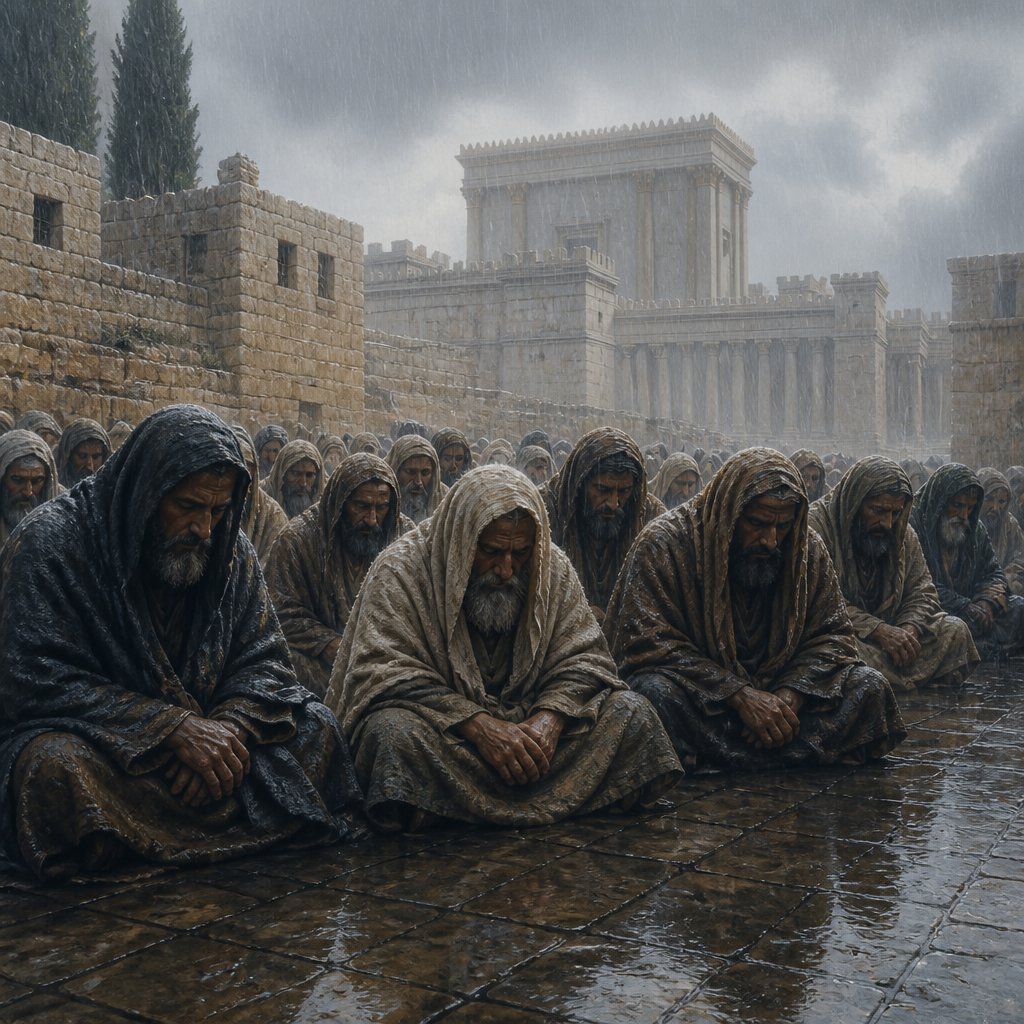
Ezra 10:9 (KJV) reads, "Then all the men of Judah and Benjamin gathered themselves together unto Jerusalem within three days. It was the ninth month, on the twentieth day of the month; and all the people sat in the street of the house of God, trembling because of this matter, and for the great rain."
To properly understand this verse, it is important to provide some context. The book of Ezra in the Old Testament of the Bible recounts the story of the return of the Jewish exiles from Babylon to Jerusalem and the rebuilding of the temple. In the later chapters, Ezra addresses the issue of intermarriage between the Israelites and the surrounding pagan nations. Many of the returning exiles had taken foreign wives, which was not in accordance with God's law given to the Israelites through Moses. This disobedience was seen as a threat to the purity of the Israelite community and their commitment to the covenant with God.
In Ezra 10:9, we find the aftermath of Ezra's impassioned plea to the people to confess their sin and put away their foreign wives. As a result, the men of Judah and Benjamin gather in Jerusalem within three days. This prompt response is a clear indication of the people's acknowledgment of their wrongdoing and their desire to set things right according to God's law. The urgency with which they came together demonstrates their commitment to seeking God's forgiveness and restoring the purity of the community.
The mention of the ninth month and the twentieth day of the month is significant as it offers a specific timeframe for this gathering. This detail gives the narrative a sense of historical accuracy and provides the reader with a clear understanding of the timeline of events. Additionally, the reference to "the great rain" paints a vivid picture of the setting in which this gathering takes place. The physical environment of the heavy rain adds to the atmosphere of solemnity and serves as a metaphor for the weight of the matter being addressed.
The people are described as trembling because of this matter, indicating the seriousness of the situation. They are deeply moved and troubled by the realization of their transgression and the implications it holds for their relationship with God. This trembling reflects their fear of God's judgment and their genuine remorse for their actions.
Symbolically, the gathering of the people in the street of the house of God represents their return to the center of their faith and their commitment to seeking God's guidance and forgiveness. Their willingness to come together in this sacred space demonstrates their longing for reconciliation and restoration within their community and in their relationship with God.
The themes present in this verse include repentance, obedience to God's law, community accountability, and the restoration of purity and holiness. The narrative emphasizes the importance of upholding God's standards and the necessity of acknowledging and addressing sin within the community. It also highlights the power of collective repentance and the strength that comes from unity in seeking reconciliation with God.
In conclusion, Ezra 10:9 provides a poignant depiction of the collective repentance and commitment to righteousness by the people of Judah and Benjamin. It serves as a reminder of the importance of upholding God's law and the significance of genuine repentance and restoration within the community. This verse offers a powerful example of the transformative impact of seeking God's forgiveness and aligning with His will, both individually and as a community.
Get our apps


Artwork for Ezra 10:9

Ezra 10:9 - "¶ Then all the men of Judah and Benjamin gathered themselves together unto Jerusalem within three days. It was the ninth month, on the twentieth day of the month; and all the people sat in the street of the house of God, trembling because of this matter, and for the great rain."
"¶ Then all the men of Judah and Benjamin gathered themselves together unto Jerusalem within three days. It was the ninth month, on the twentieth day of the month; and all the people sat in the street of the house of God, trembling because of this matter, and for the great rain." - Ezra 10:9

Ezra 9:10 - "And now, O our God, what shall we say after this? for we have forsaken thy commandments,"

Ezra 10:10-12

Ezra 10:10 - "And Ezra the priest stood up, and said unto them, Ye have transgressed, and have taken strange wives, to increase the trespass of Israel."

Ezra 9:6

Ezra 3:9

Ezra 10:3

Ezra 3:10

Ezra 9:3

Ezra 9:1

Ezra 9:1

Ezra 9:1

Ezra 10:3

Ezra 10:5 - "Then arose Ezra, and made the chief priests, the Levites, and all Israel, to swear that they should do according to this word. And they sware."

Ezra 7:10 - "For Ezra had prepared his heart to seek the law of the LORD, and to do it, and to teach in Israel statutes and judgments."

Ezra 9:1-2

Ezra 9:13-15

Ezra 10:38 - "And Bani, and Binnui, Shimei,"

Ezra 10:37 - "Mattaniah, Mattenai, and Jaasau,"

Ezra 10:40 - "Machnadebai, Shashai, Sharai,"

Ezra 10:32 - "Benjamin, Malluch, and Shemariah."

Ezra 10:35 - "Benaiah, Bedeiah, Chelluh,"

Ezra 10:41 - "Azareel, and Shelemiah, Shemariah,"

Ezra 10:36 - "Vaniah, Meremoth, Eliashib,"

Ezra 10:42 - "Shallum, Amariah, and Joseph."

Ezra 10:39 - "And Shelemiah, and Nathan, and Adaiah,"

Ezra 9:1-2

Ezra 2:9 - "The children of Zaccai, seven hundred and threescore."

Ezra 10:20 - "And of the sons of Immer; Hanani, and Zebadiah."