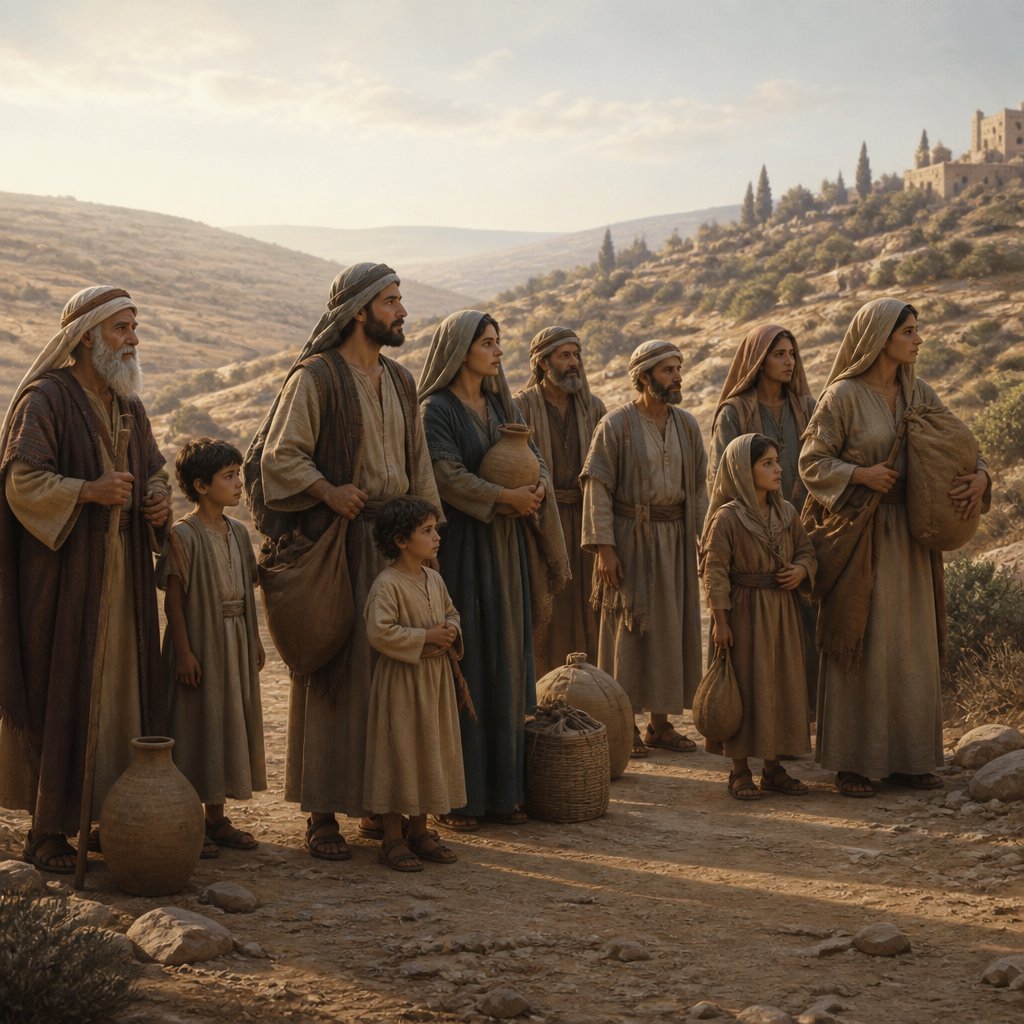
The verse Ezra 2:18 from the King James Version (KJV) of the Bible reads, "The children of Adonikam, six hundred threescore and seven." This verse comes from the book of Ezra, which is part of the Old Testament. The book of Ezra is named after its principal character, Ezra the Scribe, and it primarily deals with the history of the Jews after their return from the Babylonian exile.
To understand the full meaning of this verse, it is important to look at its context within the larger narrative of the book of Ezra. In Ezra chapter 2, the chapter lists the names of the heads of households and the number of people in each of the families who returned to Judah and Jerusalem from exile in Babylon. This list describes the exiles who returned to their homeland with Zerubbabel and Jeshua, a scribe, as they sought to rebuild the temple that had been destroyed by the Babylonians.
In this specific verse, the focus is on the descendants of Adonikam, who numbered six hundred and sixty-seven. Names and numbers in the Bible hold significant meaning. In this case, the listing of the number of descendants signifies the importance of each individual who returned to Judah. It also serves as a historical record of the families who reestablished themselves in their homeland. The meticulous recording of names and numbers in the book of Ezra underscores the importance of keeping track of the lineage and heritage of the Jewish people.
Furthermore, the number itself has symbolic significance. In biblical numerology, the number six often represents imperfection or incompleteness, while the number seven represents perfection or completeness. In this context, the listing of six hundred and sixty-seven descendants of Adonikam can be seen as a reminder of the imperfection of the people who returned from exile. They were imperfect and in need of redemption. However, the mention of the number also points to the completeness and perfection that would ultimately be achieved through the restoration of the Jewish community in Judah.
Additionally, the mention of Adonikam and his descendants serves to highlight the importance of individual families and their roles in the larger community. Each family played a part in the restoration and rebuilding of Judah. This emphasis on the family unit reflects the biblical value of community and the interconnectedness of individuals within the larger group.
Overall, the verse Ezra 2:18 holds important historical and symbolic significance within the larger narrative of the book of Ezra. It serves as a reminder of the individual names and numbers that made up the community of exiles who returned from Babylon to rebuild their homeland. It also symbolizes the imperfection and eventual completeness of the restoration process, as well as the significance of each family within the larger community. This verse reflects the themes of redemption, community, and restoration that are central to the biblical narrative.
Get our apps


Artwork for Ezra 2:18
Ezra 2:18 - "The children of Jorah, an hundred and twelve."
"The children of Jorah, an hundred and twelve." - Ezra 2:18

Ezra 3:2

Ezra 3:2

Ezra 3:2

Ezra 6:18 - "And they set the priests in their divisions, and the Levites in their courses, for the service of God, which is at Jerusalem; as it is written in the book of Moses."

Ezra 4:18 - "The letter which ye sent unto us hath been plainly read before me."

Ezra 3:2

Ezra 3:2

Ezra 9:1-2

Zerubbabel in Ezra chapter 2

Ezra 7:18 - "And whatsoever shall seem good to thee, and to thy brethren, to do with the rest of the silver and the gold, that do after the will of your God."

Ezra 2:22 - "The men of Netophah, fifty and six."

Ezra 2:54 - "The children of Neziah, the children of Hatipha."

Ezra 2:20 - "The children of Gibbar, ninety and five."

Ezra 2:24 - "The children of Azmaveth, forty and two."

Ezra 2:39 - "The children of Harim, a thousand and seventeen."

Ezra 9:1-2

Ezra 2:9 - "The children of Zaccai, seven hundred and threescore."

Ezra 2:27 - "The men of Michmas, an hundred twenty and two."

Ezra 2:29 - "The children of Nebo, fifty and two."

Ezra 2:56 - "The children of Jaalah, the children of Darkon, the children of Giddel,"

Ezra 2:11 - "The children of Bebai, six hundred twenty and three."

Ezra 2:53 - "The children of Barkos, the children of Sisera, the children of Thamah,"

Ezra 2:45 - "The children of Lebanah, the children of Hagabah, the children of Akkub,"

Ezra 2:48 - "The children of Rezin, the children of Nekoda, the children of Gazzam,"

Ezra 2:15 - "The children of Adin, four hundred fifty and four."

Ezra 2:21 - "The children of Beth-lehem, an hundred twenty and three."

Ezra 2:51 - "The children of Bakbuk, the children of Hakupha, the children of Harhur,"

Ezra 2:49 - "The children of Uzza, the children of Paseah, the children of Besai,"