What does Ezra 2:51 mean?
“The children of Bakbuk, the children of Hakupha, the children of Harhur,” — Ezra 2:51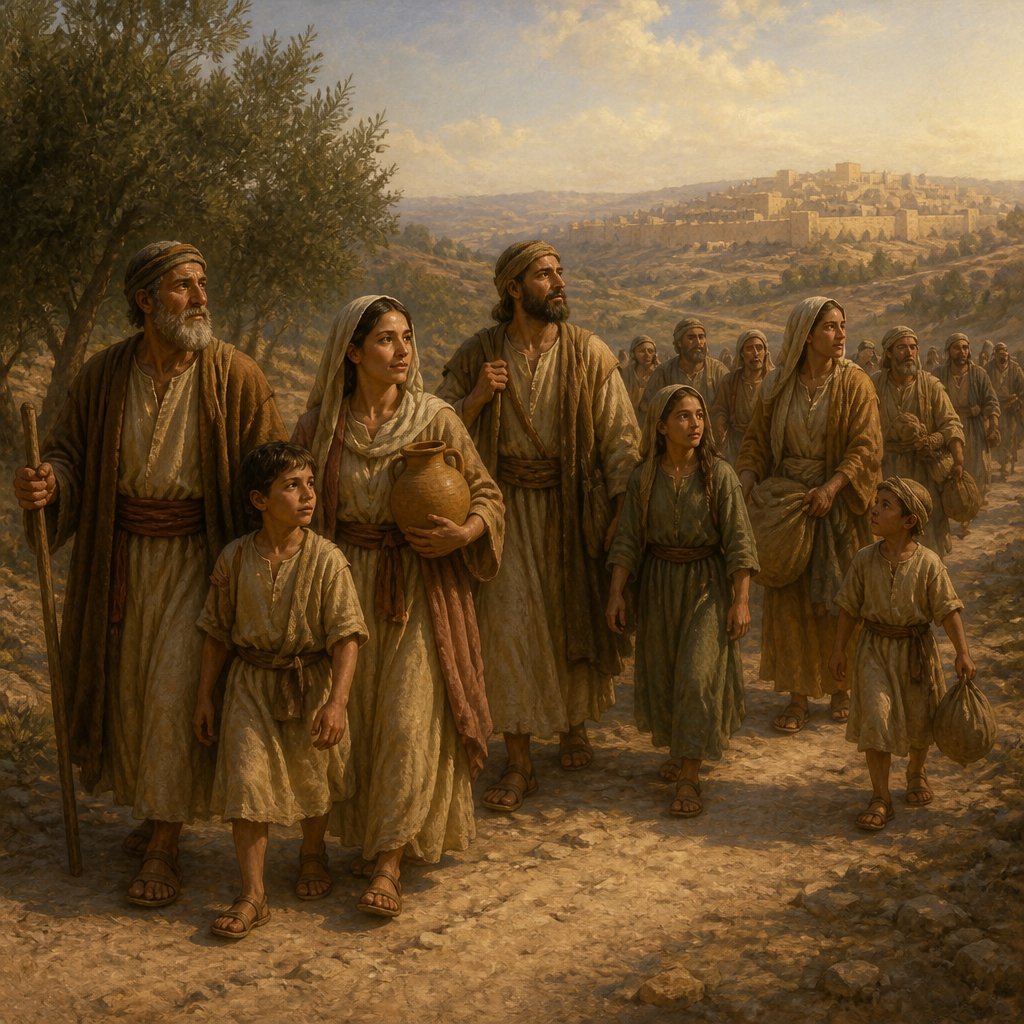
The verse Ezra 2:51 reads in the King James Version (KJV): "The children of Giddel, the children of Gahar, the children of Reaiah." At first glance, this verse may seem unremarkable and even mundane. However, when placed within its larger historical and religious context, and when interpreted through the lens of biblical analysis, it reveals deep spiritual significance.
To understand the importance of this verse, it is essential to provide some background. The book of Ezra is set during a crucial period in the history of the Jewish people. After the Babylonian exile, a remnant of Israelites returned to Jerusalem under the leadership of figures such as Zerubbabel and Ezra. Their primary mission was to rebuild the temple and restore the worship of Yahweh. In order to do so, a detailed record was kept of the families and individuals who returned to their homeland. This record is found in the early chapters of the book of Ezra, and it includes lists of the returning exiles, such as the one from which our verse is taken.
In this context, the specific mention of the "children of Giddel, the children of Gahar, the children of Reaiah" takes on greater significance. These seemingly ordinary names represent real people who played a role in the restoration of the Jewish community in Jerusalem. By including their names in this record, the biblical author ensures that their contribution is not forgotten. This demonstrates the emphasis on community and the importance of individual participation in the larger narrative of God's redemptive work. Every member of the community has a role to play, and every individual is valued and remembered.
Furthermore, the mentioning of these names serves to reinforce the continuity of the Jewish people. Through the recording of their lineage and their return to Jerusalem, the Israelites are reconnecting with their ancestral homeland and spiritual heritage. This theme of continuity and connection to the past is crucial in understanding the broader message of the book of Ezra and the overarching narrative of the Bible as a whole.
From a symbolic perspective, the names themselves can also be analyzed for deeper meaning. In the Bible, names often carry significant weight and can be reflective of a person's character or destiny. In this verse, the names Giddel, Gahar, and Reaiah may carry symbolic or allegorical meanings that contribute to the verse's overall message. For example, Giddel means "great," which could signify the potential for great things to come from this lineage. Gahar, meaning "cavern," may symbolize the depth or hidden aspects of their character. Reaiah, meaning "Yah has seen," could point to the divine oversight and protection of this lineage.
By exploring and interpreting the names, we can glean additional layers of meaning from this seemingly straightforward verse. This demonstrates the richness and depth of the biblical text, and how even a simple list of names can be a source of spiritual insight and reflection.
In conclusion, Ezra 2:51 may appear to be a small and inconsequential verse at first glance. However, when placed within its historical, religious, and literary context, and when analyzed for its themes, symbolism, and deeper meanings, it reveals itself to be a significant and meaningful part of the broader biblical narrative. It serves to highlight the importance of community, continuity, and individual participation in God's redemptive work, and it exemplifies the depth and richness of the biblical text as a source of spiritual wisdom and insight.
Get our apps


Artwork for Ezra 2:51

Ezra 2:51 - "The children of Bakbuk, the children of Hakupha, the children of Harhur,"
"The children of Bakbuk, the children of Hakupha, the children of Harhur," - Ezra 2:51

Ezra 3:2

Ezra 3:2

Ezra 3:2

Ezra 3:2

Ezra 3:2

Ezra 9:1-2

Zerubbabel in Ezra chapter 2

Ezra 2:22 - "The men of Netophah, fifty and six."
Ezra 2:18 - "The children of Jorah, an hundred and twelve."

Ezra 2:54 - "The children of Neziah, the children of Hatipha."

Ezra 2:20 - "The children of Gibbar, ninety and five."

Ezra 2:24 - "The children of Azmaveth, forty and two."

Ezra 2:39 - "The children of Harim, a thousand and seventeen."

1 Chronicles 2:51 - "Salma the father of Beth-lehem, Hareph the father of Beth-gader."

Ezra 9:1-2

Ezra 2:9 - "The children of Zaccai, seven hundred and threescore."

Ezra 2:27 - "The men of Michmas, an hundred twenty and two."

Ezra 2:29 - "The children of Nebo, fifty and two."

Psalms 51:2 - "Wash me throughly from mine iniquity, and cleanse me from my sin."

Ezra 2:56 - "The children of Jaalah, the children of Darkon, the children of Giddel,"

Ezra 2:11 - "The children of Bebai, six hundred twenty and three."

Ezra 2:53 - "The children of Barkos, the children of Sisera, the children of Thamah,"

Ezra 2:48 - "The children of Rezin, the children of Nekoda, the children of Gazzam,"

Ezra 2:15 - "The children of Adin, four hundred fifty and four."

Ezra 7:2 - "The son of Shallum, the son of Zadok, the son of Ahitub,"

Ezra 2:21 - "The children of Beth-lehem, an hundred twenty and three."

Ezra 2:45 - "The children of Lebanah, the children of Hagabah, the children of Akkub,"

Ezra 2:49 - "The children of Uzza, the children of Paseah, the children of Besai,"