What does Ezra 3:11 mean?
“And they sang together by course in praising and giving thanks unto the LORD; because he is good, for his mercy endureth for ever toward Israel. And all the people shouted with a great shout, when they praised the LORD, because the foundation of the house of the LORD was laid.” — Ezra 3:11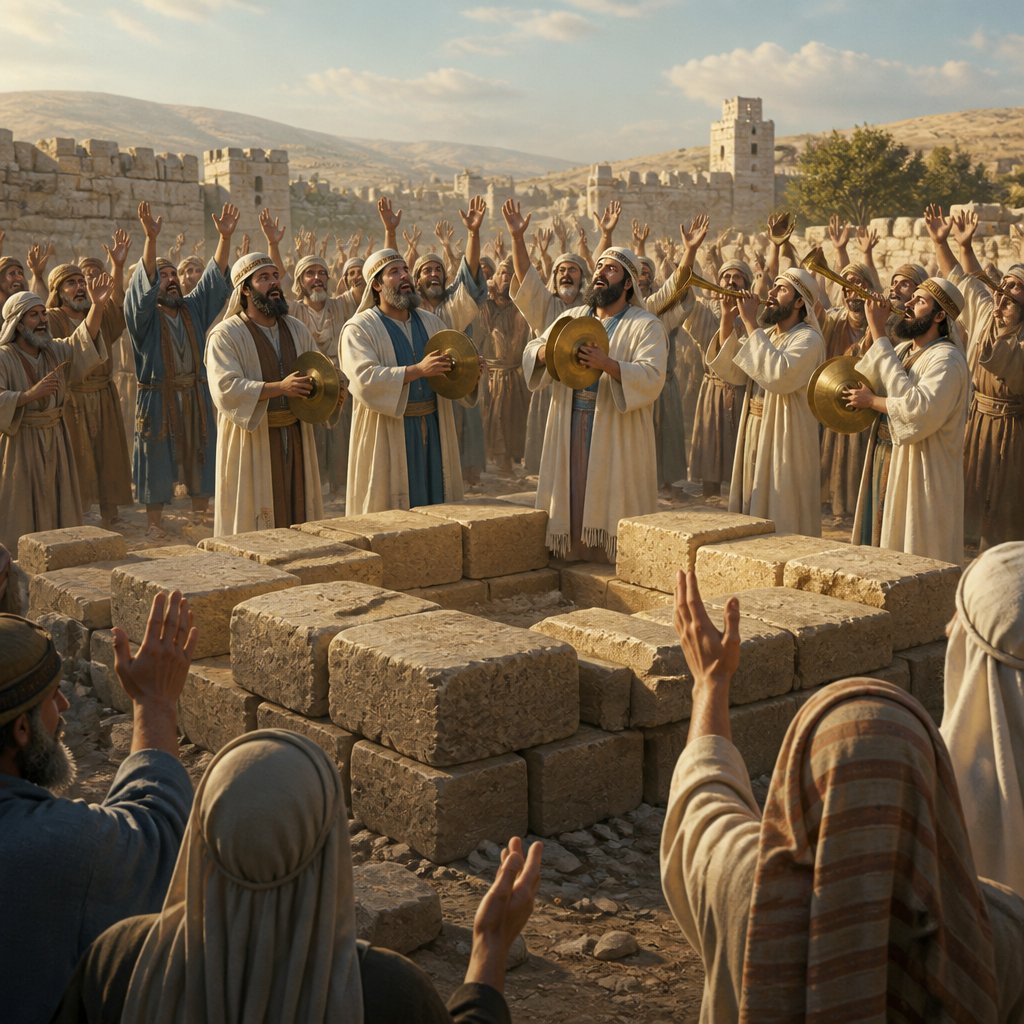
Ezra 3:11 in the King James Version (KJV) reads: "And they sang together by course in praising and giving thanks unto the LORD; because he is good, for his mercy endureth for ever toward Israel. And all the people shouted with a great shout, when they praised the LORD, because the foundation of the house of the LORD was laid."
The historical and cultural context of this verse is essential to understanding its significance. The book of Ezra takes place during a critical period in Israel’s history as the Jewish people were returning to Jerusalem after their exile in Babylon. They had been allowed to return to their homeland by the Persian king Cyrus, and the rebuilding of the Temple in Jerusalem was a significant part of their return. The foundation of the Temple being laid symbolized a new beginning, a restoration of their relationship with God, and the renewal of their faith.
The verse depicts a momentous occasion when the people of Israel came together to praise and give thanks to the Lord as the foundation of the house of the Lord was laid. Their act of “singing together by course” signifies unity and harmony among the people, despite the challenges they had faced during their exile and the ongoing struggles of rebuilding their homeland. This unity was a testament to their faith and devotion to God, as they recognized that He had been faithful to them and had shown mercy towards Israel, despite their past transgressions and the consequences they had faced.
The central theme of this verse is gratitude and praise. The people of Israel recognized that the Lord is good and that His mercy endures forever towards them. This acknowledgment of God’s goodness and everlasting mercy gives them hope and strength as they embark on the monumental task of rebuilding the Temple. Their grateful hearts overflow with praise and thanksgiving, as they understand the magnitude of God’s faithfulness and love towards them.
Another significant theme in this verse is the importance of worship and celebration. The act of singing, shouting, and praising the Lord was an integral part of the Jewish tradition and played a vital role in their relationship with God. It was a way for the people to express their adoration and gratitude towards the one who had sustained them through their trials and tribulations. The joyous celebration was a reflection of their renewed faith and hope in the Lord, as they witnessed the progress and fulfillment of God’s promises for their nation.
Symbolically, the laying of the foundation of the house of the Lord represents a new beginning, a fresh start for Israel. It symbolizes the restoration of their spiritual identity and their commitment to worshipping God in the land that He had given them. The people’s rejoicing and shouting with a great shout also symbolize their anticipation of the blessings and prosperity that would come from their renewed relationship with God. It is a powerful testament to the transformative power of faith and the enduring hope that God’s people have in His promises.
In conclusion, Ezra 3:11 in the King James Version captures the essence of gratitude, praise, and celebration as the people of Israel lay the foundation of the house of the Lord. It portrays a pivotal moment in Israel’s history, signifying their faith in God’s faithfulness, the renewal of their relationship with Him, and the restoration of their spiritual identity. The verse serves as a reminder of the importance of worship, unity, and hope in the face of adversity, and it continues to inspire believers to this day.
Get our apps


Artwork for Ezra 3:11

Ezra 3:11 – "With praise and thanksgiving they sang to the Lord: 'He is good; his love toward Israel endures forever.'"

Ezra 3:11 – "With praise and thanksgiving they sang to the Lord: 'He is good; his love toward Israel endures forever.'"

Ezra 3:11 – "With praise and thanksgiving they sang to the Lord: 'He is good; his love toward Israel endures forever.'"

Ezra 3:11 - "And they sang together by course in praising and giving thanks unto the LORD; because he is good, for his mercy endureth for ever toward Israel. And all the people shouted with a great shout, when they praised the LORD, because the foundation of the house of the LORD was laid."
"And they sang together by course in praising and giving thanks unto the LORD; because he is good, for his mercy endureth for ever toward Israel. And all the people shouted with a great shout, when they praised the LORD, because the foundation of the house of the LORD was laid." - Ezra 3:11

Ezra 3:2

Ezra 10:3

Ezra 3:2

Ezra 3:10

Ezra 3:9

Ezra 3:2

Ezra 9:3

Ezra 3:2

Ezra 3:2

Ezra 10:3

Ezra 7:11 - "¶ Now this is the copy of the letter that the king Artaxerxes gave unto Ezra the priest, the scribe, even a scribe of the words of the commandments of the LORD, and of his statutes to Israel."

Zerubbabel in Ezra chapter 3

Ezra 2:11 - "The children of Bebai, six hundred twenty and three."

Altar rebuilt in Jerusalem. Ezra 3:1-3

Ezra 7:3 - "The son of Amariah, the son of Azariah, the son of Meraioth,"

Ezra 8:11 - "And of the sons of Bebai; Zechariah the son of Bebai, and with him twenty and eight males."

Ezra 2:3 - "The children of Parosh, two thousand an hundred seventy and two."

Pagan women leave with their children ezra 10:3

Pagan women leave with their children ezra 10:3

"The children of Bebai, six hundred twenty and three." - Ezra 2:11

Ezra 8:3 - "Of the sons of Shechaniah, of the sons of Pharosh; Zechariah: and with him were reckoned by genealogy of the males an hundred and fifty."

Ezra 4:11 - "¶ This is the copy of the letter that they sent unto him, even unto Artaxerxes the king; Thy servants the men on this side the river, and at such a time."

"The son of Amariah, the son of Azariah, the son of Meraioth," - Ezra 7:3

Ezra 3:3 - "And they set the altar upon his bases; for fear was upon them because of the people of those countries: and they offered burnt offerings thereon unto the LORD, even burnt offerings morning and evening."

Ezra 3:1 - "And when the seventh month was come, and the children of Israel were in the cities, the people gathered themselves together as one man to Jerusalem."