What does Ezra 3:3 mean?
“And they set the altar upon his bases; for fear was upon them because of the people of those countries: and they offered burnt offerings thereon unto the LORD, even burnt offerings morning and evening.” — Ezra 3:3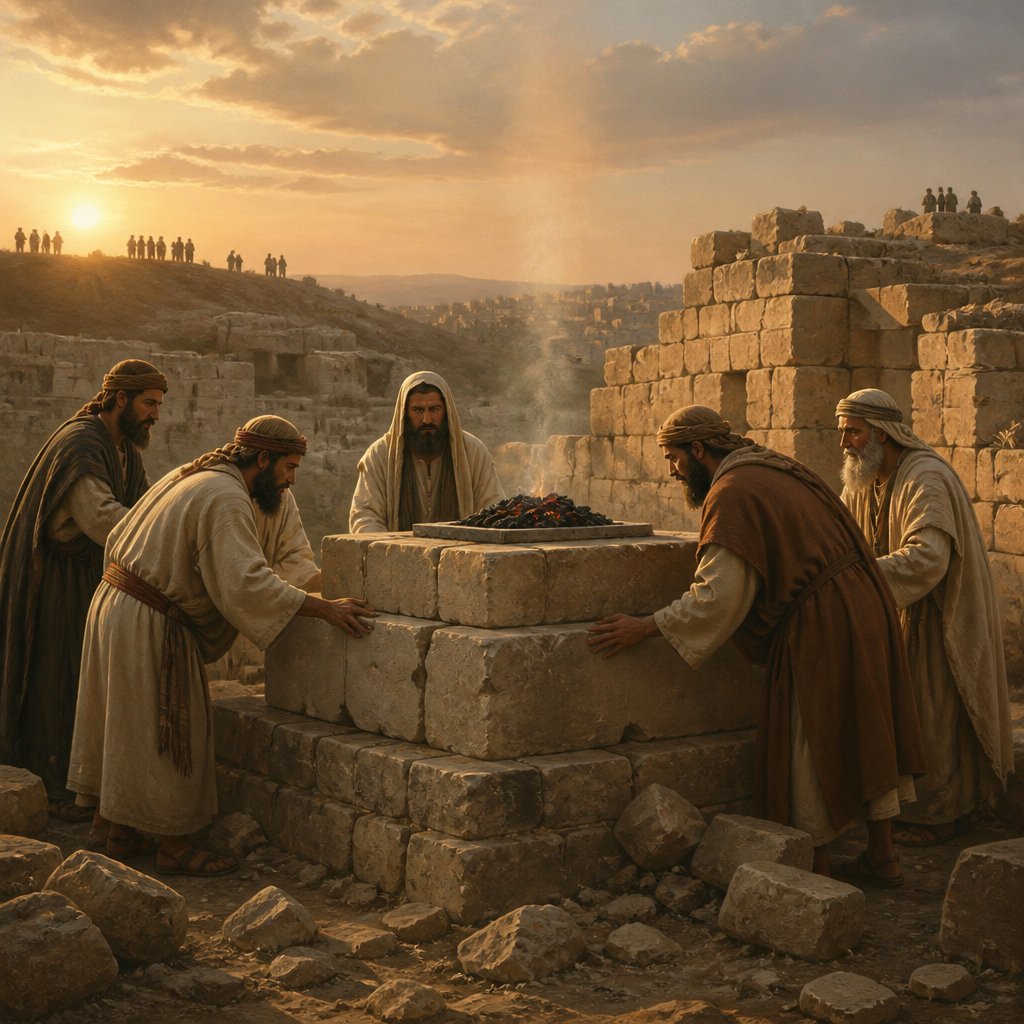
Ezra 3:3 (KJV) reads, "And they set the altar upon his bases; for fear was upon them because of the people of those countries: and they offered burnt offerings thereon unto the Lord, even burnt offerings morning and evening."
This verse comes from the book of Ezra, a historical and prophetic book in the Old Testament. The book of Ezra is set after the Babylonian exile, as the Israelites return to Jerusalem to rebuild the temple. The verse describes the reinstatement of the regular burnt offerings and the fears and concerns of the people as they rebuild the altar.
The rebuilding of the altar was a significant step in the efforts to restore the worship of the Lord in Jerusalem. The altar was the central place for offering sacrifices and seeking atonement for sins. It represented the Israelites' commitment to the Lord and their desire to restore a right relationship with Him. Its restoration signified the reestablishment of the covenant between God and His people.
The setting up of the altar "upon his bases" indicates that it was placed according to its original design or structure. This could symbolize the importance of fulfilling God's commandments and maintaining the purity of their worship. It also signifies the continuity of their faith and traditions, despite the challenges they faced.
The text mentions that "fear was upon them because of the people of those countries." The surrounding nations were hostile towards the Israelites' attempt to rebuild their temple and restore their religious practices. This fear and apprehension reflect the obstacles and opposition that the Israelites encountered in their efforts to worship God. It signifies the challenges and risks they faced in obeying God's commandments and remaining faithful to Him.
The burnt offerings offered "morning and evening" were part of the regular sacrificial system prescribed by God in the Mosaic Law. These offerings were a symbol of the Israelites' dedication, worship, and dependence on God. The morning and evening offerings represented a continuous and consistent devotion to the Lord. It signified their commitment to honoring God daily and seeking His forgiveness and favor.
The burnt offerings were a form of worship that emphasized complete surrender and dedication to God. The offerings were entirely consumed by fire, symbolizing the Israelites' willingness to give their all to God. It also pointed to the need for atonement and forgiveness for their sins.
In a broader context, this verse serves as a reminder of the importance of maintaining faith and obedience to God despite external opposition and challenges. The Israelites' commitment to rebuilding the altar and offering sacrifices, despite their fears and the threats from neighboring nations, demonstrates their unwavering faith in God.
The verse also underscores the significance of ritual and worship in the life of God's people. It emphasizes the importance of maintaining a regular and consistent pattern of worship and devotion to God. The dedication to offering burnt sacrifices "morning and evening" reflects the need for daily spiritual discipline and commitment to God.
Overall, Ezra 3:3 conveys the themes of faith, obedience, worship, and dedication to God. It highlights the challenges and opposition faced by the Israelites as they sought to rebuild their religious practices and reaffirm their covenant with God. It serves as an encouragement for believers to remain steadfast in their faith and commitment to God, even in the face of adversity.
Get our apps


Artwork for Ezra 3:3

Ezra 3:3 - "And they set the altar upon his bases; for fear was upon them because of the people of those countries: and they offered burnt offerings thereon unto the LORD, even burnt offerings morning and evening."
"And they set the altar upon his bases; for fear was upon them because of the people of those countries: and they offered burnt offerings thereon unto the LORD, even burnt offerings morning and evening." - Ezra 3:3

Ezra 3:2

Ezra 10:3

Ezra 3:2

Ezra 3:10

Ezra 3:9

Ezra 3:2

Altar rebuilt in Jerusalem. Ezra 3:1-3

Ezra 9:3

Ezra 3:2

Ezra 3:2

Ezra 10:3

Zerubbabel in Ezra chapter 3

Ezra 7:3 - "The son of Amariah, the son of Azariah, the son of Meraioth,"

Ezra 2:3 - "The children of Parosh, two thousand an hundred seventy and two."

Pagan women leave with their children ezra 10:3

Pagan women leave with their children ezra 10:3

Ezra 8:3 - "Of the sons of Shechaniah, of the sons of Pharosh; Zechariah: and with him were reckoned by genealogy of the males an hundred and fifty."

Ezra 3:11 – "With praise and thanksgiving they sang to the Lord: 'He is good; his love toward Israel endures forever.'"

"The son of Amariah, the son of Azariah, the son of Meraioth," - Ezra 7:3

Ezra 3:1 - "And when the seventh month was come, and the children of Israel were in the cities, the people gathered themselves together as one man to Jerusalem."

Ezra 3:4 - "¶ They kept also the feast of tabernacles, as it is written, and offered the daily burnt offerings by number, according to the custom, as the duty of every day required;"

Ezra 3:6 - "From the first day of the seventh month began they to offer burnt offerings unto the LORD. But the foundation of the temple of the LORD was not yet laid."

"The children of Parosh, two thousand an hundred seventy and two." - Ezra 2:3

Ezra 3:13 - "So that the people could not discern the noise of the shout of joy from the noise of the weeping of the people: for the people shouted with a loud shout, and the noise was heard afar off."

Ezra 9:3 - "And when I heard this thing, I rent my garment and my mantle, and plucked off the hair of my head and of my beard, and sat down astonied."

Ezra 3:10 - "And when the builders laid the foundation of the temple of the LORD, they set the priests in their apparel with trumpets, and the Levites the sons of Asaph with cymbals, to praise the LORD, after the ordinance of David king of Israel."

Ezra 3:11 – "With praise and thanksgiving they sang to the Lord: 'He is good; his love toward Israel endures forever.'"

Ezra 3:11 – "With praise and thanksgiving they sang to the Lord: 'He is good; his love toward Israel endures forever.'"