What does Ezra 6:13 mean?
“Then Tatnai, governor on this side the river, Shethar-boznai, and their companions, according to that which Darius the king had sent, so they did speedily.” — Ezra 6:13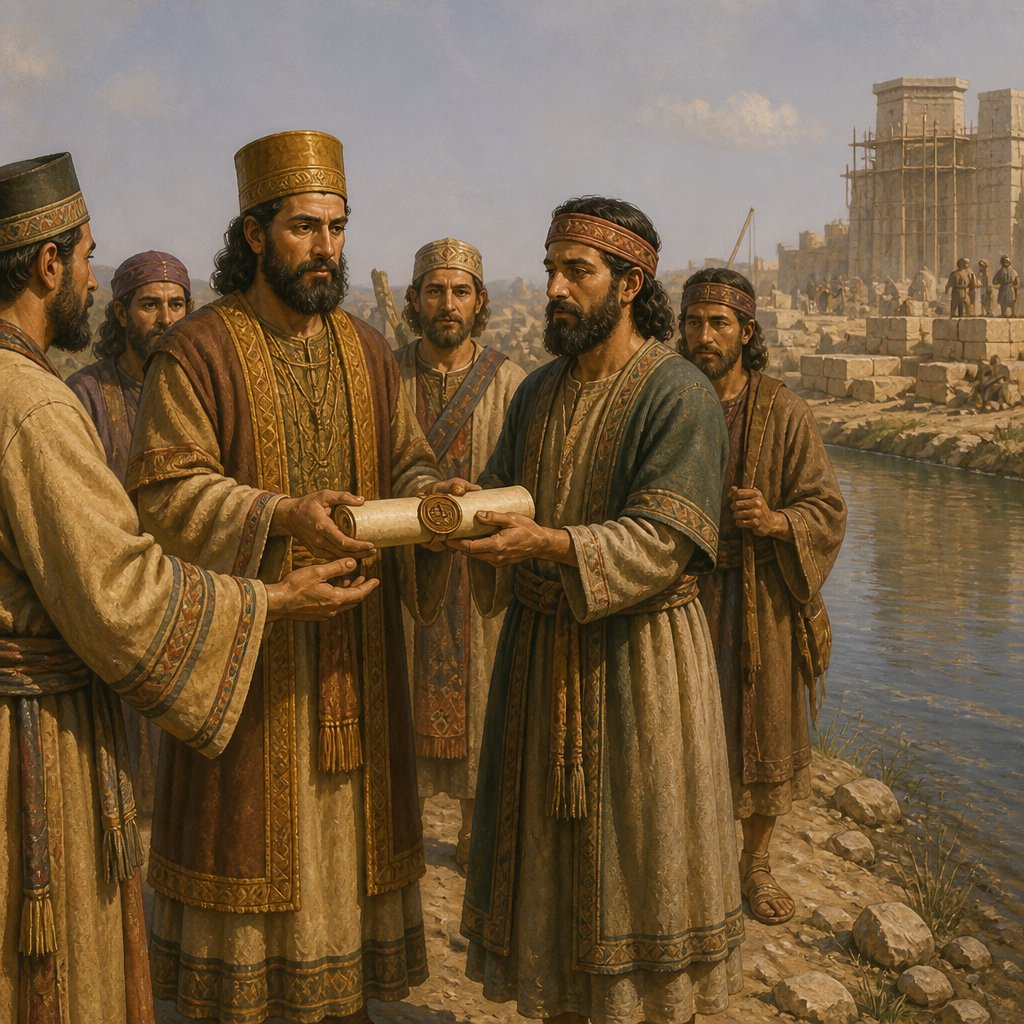
Ezra 6:13 (KJV) states, "Then Tattenai, governor on this side the river, Shetharboznai, and their companions, according to that which Darius the king had sent, so they did speedily." This verse comes from the book of Ezra in the Old Testament, which relates the story of the Jewish people returning from exile in Babylon and rebuilding the temple in Jerusalem. This particular verse occurs during a period of opposition to the rebuilding efforts, where the Jewish leaders are being questioned by the local authorities and have to show proof of their authority to rebuild.
The verse mentions Tattenai, the governor on the western side of the Euphrates River, and Shethar-Boznai, along with their companions. The context of this verse is important for understanding its full meaning. The Persian king Darius has issued a decree allowing the Jews to resume the construction of the temple, but the local authorities are still suspicious and seek to verify this decree. Ezra 6:13 depicts the actions of Tattenai and Shethar-Boznai in carrying out Darius' decree, indicating that they obeyed the king's command quickly and without any delay.
One of the themes that can be drawn from this verse is the sovereignty of God. Throughout the book of Ezra, the hand of God is evident in the events that unfold. Despite the opposition and challenges faced by the returning exiles, God's providence and protection are ultimately what enable them to complete the rebuilding of the temple. This verse serves as a reminder that even earthly authorities are subject to God's will and can be used as instruments in His plan.
Another important theme in this verse is the concept of obedience to authority. Tattenai and Shethar-Boznai, as governors appointed by the Persian king, are seen following the king's command without hesitation. This theme reflects the biblical principle of submitting to earthly authorities, as outlined in passages such as Romans 13:1-7 and 1 Peter 2:13-17. The Jewish people, in turn, are also obedient to the king's decree, demonstrating their respect for both earthly and divine authority.
Symbolism can also be found within this verse. The swiftness with which Tattenai and his companions carry out Darius' orders may symbolize the unyielding power and authority of the Persian Empire. Additionally, their swift obedience reflects the overarching theme of God's control and sovereignty. The prompt obedience of Tattenai and his companions also serves as a model for believers, urging them to obey God's commands without delay.
In conclusion, Ezra 6:13 conveys important themes of God's sovereignty, obedience to authority, and the symbolism of swift obedience. This verse provides a snapshot of the complex historical and political context in which the story of Ezra takes place, while also offering valuable lessons for believers today. It serves as a reminder of the overarching power of God, the importance of submitting to earthly authorities, and the value of prompt obedience in carrying out God's will.
Get our apps


Artwork for Ezra 6:13

Ezra 6:13 - "¶ Then Tatnai, governor on this side the river, Shethar-boznai, and their companions, according to that which Darius the king had sent, so they did speedily."
"¶ Then Tatnai, governor on this side the river, Shethar-boznai, and their companions, according to that which Darius the king had sent, so they did speedily." - Ezra 6:13

Ezra 9:6

Ezra 6:16

Ezra 9:13-15

Zerubbabel in Ezra chapter 6

Ezra 6:1-12

Nehemiah 12:13 - "Of Ezra, Meshullam; of Amariah, Jehohanan;"

Ezra 6:15-16

Ezra 6:15-16
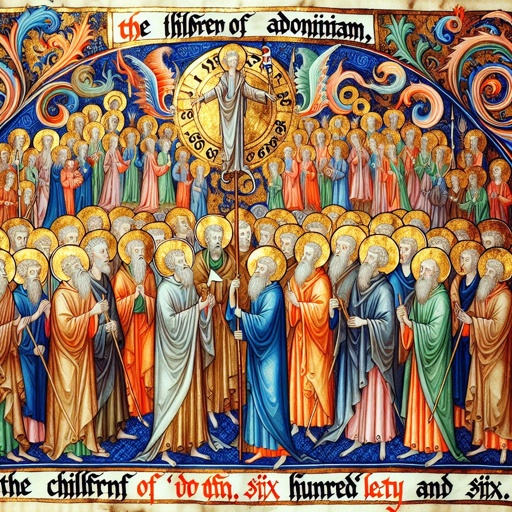
Ezra 2:13 - "The children of Adonikam, six hundred sixty and six."

"Of Ezra, Meshullam; of Amariah, Jehohanan;" - Nehemiah 12:13

Ezra 6:19 - "And the children of the captivity kept the passover upon the fourteenth day of the first month."

Ezra 8:6 - "Of the sons also of Adin; Ebed the son of Jonathan, and with him fifty males."

Ezra 8:13 - "And of the last sons of Adonikam, whose names are these, Eliphelet, Jeiel, and Shemaiah, and with them threescore males."

Ezra 6:6 - "Now therefore, Tatnai, governor beyond the river, Shethar-boznai, and your companions the Apharsachites, which are beyond the river, be ye far from thence:"

Ezra 6:2 - "And there was found at Achmetha, in the palace that is in the province of the Medes, a roll, and therein was a record thus written:"

Ezra 2:6 - "The children of Pahath-moab, of the children of Jeshua and Joab, two thousand eight hundred and twelve."

Ezra 5:13 - "But in the first year of Cyrus the king of Babylon the same king Cyrus made a decree to build this house of God."

Ezra 7:6 - "This Ezra went up from Babylon; and he was a ready scribe in the law of Moses, which the LORD God of Israel had given: and the king granted him all his request, according to the hand of the LORD his God upon him."

Ezra 6:15 - "And this house was finished on the third day of the month Adar, which was in the sixth year of the reign of Darius the king."

Ezra 6:16 - "¶ And the children of Israel, the priests, and the Levites, and the rest of the children of the captivity, kept the dedication of this house of God with joy,"

Ezra 6:18 - "And they set the priests in their divisions, and the Levites in their courses, for the service of God, which is at Jerusalem; as it is written in the book of Moses."

Ezra 6:10 - "That they may offer sacrifices of sweet savours unto the God of heaven, and pray for the life of the king, and of his sons."
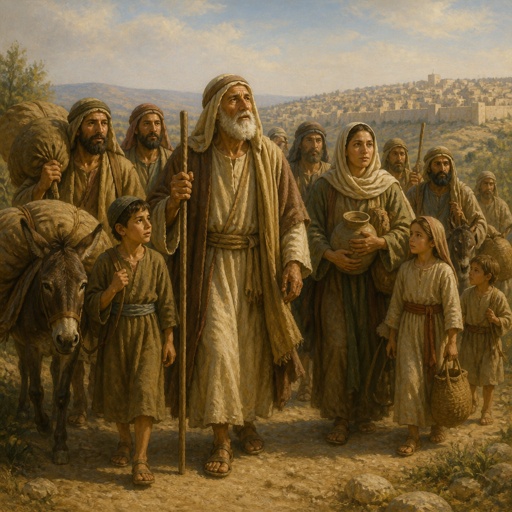
"The children of Adonikam, six hundred sixty and six." - Ezra 2:13

Ezra 4:6 - "And in the reign of Ahasuerus, in the beginning of his reign, wrote they unto him an accusation against the inhabitants of Judah and Jerusalem."

Ezra 6:4 - "With three rows of great stones, and a row of new timber: and let the expenses be given out of the king's house:"

Ezra 6:1 - "Then Darius the king made a decree, and search was made in the house of the rolls, where the treasures were laid up in Babylon."

Ezra 10:6 - "¶ Then Ezra rose up from before the house of God, and went into the chamber of Johanan the son of Eliashib: and when he came thither, he did eat no bread, nor drink water: for he mourned because of the transgression of them that had been carried away."

Ezra 6:7 - "Let the work of this house of God alone; let the governor of the Jews and the elders of the Jews build this house of God in his place."