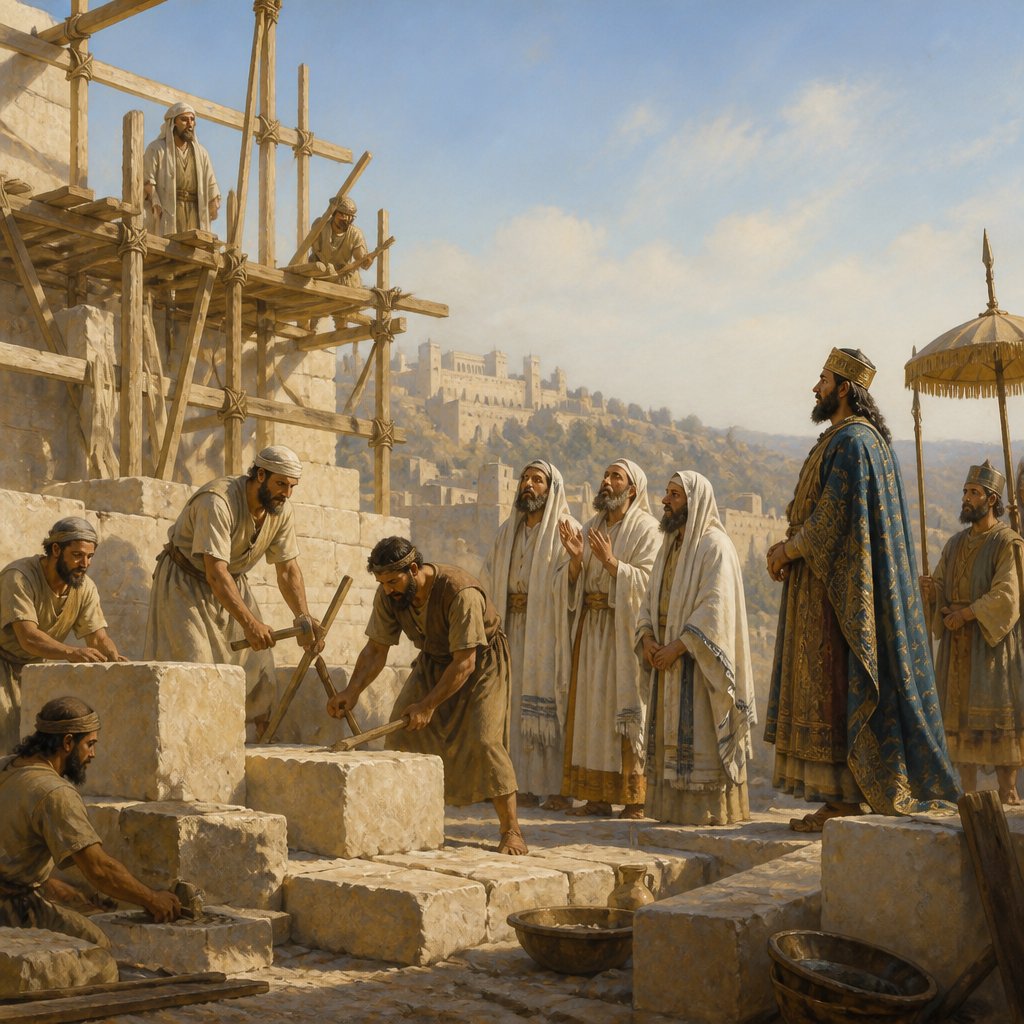
Ezra 6:3 (KJV) states, "In the first year of Cyrus the king, the same Cyrus the king made a decree concerning the house of God at Jerusalem, Let the house be builded, the place where they offered sacrifices, and let the foundations thereof be strongly laid; the height thereof threescore cubits, and the breadth thereof threescore cubits."
This verse is part of a decree issued by King Cyrus of Persia, allowing the Jews to rebuild the temple in Jerusalem. The historical context of this verse is crucial in understanding its significance. The Jewish people had been exiled in Babylon for 70 years, as a punishment for their disobedience to God. However, God moved the heart of King Cyrus to issue a decree allowing the Jews to return to their homeland and rebuild the temple. This act of mercy and kindness by the Persian ruler is a testament to God's sovereignty and his ability to work through even the most powerful and unlikely of leaders.
The theme of restoration is central to this verse. The Jewish people were given the opportunity to restore their place of worship and rebuild their spiritual life. This act of rebuilding the temple was not just a physical reconstruction, but also a spiritual one. It symbolized a fresh start, a turning point in the relationship between God and his people. The temple was the heart of Jewish worship and culture, and its restoration signaled a new beginning for the nation of Israel.
Furthermore, the mention of the dimensions of the temple in this verse holds symbolic significance. The height and breadth of the temple, being threescore cubits each (which is 60 in modern measurements), represent completeness and perfection. In biblical numerology, the number 60 is often associated with the concept of time and completion. The use of this specific measurement underscores the divine nature of the temple and emphasizes its significance as a place of worship and communion with God.
Moreover, the act of laying strong foundations for the temple is a powerful symbol of the importance of a solid spiritual foundation in the lives of believers. Just as the physical temple required strong and sturdy foundations, our spiritual lives also require a solid grounding in the principles of faith and obedience to God's word. This verse serves as a reminder of the importance of building our lives upon the rock of God's truth and promises, rather than on the shifting sands of worldly wisdom and desires.
In a broader theological context, the decree of King Cyrus and the subsequent rebuilding of the temple can be seen as a foreshadowing of the ultimate restoration and redemption that would come through the work of Jesus Christ. The temple, as the place of sacrifice and atonement, points to the ultimate sacrifice of Jesus on the cross, which served as the foundation for the restoration of humanity's relationship with God. The reinstating of the temple as a place of worship and sacrifice prefigures the ultimate restoration brought about by Christ's death and resurrection.
In conclusion, Ezra 6:3 is a verse that carries great significance in terms of biblical history, theological symbolism, and spiritual themes. It serves as a reminder of God's faithfulness in restoring and redeeming his people and points to the ultimate restoration and redemption that comes through Jesus Christ. The rebuilding of the temple symbolizes the restoration of the spiritual life of the Jewish nation and holds lessons for believers today about the importance of a solid foundation in their relationship with God.
Get our apps


Artwork for Ezra 6:3

Ezra 6:3 - "In the first year of Cyrus the king the same Cyrus the king made a decree concerning the house of God at Jerusalem, Let the house be builded, the place where they offered sacrifices, and let the foundations thereof be strongly laid; the height thereof threescore cubits, and the breadth thereof threescore cubits;"
"In the first year of Cyrus the king the same Cyrus the king made a decree concerning the house of God at Jerusalem, Let the house be builded, the place where they offered sacrifices, and let the foundations thereof be strongly laid; the height thereof threescore cubits, and the breadth thereof threescore cubits;" - Ezra 6:3

Ezra 3:6 - "From the first day of the seventh month began they to offer burnt offerings unto the LORD. But the foundation of the temple of the LORD was not yet laid."

Ezra 9:6

Ezra 6:16

Ezra 10:3

Ezra 3:10

Ezra 3:2

Ezra 3:2

Ezra 3:9

Ezra 3:2

Zerubbabel in Ezra chapter 6

Ezra 6:1-12

Ezra 9:3

Ezra 3:2

Ezra 3:2

Ezra 10:3

Ezra 6:15-16

Ezra 6:15-16

Zerubbabel in Ezra chapter 3

Altar rebuilt in Jerusalem. Ezra 3:1-3

Ezra 7:3 - "The son of Amariah, the son of Azariah, the son of Meraioth,"

Ezra 6:19 - "And the children of the captivity kept the passover upon the fourteenth day of the first month."

Ezra 8:6 - "Of the sons also of Adin; Ebed the son of Jonathan, and with him fifty males."

Ezra 2:3 - "The children of Parosh, two thousand an hundred seventy and two."

Ezra 6:6 - "Now therefore, Tatnai, governor beyond the river, Shethar-boznai, and your companions the Apharsachites, which are beyond the river, be ye far from thence:"
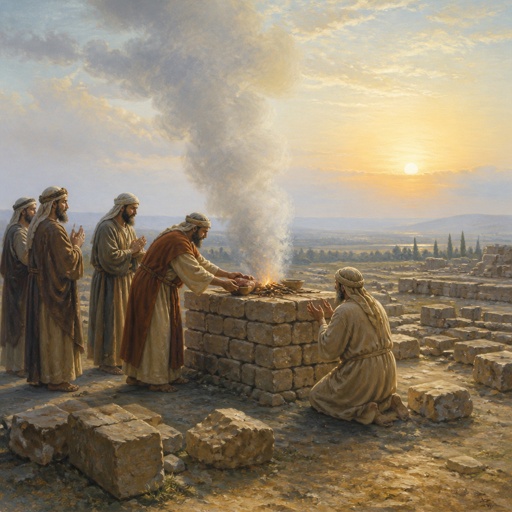
"From the first day of the seventh month began they to offer burnt offerings unto the LORD. But the foundation of the temple of the LORD was not yet laid." - Ezra 3:6

Ezra 6:2 - "And there was found at Achmetha, in the palace that is in the province of the Medes, a roll, and therein was a record thus written:"

Ezra 2:6 - "The children of Pahath-moab, of the children of Jeshua and Joab, two thousand eight hundred and twelve."

Pagan women leave with their children ezra 10:3