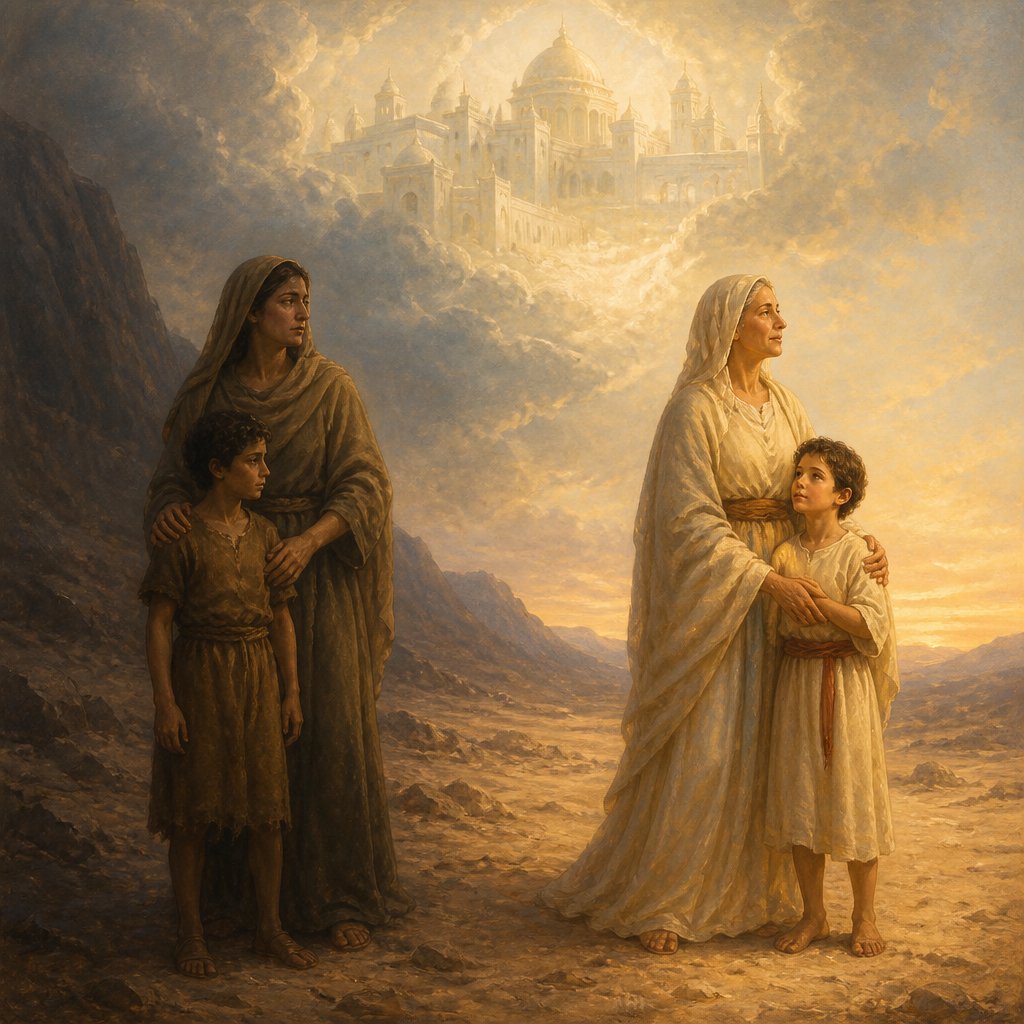
The Bible verse Galatians 4:21-31 from the King James Version (KJV) is a passage that delves into the allegorical interpretation of the Old Testament story of Sarah and Hagar, and their sons Isaac and Ishmael. This passage is rich in symbolism and carries deep theological insights about the nature of law and grace, as well as the promise of salvation through Christ.
In order to fully grasp the meaning of this passage, it is important to understand the context in which it was written. The apostle Paul wrote the letter to the Galatians to address the issue of Judaizers, who were teaching that Gentile converts to Christianity needed to adhere to the Jewish law, including circumcision, in order to be saved. Paul vehemently opposed this teaching, as he believed that salvation came through faith in Christ alone, and not through adherence to the law.
In Galatians 4:21-31, Paul uses the story of Sarah and Hagar as an allegory to illustrate the difference between the law and grace. He begins by addressing those who desire to be under the law, asking them if they truly understand what the law represents. He then refers to the story of Abraham, Sarah, Hagar, and their sons, Isaac and Ishmael, to illustrate his point.
In the allegory, Sarah represents the promise of God, while Hagar represents the law. Sarah, who was barren, miraculously conceives a child in her old age through the promise of God, while Hagar conceives a child through natural means. Paul interprets this allegorically, stating that Sarah represents the heavenly Jerusalem, while Hagar represents the earthly Jerusalem. This symbolism serves to contrast the promise of God, which is received by faith, with the law, which is received through human effort.
The birth of Isaac, the child of promise, is contrasted with the birth of Ishmael, the child born according to the flesh. Paul emphasizes that the child of the promise is the true heir, while the child born according to the flesh is cast out. This serves as a metaphor for the contrast between those who are under the law and those who are under grace. Those who rely on the law for salvation are like Ishmael, born according to the flesh, while those who rely on the promise of God through faith are like Isaac, the child of promise.
Paul goes on to explain that the Jerusalem above is free, representing the freedom that comes through faith in Christ, while the earthly Jerusalem, which is in bondage with her children, represents those who are under the law. He urges the Galatians to cast out the bondwoman and her son, symbolizing a rejection of reliance on the law for salvation, and to embrace the promise of God through faith in Christ.
This passage is replete with symbolism and carries multiple themes, including the contrast between law and grace, the promise of salvation through faith, and the rejection of reliance on human effort for salvation. It also serves as a powerful reminder of the sufficiency of Christ's sacrifice for salvation, and the futility of seeking salvation through adherence to the law.
In conclusion, Galatians 4:21-31 from the King James Version (KJV) is a rich and profound passage that uses the allegory of Sarah and Hagar to illustrate the theological truths of law and grace, and the promise of salvation through faith in Christ. It serves as a timeless reminder of the futility of seeking salvation through human effort and the sufficiency of Christ's sacrifice for salvation.
Get our apps


Artwork for Galatians 4:21-31
"Tell me, you who desire to be under the law, do you not listen to the law? For it is written that Abraham had two sons, one by a slave woman and one by a free woman. But the son of the slave was born according to the flesh, while the son of the free woman was born through promise. Now this may be interpreted allegorically: these women are two covenants. One is from Mount Sinai, bearing children for slavery; she is Hagar. Now Hagar is Mount Sinai in Arabia; she corresponds to the present Jerusalem, for she is in slavery with her children. But the Jerusalem above is free, and she is our mother. For it is written, “Rejoice, O barren one who does not bear; break forth and cry aloud, you who are not in labor! For the children of the desolate one will be more than those of the one who has a husband.” Now you, brothers, like Isaac, are children of promise. But just as at that time he who was born according to the flesh persecuted him who was born according to the Spirit, so also it is now. But what does the Scripture say? “Cast out the slave woman and her son, for the son of the slave woman shall not inherit with the son of the free woman.” So, brothers, we are not children of the slave but of the free woman." - Galatians 4:21-31

Galatians 4:31 - "So then, brethren, we are not children of the bondwoman, but of the free."
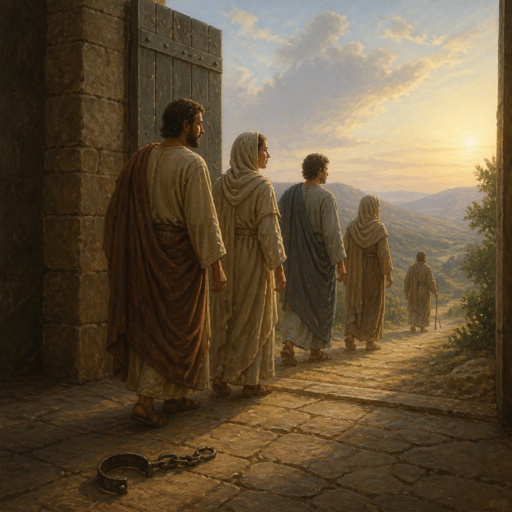
"So then, brethren, we are not children of the bondwoman, but of the free." - Galatians 4:31

Galatians 4:21 - "Tell me, ye that desire to be under the law, do ye not hear the law?"
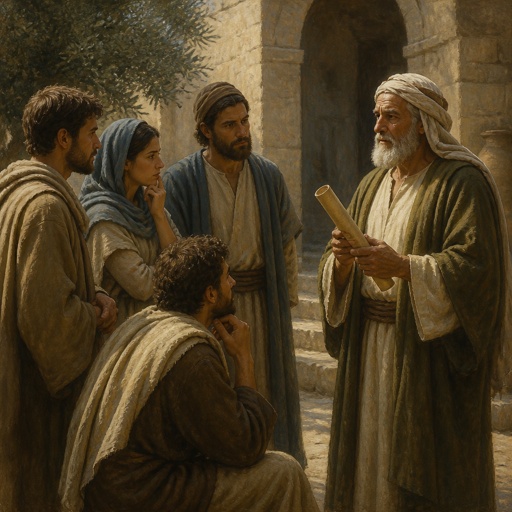
"Tell me, ye that desire to be under the law, do ye not hear the law?" - Galatians 4:21

galatians 4:4

Galatians 6:4

Galatians 6:4

Galatians 6:4

Galatians 6:4

Galatians 6:4

Galatians 6:4

Galatians 4:13

Galatians 1:21 - "Afterwards I came into the regions of Syria and Cilicia;"

Galatians 4:24-27

Galatians 6:4

Galatians 4:13

Galatians 6:4

Galatians 6:4

Galatians 4:13

Galatians 6: 4-5

Galatians 6: 4-5

Galatians 6: 4-5

Galatians 2:21 - "I do not frustrate the grace of God: for if righteousness come by the law, then Christ is dead in vain."

Galatians 4:28 - "Now we, brethren, as Isaac was, are the children of promise."

Galatians 4:10 - "Ye observe days, and months, and times, and years."

Galatians 4:4 - "But when the fulness of the time was come, God sent forth his Son, made of a woman, made under the law,"

"Afterwards I came into the regions of Syria and Cilicia;" - Galatians 1:21

Galatians 4:26 - "But Jerusalem which is above is free, which is the mother of us all."

Galatians 4:2 - "But is under tutors and governors until the time appointed of the father."