What does Galatians 5:1 mean?
“Stand fast therefore in the liberty wherewith Christ hath made us free, and be not entangled again with the yoke of bondage.” — Galatians 5:1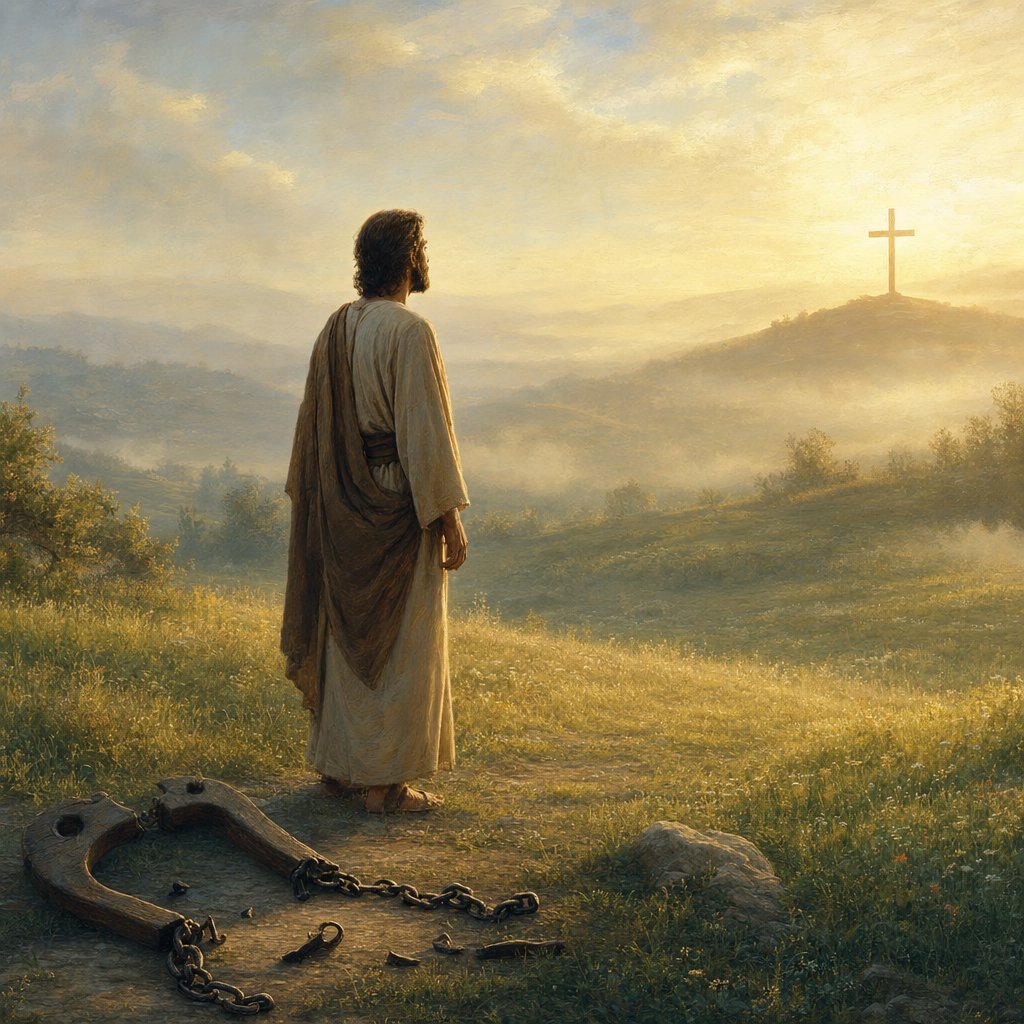
“Stand fast therefore in the liberty wherewith Christ hath made us free, and be not entangled again with the yoke of bondage.” (Galatians 5:1, KJV)
In Galatians 5:1 Paul gathers the whole burden of his letter into a single, urgent charge. He speaks to believers who have heard the gospel of Christ and begun in faith, yet are being pressured to add the Mosaic ceremonies—especially circumcision—as though obedience to the law were necessary to be justified before God. The verse sits at a turning point in the epistle: after Paul has argued at length that a man is justified by faith in Jesus Christ and not by the works of the law, and after he has used the history of Abraham and the image of Hagar and Sarah to show two opposing covenants, he now draws the practical conclusion. Since Christ has truly freed them, they must not step back into a system that would put them under a servile obligation again.
“Stand fast” carries the sense of holding one’s ground, as in a conflict where retreat would mean loss. The issue is not a casual difference of opinion but a spiritual battle over the nature of salvation and the identity of God’s people. Paul is not merely advising personal resilience; he is calling the Galatians to remain settled and immovable in the gospel they received, refusing teaching that subtly shifts their confidence from Christ to fleshly ordinances. In the context of Galatians, to “stand fast” is to keep faith as the means by which one lives before God, and to resist any return to law-keeping as a basis for righteousness.
“The liberty wherewith Christ hath made us free” points to what Christ has accomplished, not what believers manufacture. In Galatians, liberty is not lawlessness; it is freedom from the condemning power of the law, freedom from the curse that the law pronounces upon every transgressor, and freedom from the necessity of establishing one’s own righteousness by ceremonial boundary markers. Christ’s liberty is rooted in His redemptive work: by His death and resurrection He delivers those who believe from guilt and from the old covenant’s role as a tutor and custodian. The phrase “hath made us free” is decisive and completed; it presents liberation as an accomplished act, not a gradual possibility contingent upon adopting additional religious requirements. That finished liberation is meant to be lived in—guarded, enjoyed, and expressed in a new way of life governed by the Spirit, which Paul will unfold immediately afterward in the chapter.
When Paul adds, “and be not entangled again,” he uses language of being ensnared, as if cords or nets are thrown over someone who has stepped back into danger. The word “again” is striking because many Galatians were Gentiles; Paul treats any move toward law as a return to bondage, like going back to a former slavery. His point is that bondage is not only the crude slavery of pagan sin; it is also the bondage of seeking acceptance with God through a system that can only expose sin but cannot finally remove it. To accept circumcision as a necessity would not be a harmless cultural addition; it would entangle the conscience in an obligation to keep the whole law as the ground of standing before God, and thus would obscure the sufficiency of Christ.
The “yoke of bondage” is a powerful symbol drawn from common biblical and ancient imagery. A yoke is a wooden harness laid upon an animal’s neck to direct its labor; it speaks of control, burden, and enforced service. In Galatians, the yoke represents submission to the law as a covenant of works—an arrangement in which one’s status depends upon performance and in which failure brings condemnation. This does not mean the law was evil; Paul has already acknowledged the law’s purpose in exposing transgression and pointing to Christ. Yet once Christ has come, to place oneself under the law as the means of justification is to shoulder a yoke that was never designed to give life. The yoke becomes “bondage” because it binds the heart to fear and to self-reliance, and because it replaces the Son’s freedom with a servant’s condition.
The verse also echoes the broader biblical storyline of exodus and deliverance. Liberty in Scripture often carries the taste of God bringing His people out from oppression into covenant relationship with Himself. Paul’s message is that Christ has accomplished a greater exodus: deliverance not from Pharaoh but from condemnation, from the curse, and from the old order in which the law stood over the sinner. To return to the “yoke” would be like Israel longing for Egypt after being brought through the sea—preferring the familiarity of bondage to the demanding simplicity of trusting God’s provision.
Galatians 5:1 therefore sets the theological and moral frame for everything that follows. Paul will soon insist that if a man seeks to be justified by the law, he is “a debtor to do the whole law,” and he will contrast the works of the flesh with the fruit of the Spirit. The liberty of Galatians 5:1 is meant to be guarded from two opposite errors: from legalism, which binds the conscience with requirements that cannot justify, and from fleshly license, which would misuse freedom as an occasion for sin. True liberty is Christ-centered and Spirit-empowered; it is the freedom to belong to God as sons, not as slaves earning wages, and to serve in love rather than in fear. The significance of the verse is that it calls believers to treat the gospel as a place to stand—a settled ground of assurance—because Christ’s work is sufficient, and any return to law as the basis of righteousness is not progress but entanglement in a yoke that He has already broken.
Get our apps


Artwork for Galatians 5:1
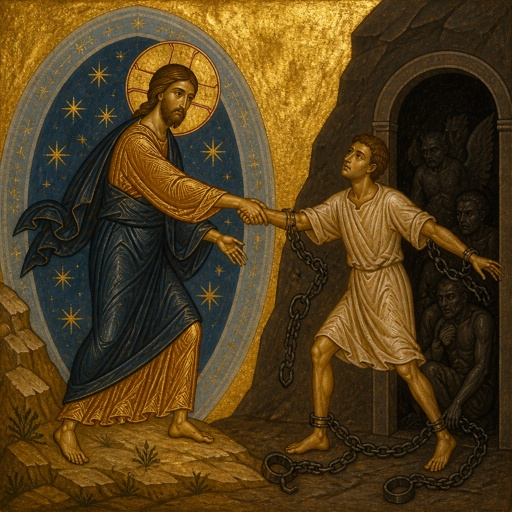
Galatian 5:1
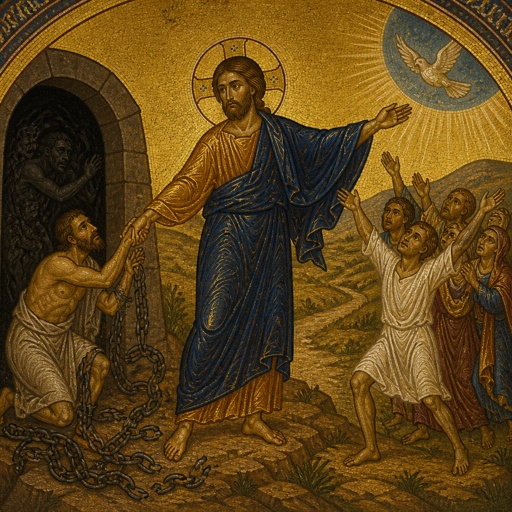
Galatian 5:1

Galatian 5:1

Galatians 5:1 - "Stand fast therefore in the liberty wherewith Christ hath made us free, and be not entangled again with the yoke of bondage."
"Stand fast therefore in the liberty wherewith Christ hath made us free, and be not entangled again with the yoke of bondage." - Galatians 5:1

"Stand fast therefore in the liberty wherewith Christ hath made us free, and be not entangled again with the yoke of bondage." - Galatians 5:1

"Stand fast therefore in the liberty wherewith Christ hath made us free, and be not entangled again with the yoke of bondage." - Galatians 5:1

Galatians 1:5 - "To whom be glory for ever and ever. Amen."

"To whom be glory for ever and ever. Amen." - Galatians 1:5

Galatians 5

Galatians 5:5-6

Galatians 5:16-17

Galatians 5:16-17

Galatians 5:24

Galatians 5:23

Galatians 5:23

Galatians 5:23

Galatians 5:23

Galatians 5:5 - "For we through the Spirit wait for the hope of righteousness by faith."

Galatians 5:22-23

Galatians 5:22-23

Galatians 6: 4-5

Galatians 5:23 - "Meekness, temperance: against such there is no law."

Galatians 6: 4-5

Galatians 5:16-26

Galatians 5:22-23

Galatians 5:22-23

Galatians 6: 4-5

Galatians 5:16-17

Galatians 5:22-23