What does Genesis 10:11 mean?
“Out of that land went forth Asshur, and builded Nineveh, and the city Rehoboth, and Calah,” — Genesis 10:11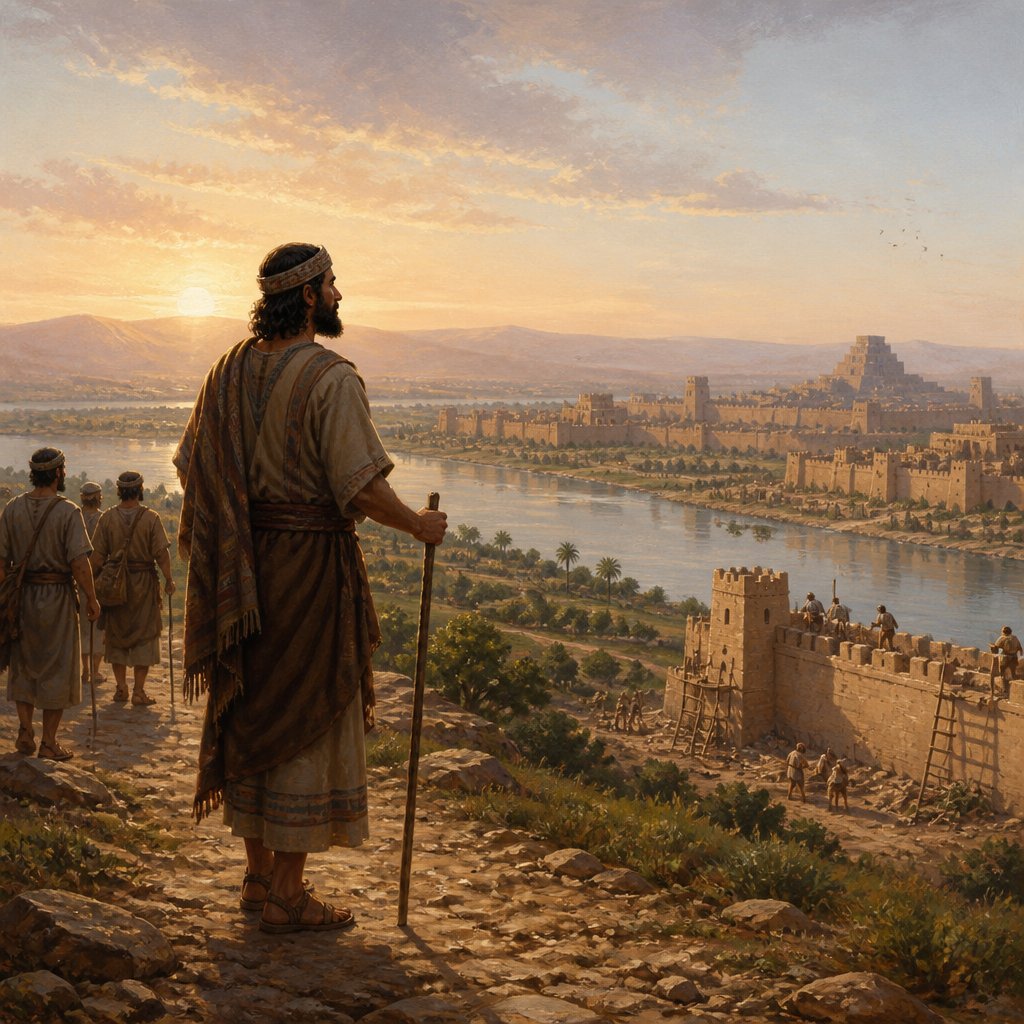
Genesis 10:11 in the King James Version (KJV) states, "Out of that land went forth Asshur, and builded Nineveh, and the city Rehoboth, and Calah." This verse is part of the genealogy of Noah's descendants, specifically focusing on the lineage of Ham, one of Noah's sons.
The genealogy in Genesis 10, also known as the Table of Nations, provides a historical account of the descendants of Noah and the nations that arose from them. In this particular verse, the focus is on the descendants of Ham, who was the father of Canaan, Mizraim (Egypt), Put, and Cush. The verse specifically mentions Asshur, who went forth from the land of Shinar (Babylonia) and built the cities of Nineveh, Rehoboth, and Calah.
Contextually, this verse is important as it highlights the early origins of some of the prominent cities in ancient Mesopotamia. Nineveh, in particular, was a significant city in ancient Assyria and is mentioned numerous times in the Bible, most notably in the book of Jonah. The mention of Nineveh in this verse serves as a foreshadowing of the city's future significance in biblical narratives.
One of the themes that can be derived from this verse is the idea of human civilization and urbanization. The descendants of Noah were tasked with repopulating the earth after the flood, and this verse provides insight into how various nations and cities arose from these early generations. It also speaks to the concept of human agency in building and developing societies, as Asshur is credited with the construction of these cities.
Symbolically, the building of cities such as Nineveh can be seen as a manifestation of human ambition and the desire for power and influence. In many ancient cultures, cities were symbols of strength and prosperity, and the construction of cities was often tied to the ambitions of rulers and leaders. In this sense, the mention of Asshur building Nineveh and other cities can be seen as a representation of human aspirations and the pursuit of worldly achievements.
From a theological standpoint, this verse also serves as a reminder of the interconnectedness of all humanity. The descendants of Noah spread out and established diverse societies, each with its own culture and traditions. This reflects the biblical understanding of the unity of the human race, despite the diversity of nations and languages that arose in subsequent generations.
It's important to note that the historical and geographical details mentioned in this verse have been of interest to scholars studying ancient civilizations of Mesopotamia. The mention of Nineveh, in particular, has been a subject of archaeological research, and the discovery of the ruins of this ancient city has provided valuable insights into the historical and cultural context of the biblical narrative.
In conclusion, Genesis 10:11 is a verse that provides historical and geographical context to the genealogy of Noah's descendants. It sheds light on the early origins of prominent cities in ancient Mesopotamia and underscores the themes of human civilization, ambition, and the interconnectedness of humanity. From a theological perspective, it serves as a reminder of the unity of the human race, despite the diversity of nations and cultures that arose in the ancient world. Ultimately, this verse contributes to the rich tapestry of biblical narratives, providing valuable insights into the early history of humanity as portrayed in the Bible.
Get our apps


Artwork for Genesis 10:11

Genesis 10:11 - "Out of that land went forth Asshur, and builded Nineveh, and the city Rehoboth, and Calah,"
"Out of that land went forth Asshur, and builded Nineveh, and the city Rehoboth, and Calah," - Genesis 10:11

Genesis 30:10-11

Genesis 11:10 - "¶ These are the generations of Shem: Shem was an hundred years old, and begat Arphaxad two years after the flood:"
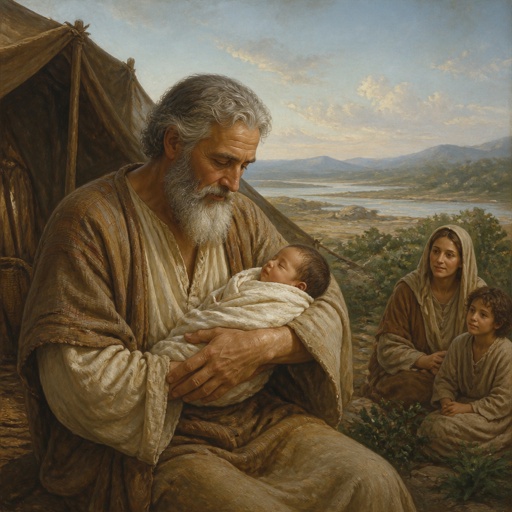
"¶ These are the generations of Shem: Shem was an hundred years old, and begat Arphaxad two years after the flood:" - Genesis 11:10

Genesis 11:5

genesis 8:11

genesis 8:11

Genesis 8:11

genesis 8:11

Genesis 8:11

Genesis 15:11

Genesis 21-11

genesis 8:11

Genesis 11:5

Genesis 18-11
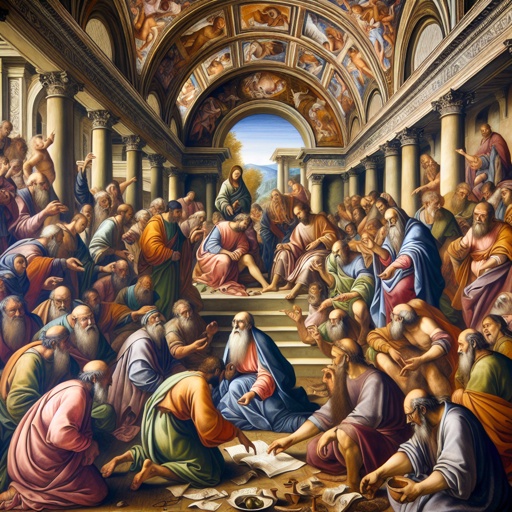
Genesis 20-11

Genesis 28-11

Genesis 11:5

Genesis 8:11

Genesis 23:11

Genesis 22:11

genesis 8:11

Genesis 24-11

Genesis 16:11

Genesis 11:5

genesis 8:11

Genesis 11:5

Genesis 17-11

genesis 8:11