What does Genesis 13:18 mean?
“Then Abram removed his tent, and came and dwelt in the plain of Mamre, which is in Hebron, and built there an altar unto the LORD.” — Genesis 13:18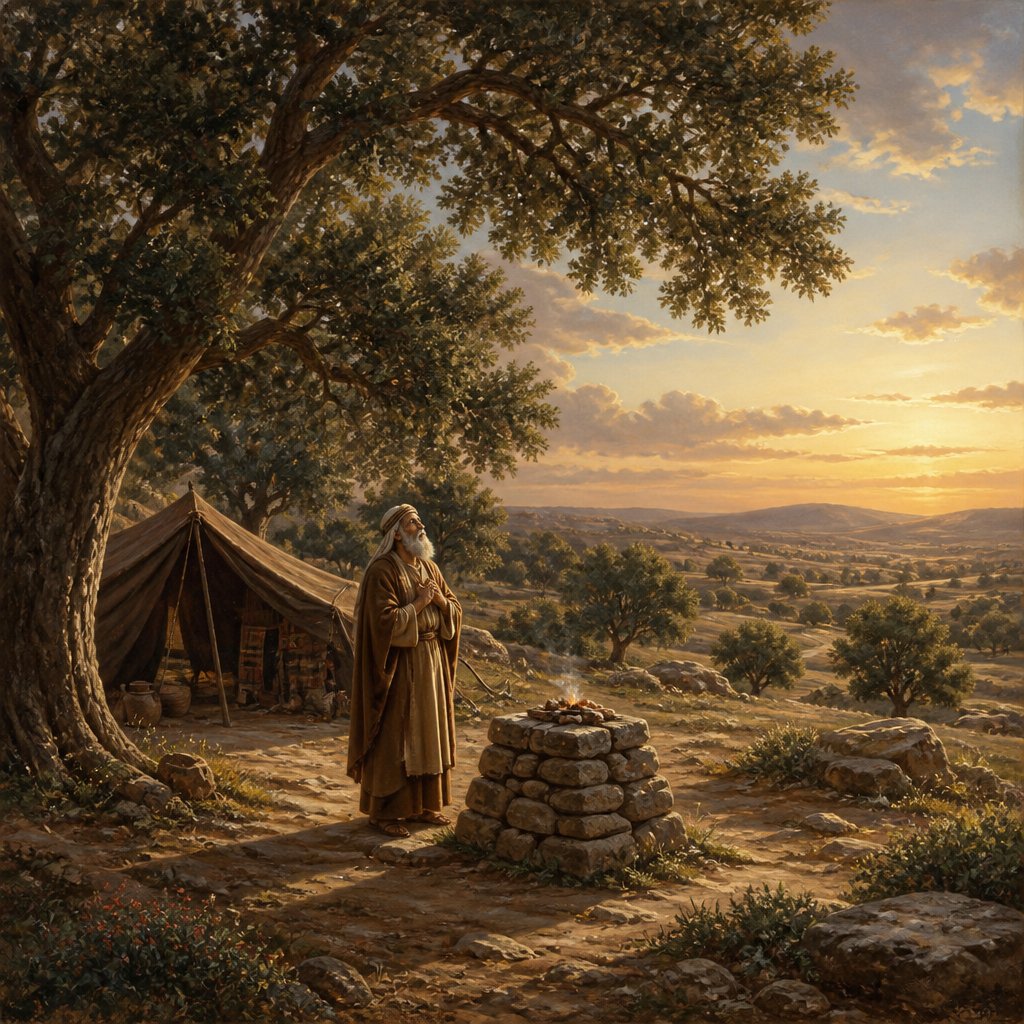
Genesis 13:18 (KJV)
"Then Abram removed his tent, and came and dwelt in the plain of Mamre, which is in Hebron, and built there an altar unto the Lord."
This verse comes at the end of a passage in which Abram (later known as Abraham) and his nephew Lot have decided to part ways due to their herds and possessions becoming too large for the land to support them both. Abram graciously gives Lot the first choice of the land, and Lot chooses the fertile plain of the Jordan River, leaving Abram with the less desirable land. After Lot's departure, God reaffirms His promise to bless Abram and give him the land of Canaan.
This verse not only serves as a transitional moment in the narrative of Abram's life, but it also holds significant meaning in terms of faith, obedience, and worship. Let's explore the themes, symbolism, and context of this verse in more detail.
One of the key themes in this verse is obedience to God's leading. In the preceding verses, Abram demonstrates faith and obedience by allowing Lot to choose the land, trusting that God will still fulfill His promise to him. Abram does not hold onto his own desires or rights, but instead, he trusts in God's faithfulness and provision. This serves as a powerful lesson in humility and obedience for believers.
Another important theme is the act of worship. After settling in the plain of Mamre, Abram builds an altar to the Lord. This act of worship signifies Abram's acknowledgment of God's presence and faithfulness in his life. It also symbolizes his gratitude and reverence towards God. The altar serves as a place of offering and communion with God, where sacrifices and prayers are made. In the context of this verse, it represents Abram's commitment to seeking and worshipping God in all circumstances.
The symbolism in this verse is also worth examining. The plain of Mamre, where Abram chooses to dwell, is situated in Hebron. Hebron is a significant location in the Bible, often associated with the Patriarchs and their interactions with God. It is a place of historical and spiritual importance, representing a sacred space where God's presence is palpable. By choosing to dwell in Hebron, Abram aligns himself with the spiritual legacy of the land, seeking a deeper connection with God.
Additionally, the act of building an altar carries deep symbolic meaning. Throughout the Bible, altars are erected as places of encounter with God, where divine communication and revelation take place. They are reminders of God's covenant with His people and serve as a focal point for spiritual practices. In building an altar to the Lord, Abram is establishing a sacred space for his ongoing relationship with God, solidifying his commitment to worship and obedience.
Contextually, this verse marks a pivotal moment in Abram's journey of faith. It illustrates his willingness to follow God's leading, even when it means relinquishing control and trusting in God's promises. It also highlights the importance of worship and reverence in the life of a believer. By building an altar in the plain of Mamre, Abram sets a precedent for future generations, emphasizing the significance of seeking God's presence and honoring Him through worship.
In conclusion, Genesis 13:18 from the King James Version encapsulates profound themes of faith, obedience, and worship. The verse holds deep spiritual significance, portraying Abram's faithfulness and humility, as well as his commitment to seeking God's presence. It serves as a timeless reminder for believers to trust in God's faithfulness, to prioritize worship and reverence, and to follow God's leading with unwavering obedience.
Get our apps


Artwork for Genesis 13:18

Genesis 13:18 - "Then Abram removed his tent, and came and dwelt in the plain of Mamre, which is in Hebron, and built there an altar unto the LORD."

Genesis 13:18 Then Abram removed his tent, and came and dwelt in the plain of Mamre, which is in Hebron, and built there an Altar unto the LORD.
"Then Abram removed his tent, and came and dwelt in the plain of Mamre, which is in Hebron, and built there an altar unto the LORD." - Genesis 13:18
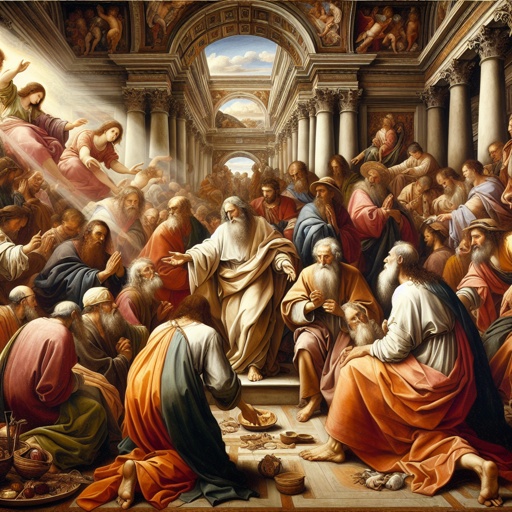
Genesis 18-13

Genesis 18:13 - "And the LORD said unto Abraham, Wherefore did Sarah laugh, saying, Shall I of a surety bear a child, which am old?"
Genesis 18-18

Genesis 18-12

Genesis 24-18

Genesis 18-10

Genesis 18-16

Genesis 18:25

Genesis 22-18

Genesis 18-30

Genesis 18-26

Genesis 17-18

Genesis 18-32

Genesis 26:18

Genesis 18-25

Genesis 18-9

Genesis 18-14
Genesis 15:18

Genesis 18-19

Genesis 18-2

Genesis 23-18

Genesis 18-28

Genesis 18-1

Genesis 25-18

Genesis 20-18

Genesis 18-22

Genesis 18-17