What does Genesis 14:2 mean?
"That these made war with Bera king of Sodom, and with Birsha king of Gomorrah, Shinab king of Admah, and Shemeber king of Zeboiim, and the king of Bela, which is Zoar." - Genesis 14:2
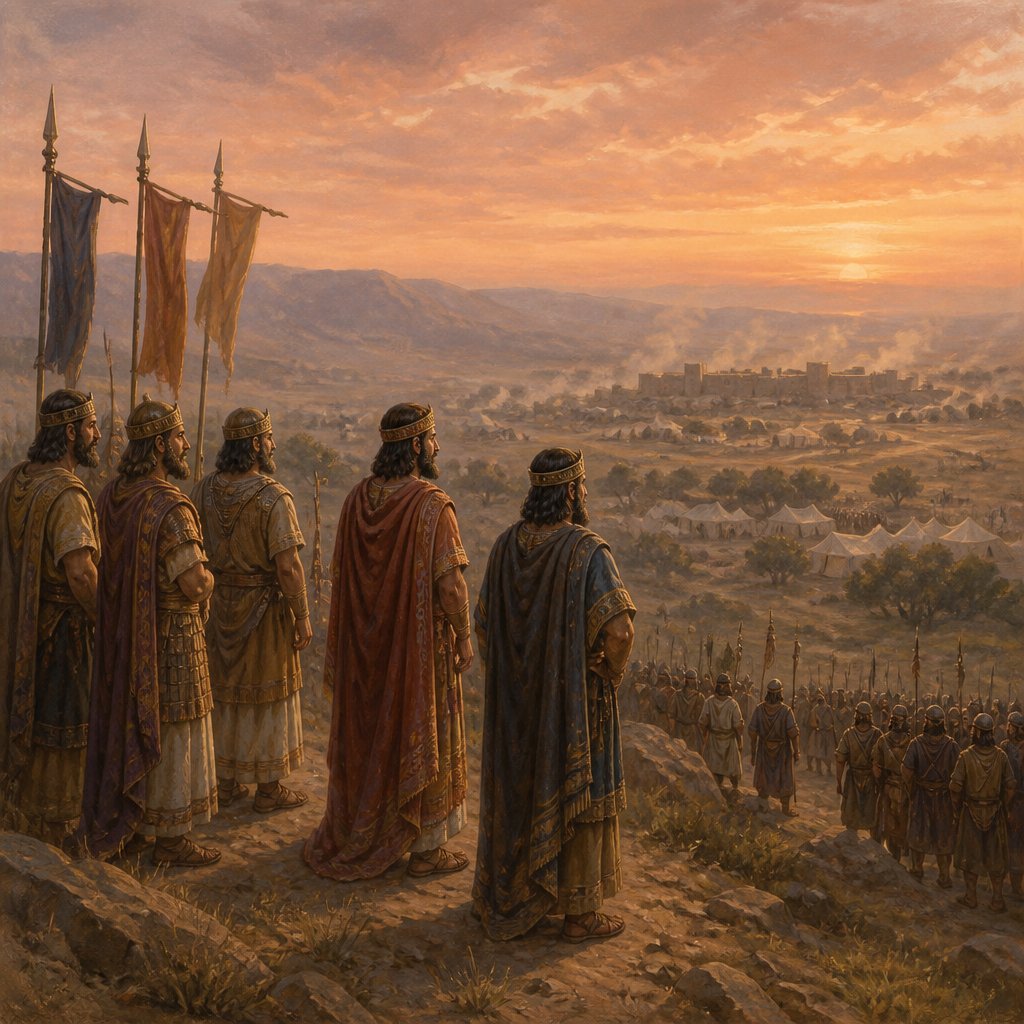
Genesis 14:2 (KJV) states, "That these made war with Bera king of Sodom, and with Birsha king of Gomorrah, Shinab king of Admah, and Shemeber king of Zeboiim, and the king of Bela, which is Zoar." This verse is a part of the larger narrative of the war of the kings in the book of Genesis.
The context of this verse is set against a backdrop of political unrest and conflict. The verse describes a coalition of kings who engaged in warfare with other cities in the region. The mention of these kings and their cities is significant because it sets the stage for the events that follow in the narrative. The names of the kings and cities mentioned in this verse carry symbolic and historical significance, offering insight into the geopolitical landscape of the ancient Near East.
The verse speaks to the theme of power struggles and conflict. The mention of war and the ongoing battles between these kings highlights the fragile nature of political alliances and the constant threat of war in the ancient world. It also sets the stage for the larger themes of conquest and dominion, which are recurring themes in the book of Genesis.
Additionally, the verse serves as a reminder of the consequences of human pride and disobedience. The cities of Sodom and Gomorrah, which are mentioned in this verse, are later condemned for their wickedness and are ultimately destroyed by God. The mention of these cities in the context of war serves as a foreshadowing of the judgment that will befall them later in the narrative.
The symbolism in this verse lies in the names of the kings and cities mentioned. Bera, king of Sodom, and Birsha, king of Gomorrah, are both associated with the cities that are later destroyed by God due to their sinfulness. The mention of these kings in the context of war serves as a prelude to the judgment that will befall them. Shinab, king of Admah, and Shemeber, king of Zeboiim, are less known figures, but their inclusion in the verse underscores the widespread nature of the conflict and the impact it has on various cities in the region.
The king of Bela, which is Zoar, is also mentioned in the verse. Zoar is notable for being the city that is spared from destruction, serving as a place of refuge for Lot and his family when Sodom and Gomorrah are destroyed. The mention of Zoar in this context serves as a reminder of God's mercy and grace, even in the midst of judgment and destruction.
In conclusion, Genesis 14:2 (KJV) carries significant thematic, contextual, and symbolic weight in the larger narrative of the book of Genesis. It serves as a reminder of the consequences of human pride and disobedience, the fragility of political alliances, and the ultimate sovereignty of God over the affairs of humanity. The names of the kings and cities mentioned in the verse offer insight into the historical and geopolitical context of the ancient Near East, while also carrying symbolic significance in the larger narrative. Ultimately, this verse serves as a precursor to the larger themes of judgment, mercy, and redemption that are explored throughout the rest of the book of Genesis.
Have questions about Genesis 14:2?
Dive deeper into this scripture with Bible Chat — an AI-powered tool for exploring God's Word through conversation. Ask questions, get context, and grow in your understanding of the Bible.
Get Our Apps


Genesis 14:2 Artwork

Genesis 14:2 - "That these made war with Bera king of Sodom, and with Birsha king of Gomorrah, Shinab king of Admah, and Shemeber king of Zeboiim, and the king of Bela, which is Zoar."

Genesis 14:2 That these made war with Bera king of Sodom, and with Birsha king of Gomorrah, Shinab king of Admah, and Shemeber king of Zeboiim, and the king of Bela, which is Zoar.
"That these made war with Bera king of Sodom, and with Birsha king of Gomorrah, Shinab king of Admah, and Shemeber king of Zeboiim, and the king of Bela, which is Zoar." - Genesis 14:2

Genesis 14:1-2

Genesis 2:14 - "And the name of the third river is Hiddekel: that is it which goeth toward the east of Assyria. And the fourth river is Euphrates."

Genesis 22 14

Genesis 21:14

Genesis 19-14

Genesis 25-14

Genesis 15:14

Genesis 23-14

Genesis 24-14

Genesis 22-14

Genesis 17-14

Genesis 16:14

Genesis 20-14

Genesis 28-14

Genesis 18-14

Genesis 25:14 - "And Mishma, and Dumah, and Massa,"

Genesis 1:10-14

Genesis 18:9-14

Genesis 18:1-14

Genesis 18:11-14

Genesis 22:1-14
"And the name of the third river is Hiddekel: that is it which goeth toward the east of Assyria. And the fourth river is Euphrates." - Genesis 2:14

Genesis 46:14 - "¶ And the sons of Zebulun; Sered, and Elon, and Jahleel."

Genesis 23:14 - "And Ephron answered Abraham, saying unto him,"

Genesis 11:14 - "And Salah lived thirty years, and begat Eber:"

Genesis 14:4 - "Twelve years they served Chedorlaomer, and in the thirteenth year they rebelled."

Genesis 10:14 - "And Pathrusim, and Casluhim, (out of whom came Philistim,) and Caphtorim."