What does Genesis 14:20 mean?
“And blessed be the most high God, which hath delivered thine enemies into thy hand. And he gave him tithes of all.” — Genesis 14:20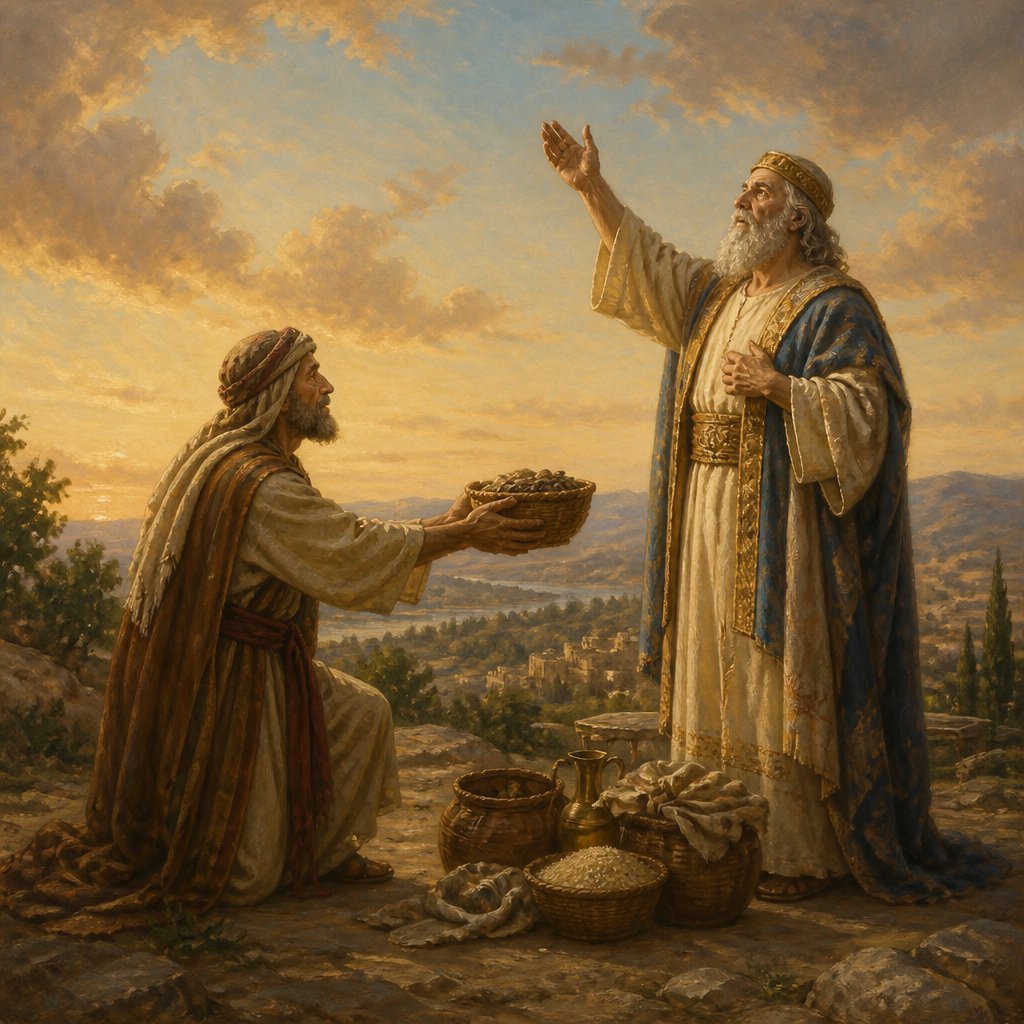
Genesis 14:20 (KJV) says, "And blessed be the most high God, which hath delivered thine enemies into thy hand. And he gave him tithes of all."
This verse comes from the story of Abram (later known as Abraham) in the book of Genesis. In this particular chapter, Abram had just returned from a military campaign where he had rescued his nephew Lot, who had been taken captive by four kings. During his return, Abram encountered Melchizedek, the king of Salem and a priest of the most high God. Melchizedek blessed Abram and in response, Abram gave him a tithe of all the spoils of war.
In this verse, Abram acknowledges the most high God who had delivered his enemies into his hands. This gesture of giving a tithe (tenth part) to Melchizedek is significant in many ways. It represents Abram's recognition of God's provision and victory in his life, as well as his acknowledgment of Melchizedek's role as a priest and representative of God.
The theme of blessing and gratitude is central to this verse. Abram's acknowledgment of God's role in his victory shows his humility and faith in God's power. It also reflects the idea of giving back to God from the abundance that He provides. Tithing is a way for believers to show gratitude and trust in God's faithfulness, and it is a practice that is found throughout the Bible.
The context of this verse is also important in understanding its significance. Abram's encounter with Melchizedek is a unique and mysterious one. Melchizedek is described as the king of Salem (which is later known as Jerusalem) and a priest of the most high God. He comes out to meet Abram with bread and wine, blesses him, and receives a tithe from Abram. This encounter has led to much speculation and discussion among theologians and scholars.
Some see Melchizedek as a prefiguration of Christ, a foreshadowing of the coming of the ultimate high priest and king. This interpretation is supported by the author of the book of Hebrews, who refers to Melchizedek as a type of Christ and draws a parallel between the priesthood of Melchizedek and that of Jesus. This deepens the symbolism of Abram's act of tithing to Melchizedek, as it can be seen as a recognition of Christ's ultimate authority and priesthood.
The symbolism of the bread and wine that Melchizedek brings is also significant, as it foreshadows the sacrament of the Eucharist in Christian tradition. This connection further emphasizes the spiritual significance of Abram's encounter with Melchizedek and his act of tithing.
In conclusion, Genesis 14:20 is a verse that captures a moment of gratitude, acknowledgment of God's provision, and recognition of spiritual authority. It is a reminder of the importance of giving back to God from the abundance He provides, as well as a recognition of the ultimate high priest and king, Jesus Christ. The themes of blessing, gratitude, and divine provision are woven throughout this verse, making it a powerful and significant moment in the narrative of Abram's journey of faith.
Get our apps


Artwork for Genesis 14:20

Genesis 14:20 - "And blessed be the most high God, which hath delivered thine enemies into thy hand. And he gave him tithes of all."

Genesis 14:20 And blessed be the most high God, which hath delivered thine enemies into thy hand. And he gave him tithes of all.
"And blessed be the most high God, which hath delivered thine enemies into thy hand. And he gave him tithes of all." - Genesis 14:20

Genesis 20-14

Genesis 20:14 - "And Abimelech took sheep, and oxen, and menservants, and womenservants, and gave them unto Abraham, and restored him Sarah his wife."

Genesis 20

Genesis 20-18

Genesis 20-13

Genesis 20-16

Genesis 15:20

Genesis 20-4

Genesis 20-1

Genesis 20-15

Genesis 18-20

Genesis 19-20

Genesis 20-17
Genesis 20-3

Genesis 20-7

Genesis 23-20

Genesis 20-19

Genesis 20-8

Genesis 28-20

Genesis 20-12

Genesis 20-10
Genesis 20-11

Genesis 22-20

Genesis 21-20

Genesis 20:9

Genesis 20-2

Genesis 20-5