What does Genesis 19:16 mean?
“And while he lingered, the men laid hold upon his hand, and upon the hand of his wife, and upon the hand of his two daughters; the LORD being merciful unto him: and they brought him forth, and set him without the city.” — Genesis 19:16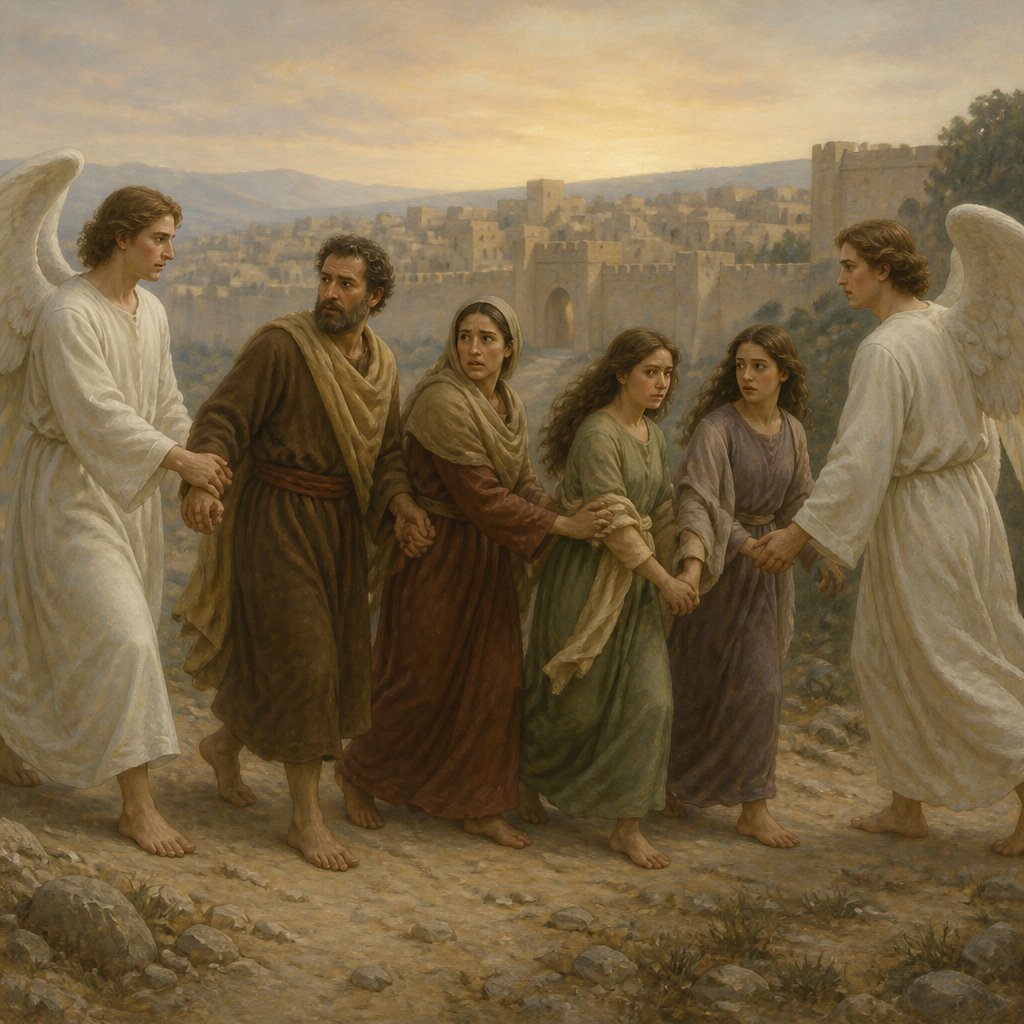
Genesis 19:16 (KJV) reads: "And while he lingered, the men laid hold upon his hand, and upon the hand of his wife, and upon the hand of his two daughters; the Lord being merciful unto him: and they brought him forth, and set him without the city."
This verse is part of the story of the destruction of Sodom and Gomorrah, one of the most well-known and often discussed stories in the Bible. This particular verse comes at a crucial moment in the narrative, as the angelic visitors are urging Lot and his family to leave the city before it is destroyed.
The context of this verse is important to understanding its full significance. In the preceding verses, we see the angels arriving in Sodom and Lot greeting them with great hospitality. It is revealed that the men of the city wished to have relations with these visitors, and Lot offers his two virgin daughters instead, illustrating the moral degradation and depravity of the city. The angels then reveal their plan to destroy the city, but because of Abraham's intercession, they agree to spare Lot and his family. They instruct Lot to take his wife and two daughters and flee the city before its destruction.
The verse under consideration depicts the urgency of the situation as Lot hesitates to leave his home and possessions. The angels mercifully grab hold of Lot, his wife, and his daughters and lead them out of the city. This act of physically forcing Lot and his family to safety reveals the depth of God's mercy and grace.
One of the central themes of this verse is the idea of divine mercy. Despite the wickedness of Sodom and Gomorrah, God shows compassion and mercy to Lot and his family. The fact that the angels physically intervened to save Lot and his family illustrates the extent of God's mercy. This theme of divine mercy is echoed throughout the Bible and is a central tenet of the Christian faith. It teaches believers that no matter how dire the circumstances may be, God's mercy is always available to those who turn to Him.
The verse also highlights the theme of obedience. Lot and his family were given clear instructions to flee the city and not look back, yet Lot hesitated. This hesitation could have cost them their lives if the angels had not intervened. This serves as a reminder to believers about the importance of obeying God's commands without delay. Obedience is often a central theme in the Bible, and this verse serves as a cautionary tale about the consequences of hesitating to follow God's instructions.
Symbolism is also present in this verse. The act of the angels physically taking hold of Lot and his family's hands can be seen as a symbol of God's guidance and protection. It illustrates the idea that God will not abandon His faithful followers, but will actively lead them to safety. The city itself also carries symbolic weight, representing the sinful and corrupt nature of humanity and the consequences of turning away from God.
In conclusion, Genesis 19:16 (KJV) is a powerful and evocative verse that serves as a testament to God's mercy, the importance of obedience, and the symbolism of divine guidance and protection. Its placement within the larger narrative of the destruction of Sodom and Gomorrah further emphasizes these themes and adds depth to its significance. As with many passages in the Bible, this verse holds timeless lessons and messages that continue to resonate with believers today.
Get our apps


Artwork for Genesis 19:16

Genesis 19-16

Genesis 19:16 - "And while he lingered, the men laid hold upon his hand, and upon the hand of his wife, and upon the hand of his two daughters; the LORD being merciful unto him: and they brought him forth, and set him without the city."
"And while he lingered, the men laid hold upon his hand, and upon the hand of his wife, and upon the hand of his two daughters; the LORD being merciful unto him: and they brought him forth, and set him without the city." - Genesis 19:16

Genesis 19-19

Genesis 16:16

Genesis 15:19

Genesis 19-26

Genesis 19-13

Genesis 23-19

Genesis 28-19

Genesis 19-31

Genesis 19-29

Genesis 19-2

Genesis 19-7

Genesis 19-17

Genesis 19-1

Genesis 19-4

Genesis 19-36

Genesis 19-28

Genesis 18-19

Genesis 19-9

Genesis 24-19

Genesis 19-34

Genesis 19-24

Genesis 22:19

Genesis 19-12

Genesis 19-25

Genesis 19-11

Genesis 21-19

Genesis 19-38