What does Genesis 19:28 mean?
“And he looked toward Sodom and Gomorrah, and toward all the land of the plain, and beheld, and, lo, the smoke of the country went up as the smoke of a furnace.” — Genesis 19:28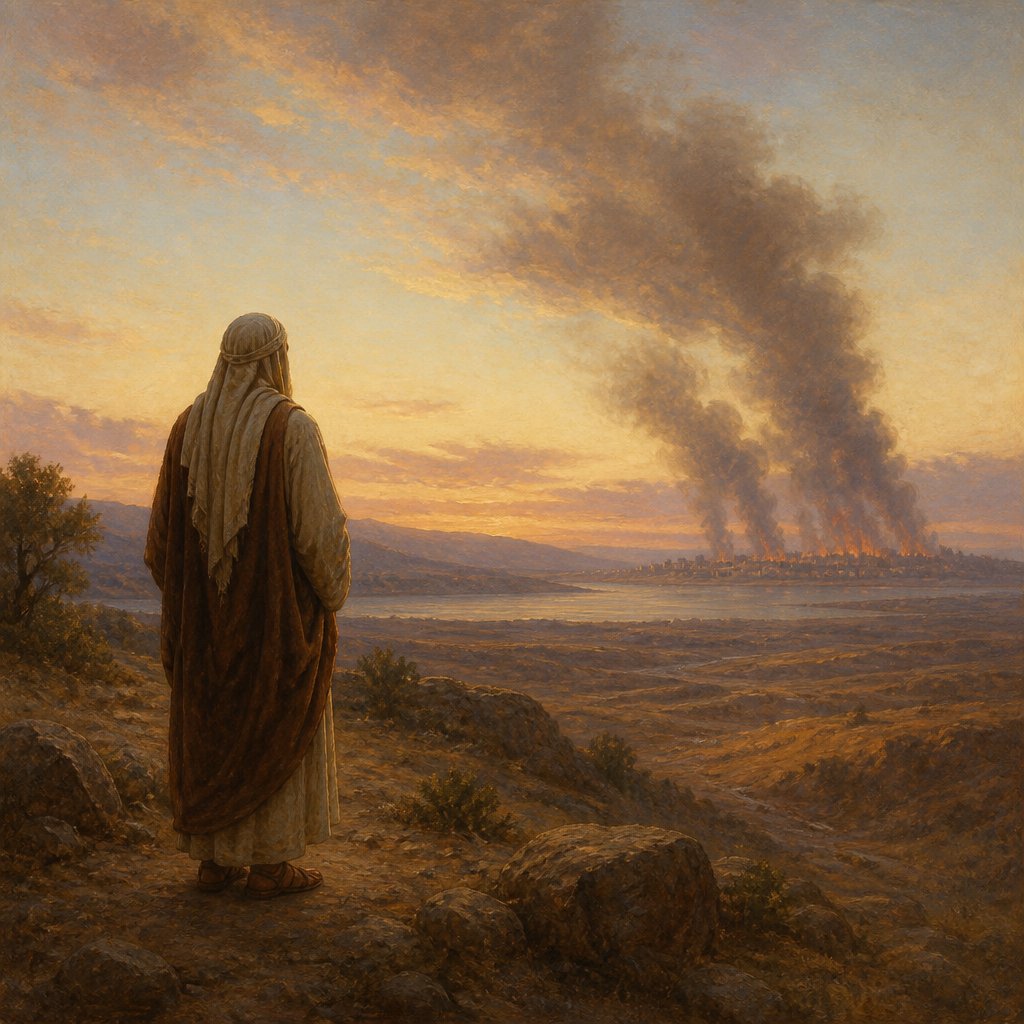
Genesis 19:28 (KJV) states, "And he looked toward Sodom and Gomorrah, and toward all the land of the plain, and beheld, and, lo, the smoke of the country went up as the smoke of a furnace."
The verse appears in the book of Genesis, which is the first book of the Bible, and recounts the story of the destruction of the cities of Sodom and Gomorrah. This story is one of the most well-known and frequently referenced stories in the Bible, and it holds significant theological and moral implications.
In order to fully understand the context and meaning of this verse, it is necessary to provide a brief overview of the events leading up to this point in the narrative. The story of Sodom and Gomorrah begins in Genesis 18, when the Lord informs Abraham that he intends to destroy the cities due to their great wickedness. Abraham intercedes on behalf of the cities, asking the Lord if he would spare them if there were even ten righteous people among them. The Lord agrees, but ultimately there are not even ten righteous individuals to be found, and Sodom and Gomorrah are destroyed.
In Genesis 19:1-29, the account details the specific events leading up to the destruction of the cities. Two angels visit Lot, who is Abraham's nephew, in Sodom. Lot offers them hospitality and protection, and they warn him of the impending destruction of the city. The angels urge Lot and his family to flee the city before the impending judgment, and as they do so, the cities are consumed by fire and sulfur from the Lord out of the heavens.
Genesis 19:28 marks the moment when Lot's wife disobeys the angel's instruction to not look back as they flee the city. As a result of her disobedience, she is turned into a pillar of salt, and Lot and his daughters continue on their way. This verse describes Lot looking back toward the cities and witnessing the devastation as "the smoke of the country went up as the smoke of a furnace."
Symbolically, the destruction of Sodom and Gomorrah holds theological and moral implications. It serves as a powerful demonstration of God's judgment against sin and wickedness. The cities had become so corrupt and debauched that they were ripe for divine retribution. Additionally, the story underscores the importance of obedience to God's commands, as seen in the tragic fate of Lot's wife, who valued her worldly possessions more than obeying the word of the Lord.
Furthermore, the destruction of Sodom and Gomorrah is frequently cited in both the Old and New Testaments of the Bible as a warning against unrepentant sin and as an example of God's justice. The cities are often associated with moral degradation, and the imagery of the smoke rising as from a furnace underscores the severity of the judgment that befell them.
The story of Sodom and Gomorrah and the verse in question also have relevance for contemporary issues and discussions. The concept of divine judgment and the consequences of disobedience to God's commands continue to be relevant topics of debate and reflection for many individuals and religious communities. Additionally, the story has implications for discussions about morality, ethics, and the nature of sin and judgment.
In conclusion, Genesis 19:28 is a verse that holds deep theological significance and moral implications. It serves as a powerful reminder of the consequences of disobedience to God's commands and of the justice and judgment of the Lord. The destruction of Sodom and Gomorrah remains a frequently cited and discussed story within the Bible and holds relevance for contemporary discussions about morality, ethics, and divine judgment.
Get our apps


Artwork for Genesis 19:28

Genesis 19-28

Genesis 19:28 - "And he looked toward Sodom and Gomorrah, and toward all the land of the plain, and beheld, and, lo, the smoke of the country went up as the smoke of a furnace."
"And he looked toward Sodom and Gomorrah, and toward all the land of the plain, and beheld, and, lo, the smoke of the country went up as the smoke of a furnace." - Genesis 19:28

Genesis 28-19

Genesis 28:19 - "And he called the name of that place Beth-el: but the name of that city was called Luz at the first."

"And he called the name of that place Beth-el: but the name of that city was called Luz at the first." - Genesis 28:19

Ezekiel 28:11-19

Ezekiel 28:11-19

Ezekiel 28:11-19

Ezekiel 28:11-19

Ezekiel 28:11-19

Ezekiel 28:11-19

matthew 28:19

matthew 28:19

Genesis 19-19

Luke 19:28

Genesis 28-15

Genesis 28-12

Genesis 28-16

Genesis 28-21

Genesis 28-22

Genesis 28-17

Genesis 21:28

Genesis 28:18

Genesis 24:28

Genesis 28:18

Genesis 28-20

Genesis 28-13

Genesis 28-14

Genesis 28-11