What does Genesis 21:10 mean?
"Wherefore she said unto Abraham, Cast out this bondwoman and her son: for the son of this bondwoman shall not be heir with my son, even with Isaac." - Genesis 21:10
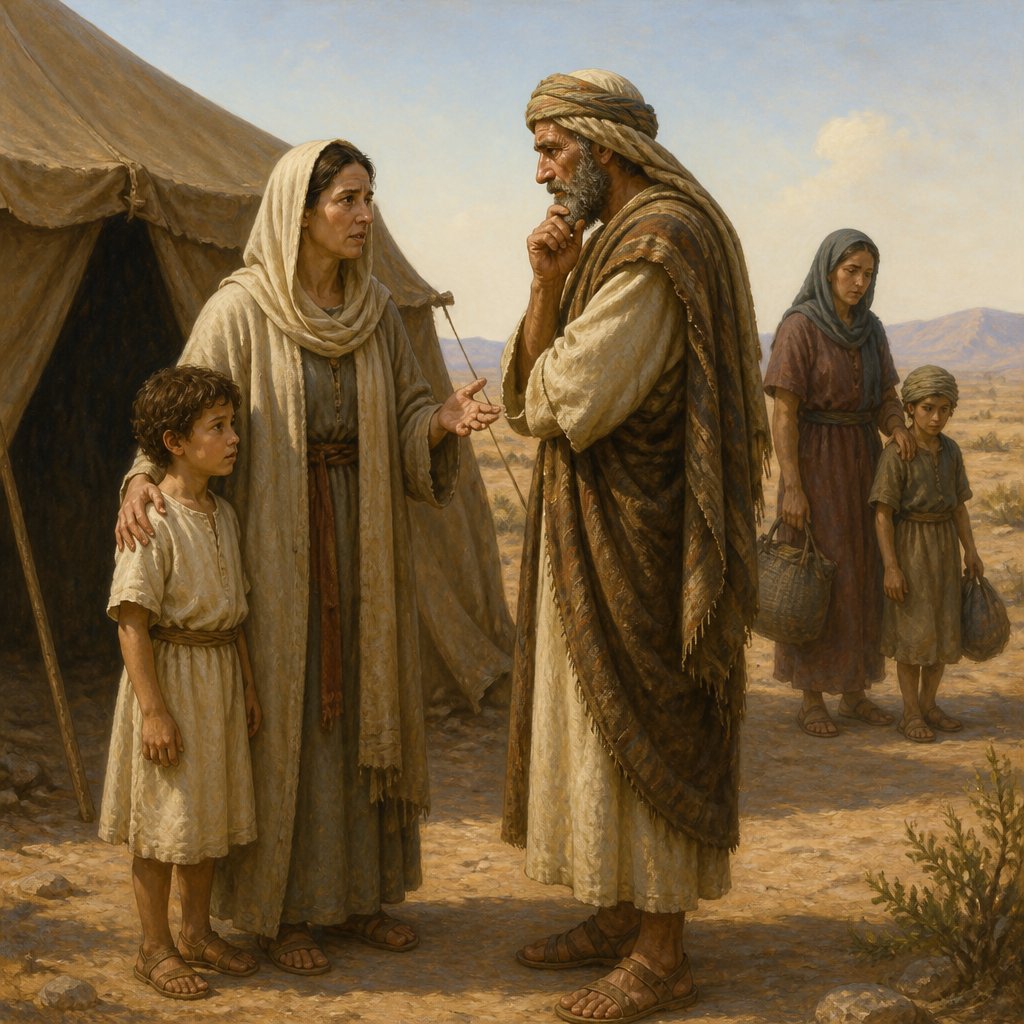
Genesis 21:10 (KJV) says, "Wherefore she said unto Abraham, Cast out this bondwoman and her son: for the son of this bondwoman shall not be heir with my son, even with Isaac."
This verse comes from the story of Abraham, Sarah, and Hagar, and it carries a significant meaning in the biblical narrative. To fully understand the depth of this verse, it is crucial to delve into the themes, context, and symbolism behind it.
The context of Genesis 21:10 begins with the birth of Isaac, the promised son of Abraham and Sarah. After many years of barrenness, Sarah miraculously conceives and gives birth to Isaac in her old age. This event fulfills God's promise to Abraham that he would be the father of many nations through Sarah's child. However, tensions arise in the household when Sarah sees Hagar's son, Ishmael, mocking Isaac. This provocation leads Sarah to request Abraham to cast out Hagar and Ishmael, as she does not want Ishmael to share in Isaac's inheritance. This request grieves Abraham, but God reassures him that He will make a great nation of Ishmael as well.
The themes present in Genesis 21:10 include obedience to God's promises, the consequences of human decisions, the fulfillment of God's covenant, and the complexities of human relationships. One theme that stands out is the tension between the fulfillment of God's promise and the implications of human choices. Sarah and Abraham took matters into their own hands when Sarah gave Hagar to Abraham to conceive a child, which resulted in Ishmael's birth. This decision created a situation of conflict and jealousy within the family, leading to the eventual separation of Hagar and Ishmael. Despite the complexities of human relationships and the consequences of their actions, God remains faithful to His promises and works out His redemptive plan.
Furthermore, the theme of God's sovereignty and His ability to bring about His purposes through flawed human beings is evident in this passage. Despite the human error and the conflict between Sarah and Hagar, God ensures that both Ishmael and Isaac will become great nations, fulfilling His covenant with Abraham. This demonstrates God's ability to work through imperfect circumstances and human decisions to accomplish His divine plan.
Another theme present in this verse is the contrast between the bondwoman and the free woman, which serves as a symbolic representation of the Old Testament and the New Testament. Hagar, the bondwoman, represents the old covenant and the law, while Sarah, the free woman, represents the new covenant of grace through Jesus Christ. This symbolic contrast is further developed in the New Testament, particularly in the book of Galatians, where the apostle Paul uses the story of Hagar and Sarah as an allegory for the two covenants and the distinction between legalism and grace.
The symbolism in Genesis 21:10 is profound and multi-layered. Hagar and Ishmael represent the law and those who seek righteousness through their own efforts. Sarah and Isaac, on the other hand, represent grace and the promise of God fulfilled through faith. This symbolic contrast reflects the overarching narrative of the Bible, highlighting the transition from the old covenant to the new covenant through the work of Christ.
In conclusion, Genesis 21:10 encompasses various themes, significant context, and profound symbolism. It reveals the complexities of human relationships and the consequences of human decisions, while also showcasing God's faithfulness to His promises and His ability to work through imperfect circumstances to bring about His redemptive plan. This verse serves as a pivotal point in the biblical narrative, reflecting the tension between human agency and God's sovereignty, as well as the symbolic contrast between the old and new covenants.
Have questions about Genesis 21:10?
Dive deeper into this scripture with Bible Chat — an AI-powered tool for exploring God's Word through conversation. Ask questions, get context, and grow in your understanding of the Bible.
Get Our Apps


Genesis 21:10 Artwork

Genesis 21-10

Genesis 21:10 - "Wherefore she said unto Abraham, Cast out this bondwoman and her son: for the son of this bondwoman shall not be heir with my son, even with Isaac."
"Wherefore she said unto Abraham, Cast out this bondwoman and her son: for the son of this bondwoman shall not be heir with my son, even with Isaac." - Genesis 21:10

Genesis 10:21 - "¶ Unto Shem also, the father of all the children of Eber, the brother of Japheth the elder, even to him were children born."

Genesis 21-21

Genesis 1:21

Genesis 1:21

Genesis 21-20

Genesis 21-6

Genesis 21-13

Genesis 21-34

Genesis 21-2

Genesis 21-7
Genesis 21-32

Genesis 21-29

Genesis 21:1

Genesis 21:9

Genesis 21-30

Genesis 21-25

Genesis 21:25

Genesis 15:21

Genesis 21-19

Genesis 24-21

Genesis 21:22

Genesis 21-5

Genesis 28-21

Genesis 17-21

Genesis 18-21

Genesis 21-31

Genesis 21:14