What does Genesis 22:14 mean?
"And Abraham called the name of that place Jehovah-jireh: as it is said to this day, In the mount of the LORD it shall be seen." - Genesis 22:14
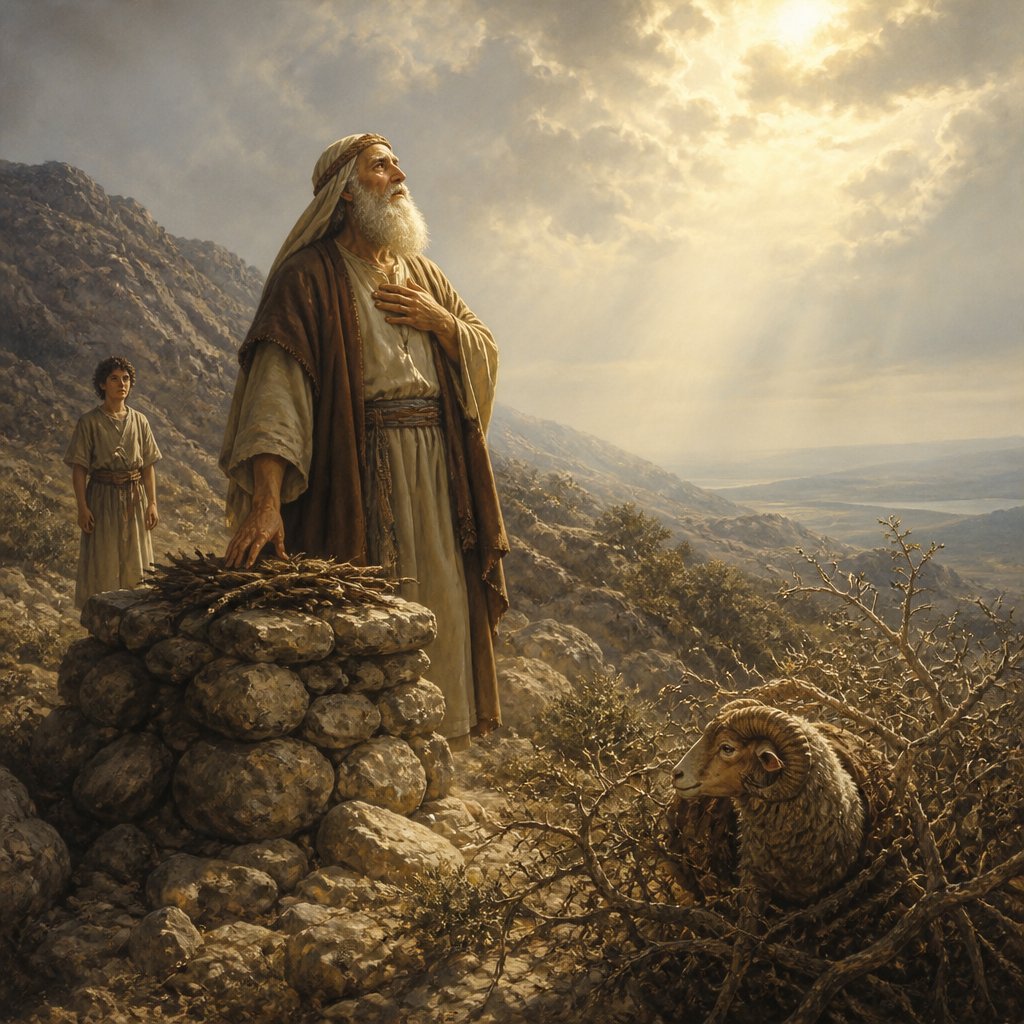
Genesis 22:14 (KJV) states: "And Abraham called the name of that place Jehovahjireh: as it is said to this day, In the mount of the Lord it shall be seen."
This verse comes from the story of Abraham and his willingness to sacrifice his son, Isaac, as a test of faith and obedience to God. The verse serves as a declaration of God's provision and a memorial to the faithfulness of Abraham.
The context of this verse is important to understand its significance. In the previous verses, God had commanded Abraham to take his son Isaac to the land of Moriah and offer him as a burnt offering. Without hesitation, Abraham obeyed and took his son to the designated place. As he was about to sacrifice Isaac, an angel of the Lord intervened and provided a ram caught in the thicket to be sacrificed instead. This act of divine intervention solidified Abraham's belief in the faithfulness of God, and he named the place "Jehovahjireh," which means "the Lord will provide."
One theme that is evident in this verse is the theme of obedience and trust in God. Abraham demonstrated unwavering faith and obedience to God's command, even in the face of such a difficult and heart-wrenching request. His obedience and trust in God's provision serve as a powerful example for believers, showing that God honors those who are faithful and obedient to Him.
Another theme in this verse is the provision of God. The name "Jehovahjireh" that Abraham gave to the place where the sacrifice took place reflects his recognition of God's provision. It serves as a reminder that God will always provide for His people, even in the most challenging and dire circumstances. This theme of God's provision is echoed throughout the Bible and is a source of comfort and hope for believers.
The symbolism in this verse is also significant. The act of sacrificing Isaac foreshadows the ultimate sacrifice of Jesus Christ on the cross. Isaac, who was spared from death and replaced with a ram, represents the substitutionary atonement that Jesus provided for humanity. This connection between the story of Abraham and the sacrifice of Jesus adds depth to the significance of God's provision and faithfulness.
The phrase "In the mount of the Lord it shall be seen" also holds symbolic meaning. This can be interpreted as a prophecy of the future sacrifice of Jesus on the cross, which took place on a hill outside of Jerusalem. It signifies that God's ultimate provision for humanity's redemption would be revealed in the same location where Abraham demonstrated his faith and obedience.
In conclusion, Genesis 22:14 (KJV) is a powerful verse that encapsulates themes of obedience, trust, and God's provision. Through the story of Abraham and the sacrifice of Isaac, believers are reminded of the importance of unwavering faith and obedience to God, as well as the assurance of His provision in all circumstances. The symbolism in this verse also points to the ultimate sacrifice of Jesus Christ, adding a layer of depth to its significance. Overall, this verse serves as a testament to the faithfulness and provision of God, providing comfort and encouragement for believers throughout the ages.
Have questions about Genesis 22:14?
Dive deeper into this scripture with Bible Chat — an AI-powered tool for exploring God's Word through conversation. Ask questions, get context, and grow in your understanding of the Bible.
Get Our Apps


Genesis 22:14 Artwork

Genesis 22 14

Genesis 22-14

Genesis 22:14 - "And Abraham called the name of that place Jehovah-jireh: as it is said to this day, In the mount of the LORD it shall be seen."
"And Abraham called the name of that place Jehovah-jireh: as it is said to this day, In the mount of the LORD it shall be seen." - Genesis 22:14

Genesis 22:1-14

Genesis 14:22 - "And Abram said to the king of Sodom, I have lift up mine hand unto the LORD, the most high God, the possessor of heaven and earth,"

Genesis 22-22

Genesis 14:22 And Abram said to the king of Sodom, I have lift up my hand unto the LORD, the Most High God, the Possessor of heaven and Earth

Genesis 22:22 - "And Chesed, and Hazo, and Pildash, and Jidlaph, and Bethuel."

Genesis 22

Genesis 21:22

Genesis 18-22

Genesis 22-9

Genesis 22-8

Genesis 22:15

Genesis 22-12

Genesis 28-22

Genesis 22-10

Genesis 22-16

Genesis 22-23

Genesis 22-21

Genesis 22-7

Genesis 22-4

Genesis 17-22

Genesis 19-22

Genesis 22-17

Genesis 22:1

Genesis 22-20

Genesis 22:11

Genesis 22-18