What does Genesis 22:12 mean?
"And he said, Lay not thine hand upon the lad, neither do thou any thing unto him: for now I know that thou fearest God, seeing thou hast not withheld thy son, thine only son from me." - Genesis 22:12
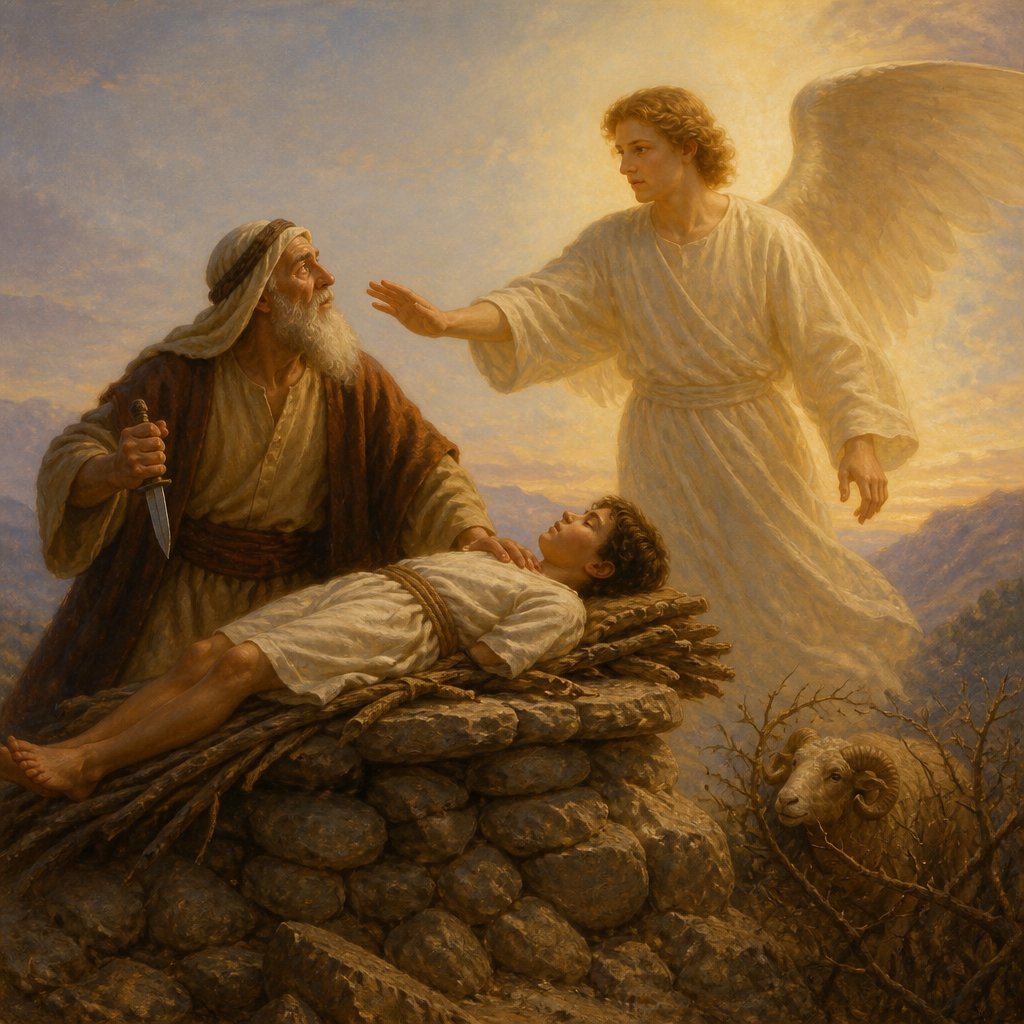
Genesis 22:12 in the King James Version of the Bible reads, "And he said, Lay not thine hand upon the lad, neither do thou any thing unto him: for now I know that thou fearest God, seeing thou hast not withheld thy son, thine only son from me."
This verse comes from one of the most well-known and impactful stories in the Bible – the story of Abraham and Isaac. The verse occurs in the midst of the intense and poignant account of God testing Abraham's faith by asking him to sacrifice his beloved son Isaac. The passage is of great importance in the Bible and is rich in meaning and symbolism.
The themes and messages within this passage are numerous and profound. At its core, this verse speaks to the idea of obedience and faith. It demonstrates the lengths to which Abraham was willing to go in order to obey and trust God, even when confronted with unimaginable circumstances. Abraham's willingness to sacrifice his own son at God's command is the ultimate demonstration of his faith and obedience.
This verse also touches on the theme of fear of God, as God Himself acknowledges Abraham's fear of Him. The fear of God here does not mean being afraid of God in the conventional sense, but rather a deep reverence, respect, and awe for the Almighty. Abraham's obedience and unwavering faith illustrate his profound reverence for God, which is a central theme throughout the Bible.
The context of this verse is set within the larger narrative of the relationship between God and Abraham. Throughout the book of Genesis, God establishes a covenant with Abraham, promising to make him the father of many nations. This promise is fulfilled through the birth of Isaac, and the subsequent test of Abraham's faith with the command to sacrifice his son serves as a pivotal moment in their relationship.
The symbolism in this verse is abundant and profound. The act of sacrificing Isaac can be seen as a foreshadowing of the sacrifice of Jesus Christ, as both demonstrate the love and faithfulness of a father and the obedience of a beloved son. The ram caught in the thicket also serves as a symbol of substitution, mirroring the future atonement provided by Jesus Christ.
Moreover, the significance of Isaac as the "only son" is deeply symbolic and points to the parallel between Isaac and Jesus Christ. Both are beloved sons who are offered as sacrifices by their fathers. This symbolism emphasizes the profound love and sacrifice of God the Father in offering His only begotten Son, Jesus, as an atonement for the sins of humanity.
In conclusion, Genesis 22:12 is a verse of immense importance in the Bible, capturing the essence of faith, obedience, and reverence for God. The narrative of Abraham and Isaac serves as a powerful testament to the depth of Abraham's faith and the ultimate trust he had in God, even in the face of unimaginable circumstances. The verse also carries profound symbolism, foreshadowing the sacrifice of Jesus Christ and underscoring the depth of God's love for humanity. This verse stands as a timeless and enduring testament to the unwavering faith and obedience of God's people.
Have questions about Genesis 22:12?
Dive deeper into this scripture with Bible Chat — an AI-powered tool for exploring God's Word through conversation. Ask questions, get context, and grow in your understanding of the Bible.
Get Our Apps


Genesis 22:12 Artwork

Genesis 22-12

Genesis 22:12 - "And he said, Lay not thine hand upon the lad, neither do thou any thing unto him: for now I know that thou fearest God, seeing thou hast not withheld thy son, thine only son from me."
"And he said, Lay not thine hand upon the lad, neither do thou any thing unto him: for now I know that thou fearest God, seeing thou hast not withheld thy son, thine only son from me." - Genesis 22:12

Genesis 22:11-12.

Genesis 22:11-12

Genesis 22:11-12

Genesis 22-22

Genesis 22:22 - "And Chesed, and Hazo, and Pildash, and Jidlaph, and Bethuel."

Genesis 22

Genesis 22 14

Genesis 28-22

Genesis 18-22

Genesis 21:22

Genesis 22-8

Genesis 22-9

Genesis 22:15

Genesis 22-10

Genesis 22-16

Genesis 22-14

Genesis 17-22

Genesis 22-23

Genesis 22-7

Genesis 22-21

Genesis 22-4

Genesis 19-22

Genesis 22-17

Genesis 22:1

Genesis 22-20

Genesis 24-22

Genesis 22:10