What does Genesis 22:17 mean?
“That in blessing I will bless thee, and in multiplying I will multiply thy seed as the stars of the heaven, and as the sand which is upon the sea shore; and thy seed shall possess the gate of his enemies;” — Genesis 22:17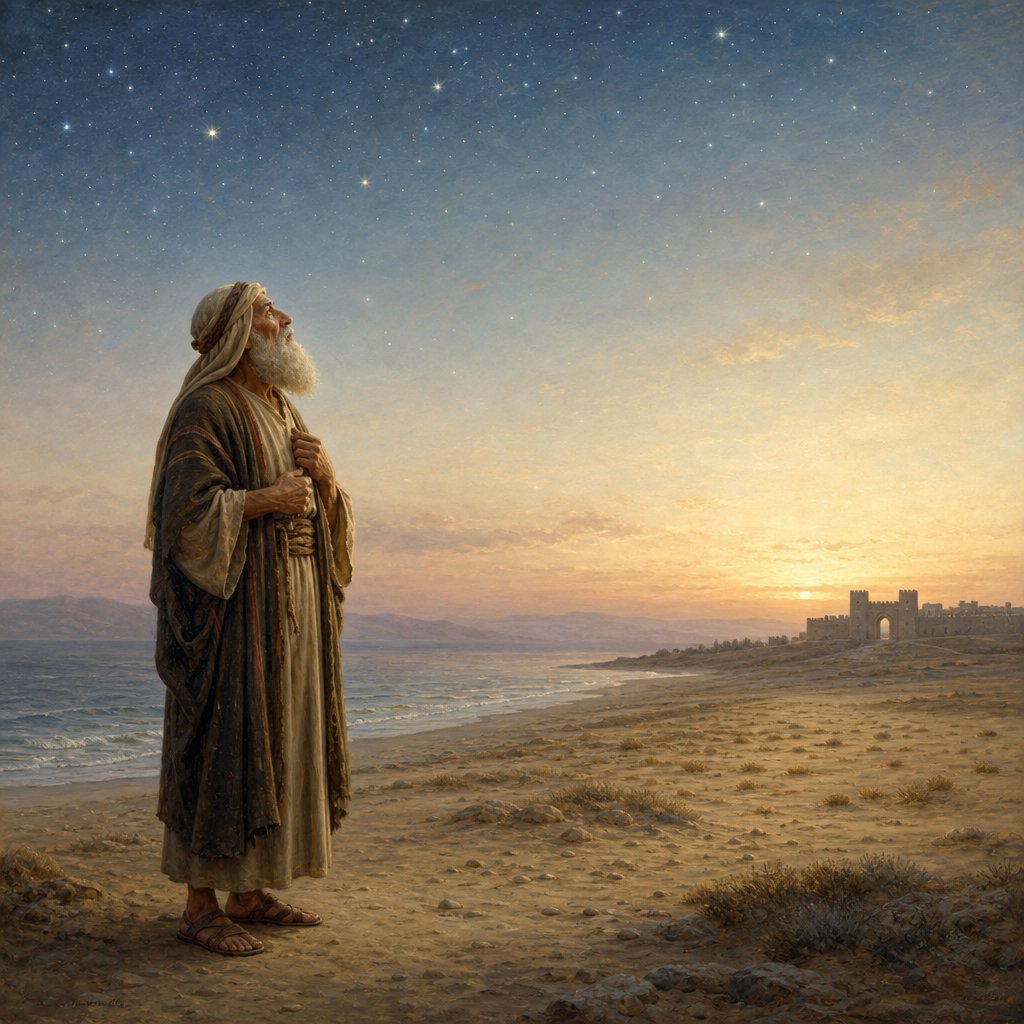
Genesis 22:17 (KJV) stands in the aftermath of one of the most searching scenes in Scripture: Abraham’s offering up of Isaac upon mount Moriah, stopped at the last moment by the voice of the angel of the LORD, and answered by the provision of “a ram caught in a thicket by his horns” (KJV). In that setting God speaks not merely as a comfort after a trial, but as a covenant Lord who binds His promise to Abraham with an oath. The verse reads, “That in blessing I will bless thee, and in multiplying I will multiply thy seed as the stars of the heaven, and as the sand which is upon the sea shore; and thy seed shall possess the gate of his enemies;” (KJV). Its meaning unfolds by attending to the context of obedience, the covenant language, and the rich images God chooses.
The first thing to notice is that Genesis 22:17 is not an isolated encouragement; it is the declared consequence of a proved faith. Earlier in the chapter Abraham is commanded, “Take now thy son, thine only son Isaac, whom thou lovest” (KJV), and is led to a place where the promise seems to be placed on the altar. Isaac is not only Abraham’s beloved child; he is the child through whom the promise of a “seed” was to be carried forward. When Abraham lifts the knife, the narrative presses the reader into the tension between God’s command and God’s promise. The turning point comes when God stops Abraham: “Lay not thine hand upon the lad… for now I know that thou fearest God” (KJV). Genesis 22:17 then functions as the divine answer to that ordeal. It is as though God publicly reiterates and enlarges what He had already spoken in earlier chapters, but now with the solemn weight of an oath that follows Abraham’s demonstrated fear of God.
The verse begins with a double form of certainty and abundance: “in blessing I will bless thee.” This is more than a general wish for well-being. In Genesis, “blessing” is God’s active favor that makes life fruitful, establishes a future, and advances His redemptive purpose. Here the repetition intensifies the promise: God is not sparing in His kindness, nor tentative in His commitment. The same intensifying pattern appears again: “in multiplying I will multiply thy seed.” The language emphasizes that increase is not merely natural growth, but God-caused fruitfulness. The promise is personal (“bless thee”) and generational (“multiply thy seed”), tying Abraham’s obedience to a future beyond his own lifespan. Abraham’s story is thus framed not as private spirituality but as covenant history, where one man’s faithfulness is bound up with the shaping of a people.
The phrase “thy seed” is central to understanding Genesis 22:17. In the immediate sense it points to Abraham’s descendants, the lineage that will become a nation. Yet it also carries the idea of a continuing line, a single stream of promise running through generations. The chapter has just put Isaac, the bearer of that line, under the shadow of death, and then restored him as it were from the brink. In that light, the reaffirmation of “thy seed” underscores that the promise survives the test. God’s purposes are not fragile, dependent upon human calculation, and they are not undone by the very trials that seem to threaten them. The promise of “seed” is, in the logic of the chapter, secured by God Himself.
Then come two of Scripture’s most memorable images: “as the stars of the heaven” and “as the sand which is upon the sea shore.” The imagery is symbolic in a way that is meant to be felt, not merely counted. Stars suggest height, wonder, and an innumerable host spread across the heavens; sand suggests countless grains along the shoreline, appearing ordinary and yet beyond human numbering. Together they convey magnitude from two directions—above and below, the skies and the earth’s edge—indicating that God’s multiplication is immeasurable and comprehensive. The images also speak to Abraham’s earlier condition: he had been childless, facing the barrenness of age and circumstance. The contrast between that emptiness and this vastness magnifies the grace of the promise. God pledges a future so large that it breaks the limits of what Abraham could see in his present life.
The final clause introduces a different kind of blessing, one that includes victory and stability: “and thy seed shall possess the gate of his enemies.” In the ancient world the “gate” of a city was not merely an entryway; it was a place of power, judgment, commerce, and defense. To “possess the gate” is to hold authority over what once threatened you. It implies protection from hostile forces, the reversal of vulnerability, and the establishment of dominion. In the immediate biblical story this anticipates that Abraham’s descendants will not only grow in number but will endure conflict, opposition, and contest for their place in the land and in the world—and yet will not be extinguished. The promise does not deny the reality of enemies; it declares that enemies will not have the last word over the covenant line.
All of this is spoken on the other side of the altar on mount Moriah, where substitution is enacted: Isaac lives, and the ram dies “in the stead of his son” (KJV). That event supplies the atmosphere in which Genesis 22:17 should be read. The promise of multiplied “seed” is tied to a scene where death is confronted and overcome by God’s provision. Symbolically, the chapter teaches that the covenant future is not maintained by human grasping but by surrender and divine provision. Abraham’s act shows that he does not treat God’s gifts as ultimate; he yields even the gift back to the Giver. And God’s response shows that He is the One who ultimately secures the promise. The blessing of Genesis 22:17 therefore carries the imprint of the altar: it is a covenant blessing spoken in the wake of costly obedience and God-provided deliverance.
There is also significance in the way the promise is framed as God’s own initiative. The structure of the verse is dominated by “I will”: “I will bless thee… I will multiply… thy seed shall possess.” The human act of faith is real and meaningful, but the fulfillment rests on God’s commitment. The chapter makes this even more pronounced by grounding the promise in God’s sworn word just before this verse: “By myself have I sworn, saith the LORD” (KJV). Genesis 22:17 is therefore not merely predictive; it is covenantal. It declares that God has bound Himself to bring about what He promises, and that Abraham’s tested obedience has become the occasion for God to restate and confirm that binding commitment.
Taken together, Genesis 22:17 teaches that God’s blessing is both personal and historical, that His promises can pass through severe testing without failing, and that the future He gives is both numerous (“as the stars… as the sand”) and secure (“possess the gate of his enemies”). In the narrative flow of Genesis, it marks a climactic reaffirmation that the covenant line will continue, expand, and prevail—not because Abraham can control outcomes, but because the LORD who calls, tests, provides, and swears by Himself will be faithful to His word.
Get our apps


Artwork for Genesis 22:17

Genesis 22-17

"That in blessing I will bless thee, and in multiplying I will multiply thy seed as the stars of the heaven, and as the sand which is upon the sea shore; and thy seed shall possess the gate of his enemies;" - Genesis 22:17
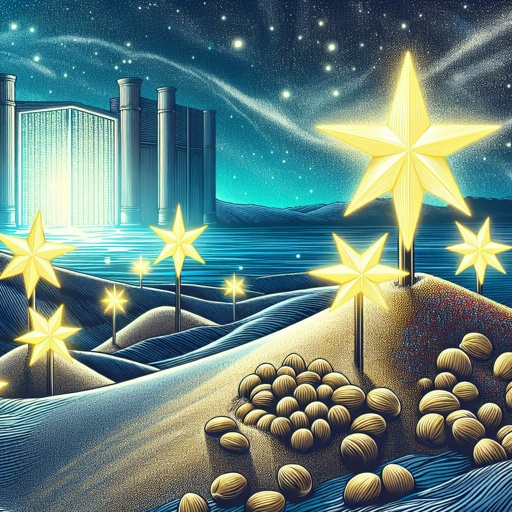
Genesis 22:17 - "That in blessing I will bless thee, and in multiplying I will multiply thy seed as the stars of the heaven, and as the sand which is upon the sea shore; and thy seed shall possess the gate of his enemies;"

"That in blessing I will bless thee, and in multiplying I will multiply thy seed as the stars of the heaven, and as the sand which is upon the sea shore; and thy seed shall possess the gate of his enemies;" - Genesis 22:17
"That in blessing I will bless thee, and in multiplying I will multiply thy seed as the stars of the heaven, and as the sand which is upon the sea shore; and thy seed shall possess the gate of his enemies;" - Genesis 22:17

Genesis 17-22

Genesis 17:22 - "And he left off talking with him, and God went up from Abraham."
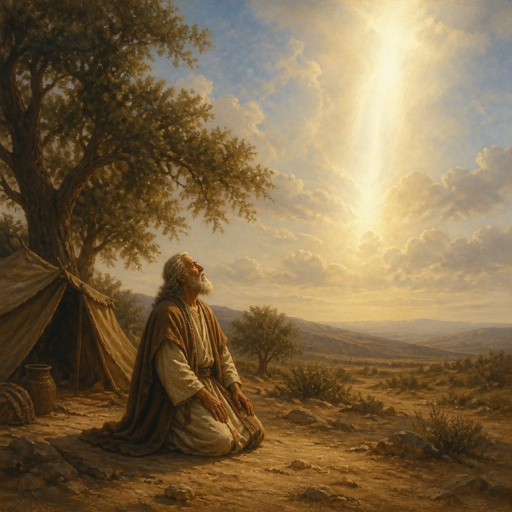
"And he left off talking with him, and God went up from Abraham." - Genesis 17:22

Genesis 22-22

Genesis 17-17

Genesis 22:22 - "And Chesed, and Hazo, and Pildash, and Jidlaph, and Bethuel."

Genesis 22

Genesis 22 14

Genesis 28-22

Genesis 18-22

Genesis 21:22

Genesis 22-8

Genesis 22-9

Genesis 22-12

Genesis 22:15

Genesis 22-10

Genesis 22-16

Genesis 22-14

Genesis 22-23

Genesis 22-7

Genesis 22-21

Genesis 22-4

Genesis 19-22

Genesis 22:1

Genesis 22-20