What does Genesis 24:64 mean?
“And Rebekah lifted up her eyes, and when she saw Isaac, she lighted off the camel.” — Genesis 24:64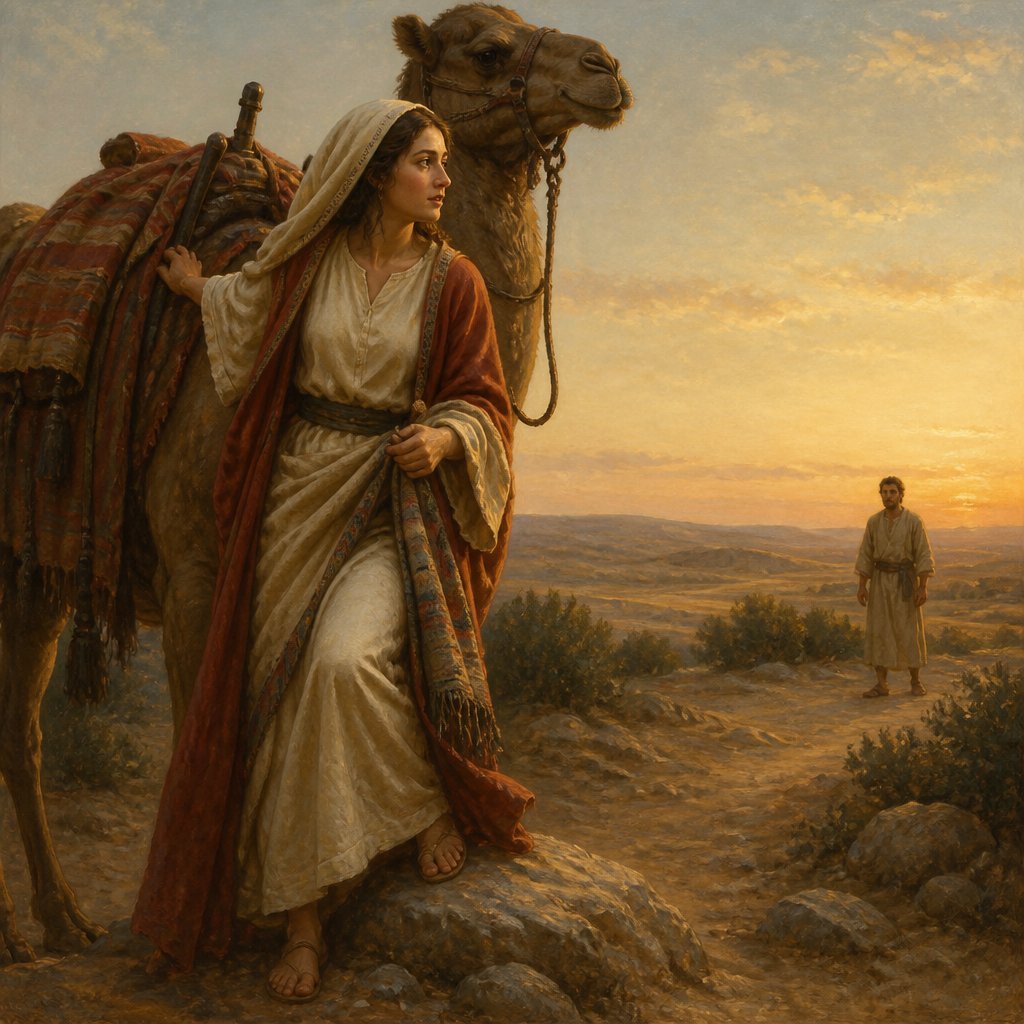
Genesis 24:64 (KJV): "And Rebekah lifted up her eyes, and when she saw Isaac, she lighted off the camel."
In this verse, we witness a significant moment in the story of Isaac and Rebekah, as they meet for the first time. This verse is part of the larger narrative in Genesis 24, which details how Abraham sent his servant to find a wife for his son, Isaac. The servant, after praying for guidance, meets Rebekah at a well, where she fulfills the sign given to the servant by offering him and his camels water. The servant then goes with Rebekah to her home, where he meets her family and ultimately arranges for her to marry Isaac. This verse occurs as Rebekah finally lays eyes on Isaac, the man she is meant to marry.
One of the key themes of this verse is the concept of divine providence and guidance. Throughout the story, there is a strong sense that God is orchestrating events to bring Isaac and Rebekah together. From the servant being led to Rebekah at the well to the smooth negotiations for her marriage, it is clear that God's hand is at work in bringing about this union. The lifting of Rebekah's eyes and her immediate recognition of Isaac can be seen as a further confirmation of God's guidance in this matter. It is a moment of fulfillment and validation of the servant's mission and Rebekah's role in God's plan.
Another important theme in this verse is the idea of love and romance. Despite this being an arranged marriage, there is a sense of anticipation and excitement as Rebekah finally meets her future husband. Her response, "And when she saw Isaac, she lighted off the camel," suggests a sense of awe and respect for this important meeting. It is a significant moment in the lives of both characters, and the verse captures the emotion and significance of this encounter.
The context of this verse is also significant in understanding its full meaning. The story of Isaac and Rebekah is part of the larger narrative of the patriarchs and matriarchs of Israel. It highlights the importance of marital relationships and family in the history and destiny of the Jewish people. This verse serves as a pivotal moment in this larger narrative, marking the beginning of a new chapter in the family's history.
Symbolism plays a crucial role in this verse as well. The lifting of Rebekah's eyes can be seen as a symbol of hope and anticipation. It represents the culmination of the servant's journey and the beginning of a new phase in Rebekah's life. Additionally, the act of "lighting off the camel" can be seen as a sign of respect and humility. It is a symbolic gesture of reverence and deference to Isaac, her future husband.
In conclusion, Genesis 24:64 is a rich and multi-layered verse that captures the themes of divine providence, love, and anticipation. It is a pivotal moment in the larger narrative of the patriarchs and matriarchs and holds significant symbolism in its depiction of Rebekah's first meeting with Isaac. As a foundational story in the Bible, this verse holds deep meaning and significance in the history and theology of the Judeo-Christian tradition.
Get our apps


Artwork for Genesis 24:64

Genesis 24-64

Genesis 24:64 - "And Rebekah lifted up her eyes, and when she saw Isaac, she lighted off the camel."
"And Rebekah lifted up her eyes, and when she saw Isaac, she lighted off the camel." - Genesis 24:64

Genesis 24:24

Genesis 24-21

Genesis 25-24

Genesis 24-41

Genesis 24-61

Genesis 24:36

Genesis 24-54

Genesis 24-50

Genesis 24:60

Genesis 24-62

Genesis 24-7

Genesis 24-26

Genesis 24-55

Genesis 24-59

Genesis 24-56

Genesis 3:24

Genesis 24-53

Genesis 24-63

Genesis 24-66

Genesis 21-24

Genesis 24-15

Genesis 24-48

Genesis 24-43

Genesis 24-16

Genesis 24-3

Genesis 19:24

Genesis 24-17