What does Genesis 25:4 mean?
"And the sons of Midian; Ephah, and Epher, and Hanoch, and Abida, and Eldaah. All these were the children of Keturah." - Genesis 25:4
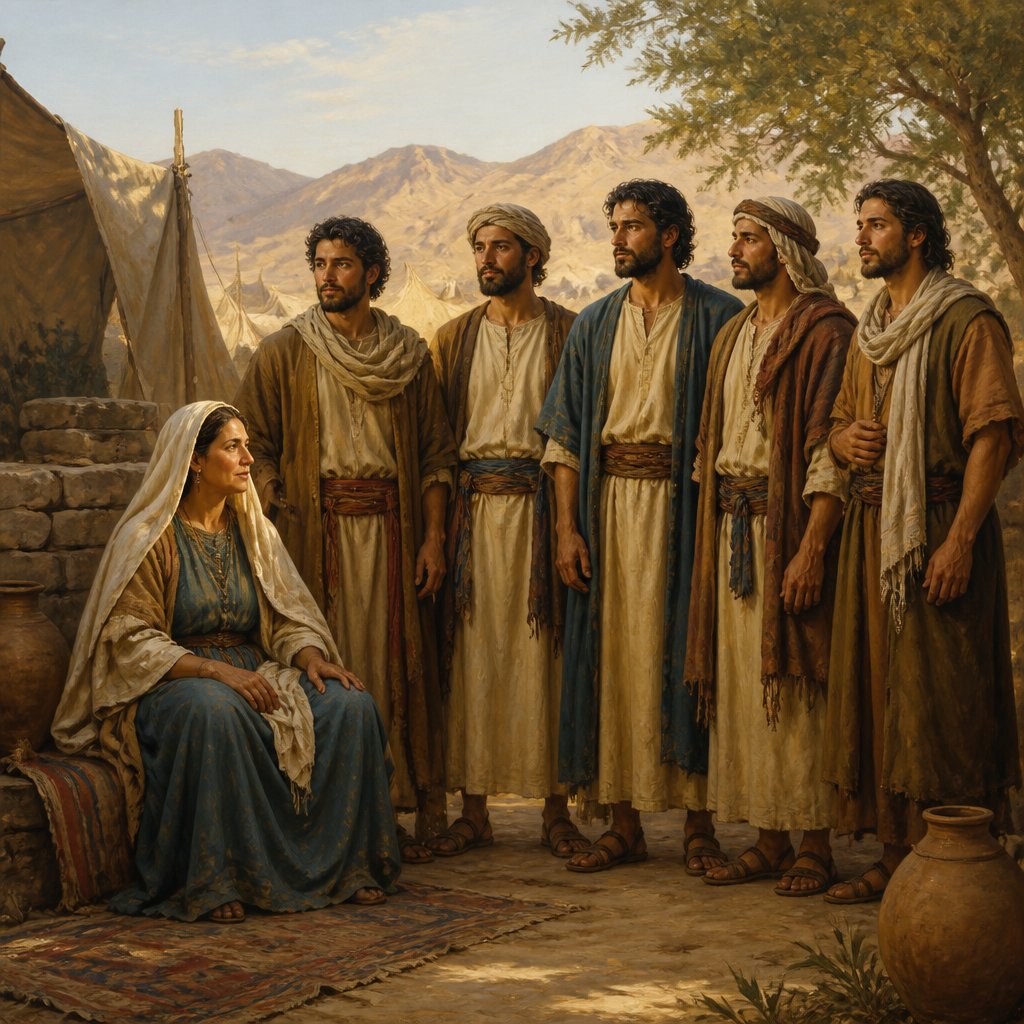
Genesis 25:4 (KJV) states, "And the sons of Midian; Ephah, and Epher, and Hanoch, and Abida, and Eldaah. All these were the children of Keturah." This verse is part of the genealogy of Abraham, the patriarch of the Israelites and the father of many nations. The verse lists the descendants of Abraham through his second wife, Keturah.
The context of this verse is important for understanding its significance. In the preceding verses, Genesis 25:1-3, it is recorded that Abraham took another wife, Keturah, after the death of his first wife, Sarah. This marriage produced six children: Zimran, Jokshan, Medan, Midian, Ishbak, and Shuah. These children's descendants would become known as the Midianites, and they played a significant role in Israel's history.
The verse in question, Genesis 25:4, specifically mentions the sons of Midian, who are listed as Ephah, Epher, Hanoch, Abida, and Eldaah. Each of these names carries significant meanings and can provide insight into the themes and symbolism of this verse.
Ephah, the first son of Midian, is mentioned elsewhere in the Old Testament as the founder of a tribe bearing his name. The tribe of Ephah is documented as having dealings with the people of Israel, particularly in trading various goods such as precious metals and spices. This indicates that Ephah's descendants were involved in commerce and trade, contributing to the economic landscape of the region.
Epher, the second son of Midian, is not mentioned frequently in the Old Testament. However, his inclusion in this genealogy emphasizes the continuation of Abraham's lineage and the growth of his descendants.
Hanoch, the third son of Midian, bears a name that translates to "initiated" or "dedicated." This name suggests a sense of purpose or consecration, perhaps indicating that Hanoch's descendants were devoted to a particular way of life or religious practice.
Abida, the fourth son of Midian, is only briefly mentioned in the Bible, but his name signifies "father of knowledge" or "my father knows." This could indicate that Abida's descendants were known for their wisdom or perhaps that they had a close relationship with the Divine.
Eldaah, the fifth son of Midian, means "tree of God" or "God has known." This name could hint at a spiritual significance or connection to the divine, suggesting that Eldaah's descendants were chosen or favored by God.
The inclusion of these names in the genealogy of Keturah's children serves to underscore the theme of continuity and expansion of Abraham's lineage. The descendants of Keturah and Midian were no less important than those of Sarah and Hagar. The verse also highlights the diverse roles and contributions of these descendants to the historical and cultural landscape of the ancient Near East.
Moreover, this genealogy demonstrates God's faithfulness in fulfilling his promise to Abraham of making him the father of many nations. Through his descendants, Abraham's legacy continued to spread throughout the known world, and the inclusion of Keturah's children in this genealogy affirms the fulfillment of God's covenant with Abraham.
In addition to the thematic significance, there is also symbolism present in this verse. The names of the sons of Midian carry deep meanings that may symbolize the characteristics or roles of their descendants. Their inclusion in the genealogy of Abraham serves as a representation of the diversity and richness of his heritage, as well as the unfolding of God's plan for his chosen people.
In conclusion, Genesis 25:4 is a verse that may seem obscure at first glance, but upon closer examination, it reveals important themes, context, and symbolism. This verse serves as a link in the chain of generations that ultimately leads to the fulfillment of God's promise to Abraham. It also emphasizes the diverse roles and contributions of Abraham's descendants, showcasing the continuity and expansion of his lineage. The names mentioned in this verse provide additional layers of meaning and symbolism, underscoring the significance of each individual in the grand tapestry of God's plan for his people.
Have questions about Genesis 25:4?
Dive deeper into this scripture with Bible Chat — an AI-powered tool for exploring God's Word through conversation. Ask questions, get context, and grow in your understanding of the Bible.
Get Our Apps


Genesis 25:4 Artwork

Genesis 25-4

Genesis 25:4 - "And the sons of Midian; Ephah, and Epher, and Hanoch, and Abida, and Eldaah. All these were the children of Keturah."
"And the sons of Midian; Ephah, and Epher, and Hanoch, and Abida, and Eldaah. All these were the children of Keturah." - Genesis 25:4

Genesis 25:25

Genesis 4:25 - "¶ And Adam knew his wife again; and she bare a son, and called his name Seth: For God, said she, hath appointed me another seed instead of Abel, whom Cain slew."

Genesis 1:1-25

Genesis 1:1-25

Genesis 1:1-25

Genesis 25-18

Genesis 25-24

Genesis 25-2

Genesis 25-7

Genesis 25-23

Genesis 25-14

Genesis 50:25

Genesis 25:1

Genesis 26:25

Genesis 25-15

Genesis 21:25

Genesis 25-13

Genesis 25-26

Genesis 50:25

Genesis 25-6

Genesis 2:25

Genesis 18:25

Genesis 25-16

Genesis 25-32

Genesis 25-10

Genesis 18-25

Genesis 25-8