What does Genesis 26:8 mean?
"And it came to pass, when he had been there a long time, that Abimelech king of the Philistines looked out at a window, and saw, and, behold, Isaac was sporting with Rebekah his wife." - Genesis 26:8
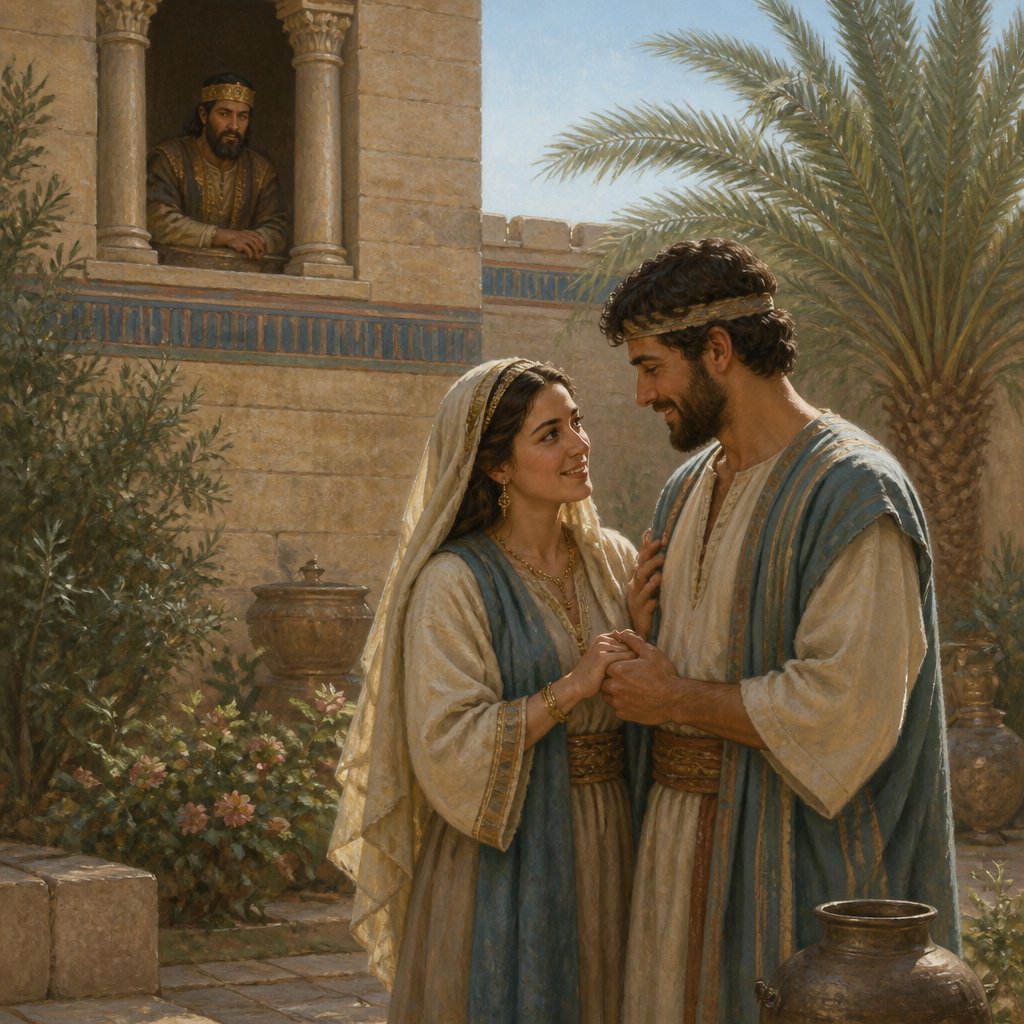
Genesis 26:8 (KJV) - "And it came to pass, when he had been there a long time, that Abimelech king of the Philistines looked out at a window, and saw, and, behold, Isaac was sporting with Rebekah his wife."
Genesis 26:8 is a verse from the Book of Genesis in the Old Testament of the Bible. This verse describes an encounter between Isaac, the son of Abraham, and Abimelech, the king of the Philistines. The verse provides insight into the relationship between Isaac and Rebekah, his wife, as well as the dynamics of power and diplomacy in the ancient Near East.
The context of Genesis 26:8 is important for understanding the significance of the verse. Isaac and his family are sojourning in Gerar, the territory of the Philistines, due to a famine in the land of Canaan. In Gerar, Isaac encounters Abimelech, who is intrigued by the behavior of Isaac and Rebekah. The verse captures the moment when Abimelech observes Isaac "sporting" with Rebekah, which raises questions about the nature of their interaction and its implications for their relationship.
One theme that can be derived from Genesis 26:8 is the theme of marriage and the sanctity of the marital relationship. The verse presents Isaac and Rebekah engaging in what can be interpreted as affectionate or intimate behavior, and this is being observed by a powerful outsider, Abimelech. The incident highlights the vulnerability and potential scrutiny of marital relationships, as well as the need for discretion and respect within marriage.
Another theme that emerges from this verse is the theme of diplomacy and power dynamics. The fact that Abimelech, as a king, is observing the behavior of Isaac and Rebekah indicates an awareness of the political and social implications of their actions. In the ancient Near East, marriages and alliances were often strategic and carried political significance. Abimelech's observation of Isaac and Rebekah may indicate his interest in understanding the dynamics of Isaac's household and assessing the potential impact on his own kingdom.
The symbolism in Genesis 26:8 is open to interpretation and can be viewed in various ways. One interpretation could be that the verse symbolizes the watchful eye of authority and the potential for external judgment. As Abimelech peers out from the window, his observation of Isaac and Rebekah suggests a monitoring of their behavior and a potential intrusion into their private lives. This can be seen as a symbolic representation of the intrusion of external forces into the sanctity of the marriage relationship.
Additionally, the verse can be seen as symbolizing the delicate balance of power and vulnerability within relationships. Isaac and Rebekah's intimate behavior is being observed by someone in a position of power and influence, highlighting the complexities of navigating personal relationships within the context of external scrutiny and potential political ramifications.
In conclusion, Genesis 26:8 provides a rich and layered portrayal of the dynamics of marriage, power, and diplomacy in the ancient Near East. The verse offers insight into the themes of sanctity of marriage, diplomacy, and power dynamics, as well as the symbolism of external scrutiny and the delicate balance of vulnerability and strength within relationships. Overall, this verse contributes to the larger narrative of the Book of Genesis and offers valuable lessons on human relationships and the complexities of navigating personal and political dynamics.
Have questions about Genesis 26:8?
Dive deeper into this scripture with Bible Chat — an AI-powered tool for exploring God's Word through conversation. Ask questions, get context, and grow in your understanding of the Bible.
Get Our Apps


Genesis 26:8 Artwork

Genesis 26:8 - "And it came to pass, when he had been there a long time, that Abimelech king of the Philistines looked out at a window, and saw, and, behold, Isaac was sporting with Rebekah his wife."

"And it came to pass, when he had been there a long time, that Abimelech king of the Philistines looked out at a window, and saw, and, behold, Isaac was sporting with Rebekah his wife." - Genesis 26:8

Genesis 1:26

Genesis 1:26

Genesis 1:26

Genesis 1:26

Genesis 24-26

Genesis 26:35

Genesis 50:26

Genesis 26:25

Genesis 21-26

Genesis 25-26

Genesis 50:26

Genesis 19-26

Genesis 26:29

Genesis 50:26

Genesis 18-26

Genesis 26:18

Genesis 50:26

Genesis 26:9

Genesis 17-26

Genesis 26 1 famine

Genesis 26:6 - "¶ And Isaac dwelt in Gerar:"

genesis 26:1-35

Genesis 26:26 - "¶ Then Abimelech went to him from Gerar, and Ahuzzath one of his friends, and Phichol the chief captain of his army."

Genesis 42:26 - "And they laded their asses with the corn, and departed thence."

Genesis 36:26 - "And these are the children of Dishon; Hemdan, and Eshban, and Ithran, and Cheran."

Numbers 26:8 - "And the sons of Pallu; Eliab."

Genesis 10:26 - "And Joktan begat Almodad, and Sheleph, and Hazarmaveth, and Jerah,"

Genesis 26:23 - "And he went up from thence to Beer-sheba."